Play ideas
Spring Activities for 1-Year-Olds
Spring is when one-year-olds get to be outside again without three layers and a pram cover. New walkers and the new season go together: soft grass to practise on, puddles to discover, the first flowers to point at.
These ideas are all about gentle first contact with the outdoors. Touching grass, watching birds, splashing a shallow puddle. Nothing structured, just safe outdoor time with you close by.
You need nothing but wellies and a bit of patience for the stop-start pace. A one-year-old will study a single daisy for longer than you’d think possible, and that’s exactly right.
Featured spring for 1-year-olds
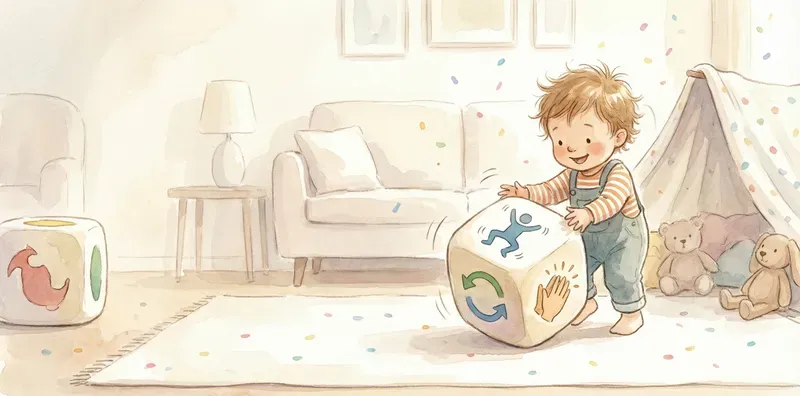
Action Dice Game
- Age
- 2–6 years
- Time
- 10–20 min
- Energy
- Hands-on
- Setting
- Indoor
You'll need: Paper cube or dice, Markers
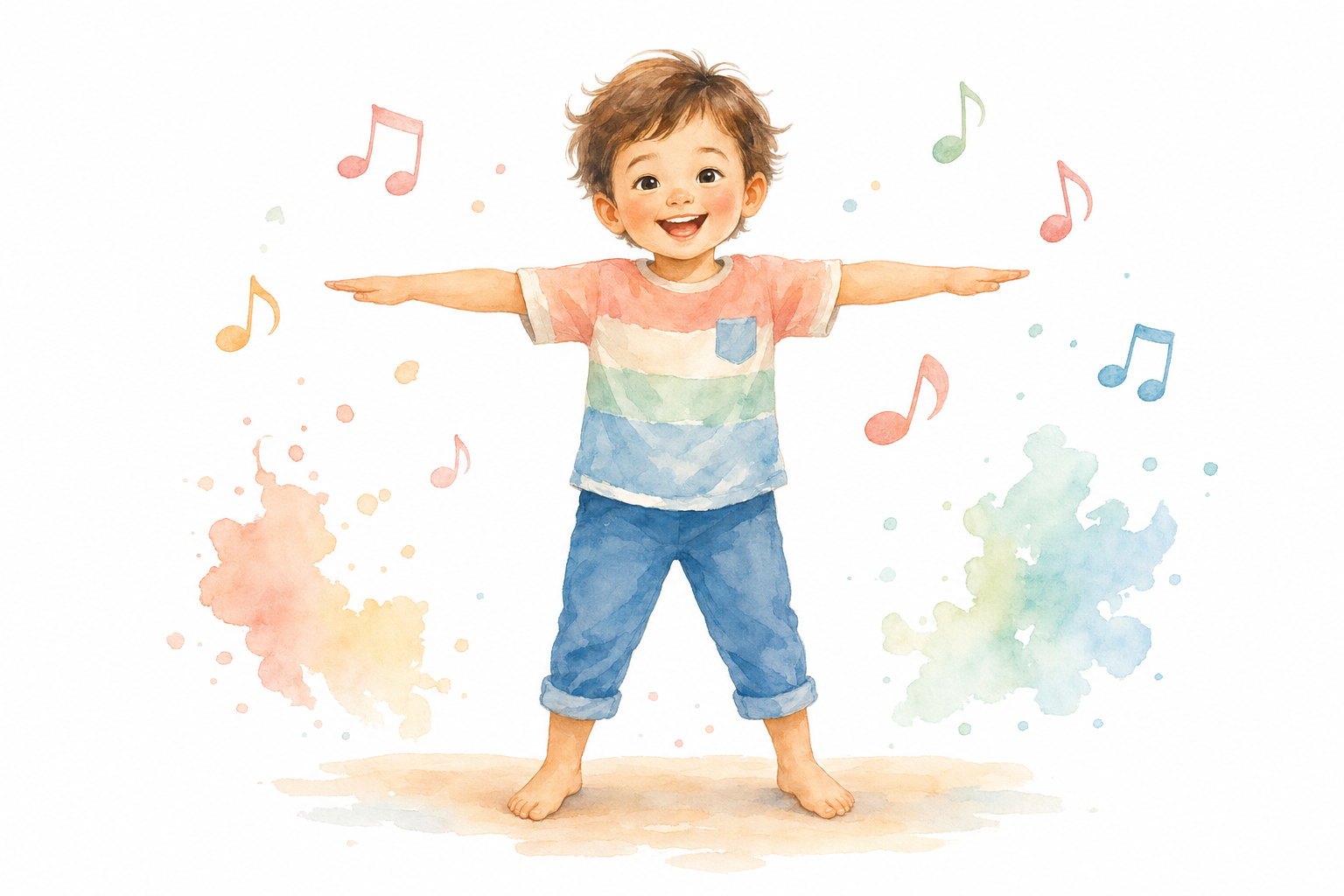
Alphabet Freeze Dance
- Age
- 2–6 years
- Time
- 10–20 min
- Energy
- Hands-on
- Setting
- Indoor
You'll need: Music (phone or speaker), Clear floor space
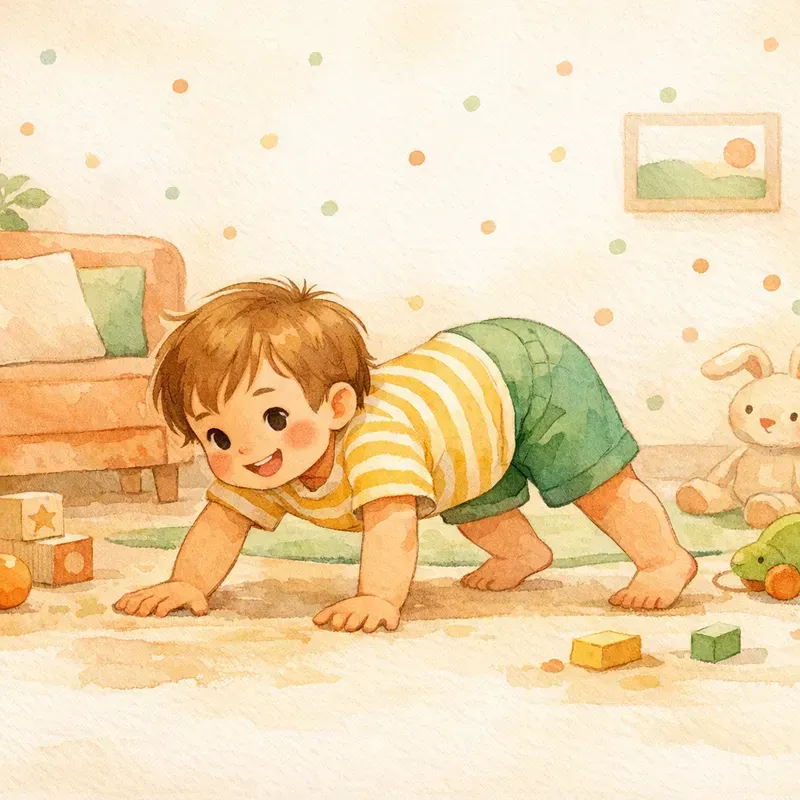
Animal Walks
- Age
- 2–5 years
- Time
- 5–15 min
- Energy
- Hands-on
- Setting
- Indoor
You'll need: Clear floor space
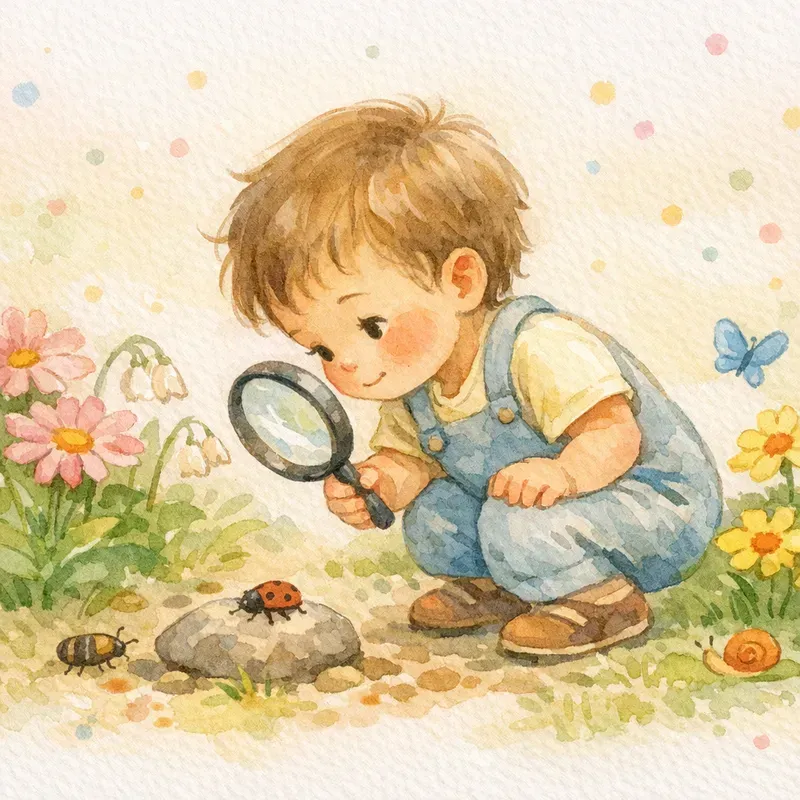
Backyard Bug Hunt
- Age
- 2–6 years
- Time
- 15–30 min
- Energy
- Hands-on
- Setting
- Outdoor
You'll need: Magnifying glass (optional), Container for temporary observation, Nature area
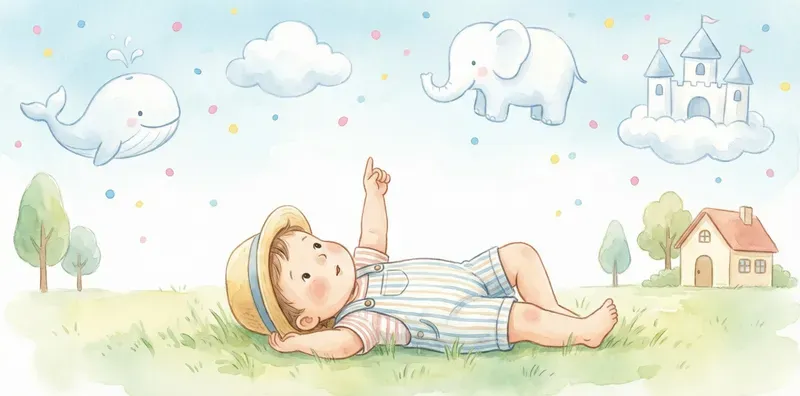
Backyard Cloud Watching
- Age
- 2–6 years
- Time
- 10–30 min
- Energy
- Low-energy
- Mess
- No mess
You'll need: Blanket to lie on, Sunglasses (optional)
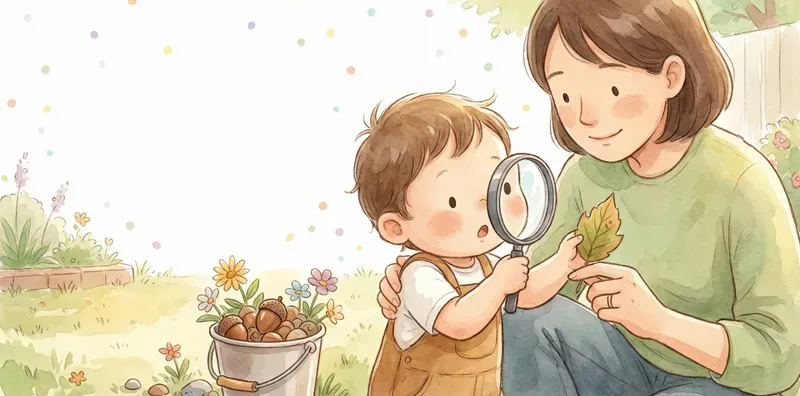
Backyard Nature Hunt
- Age
- 2–6 years
- Time
- 15–30 min
- Energy
- Hands-on
- Setting
- Outdoor
You'll need: Bag or bucket for collecting, Magnifying glass (optional)
Tips for Spring with a 1-Year-Old
- 1Wellies change everything. Once their feet are waterproof you can relax and let them splash instead of swooping in.
- 2Ground time is good. Sitting on a blanket on the grass, touching the texture, watching it move, is a full activity at this age.
- 3Point and name. "Bird. Flower. Puddle." Spring is a free vocabulary lesson; narrate what they’re looking at.
- 4Keep it short. Cool spring air tires little ones quickly. Ten happy minutes outside beats a forced half hour.
More ideas in this collection
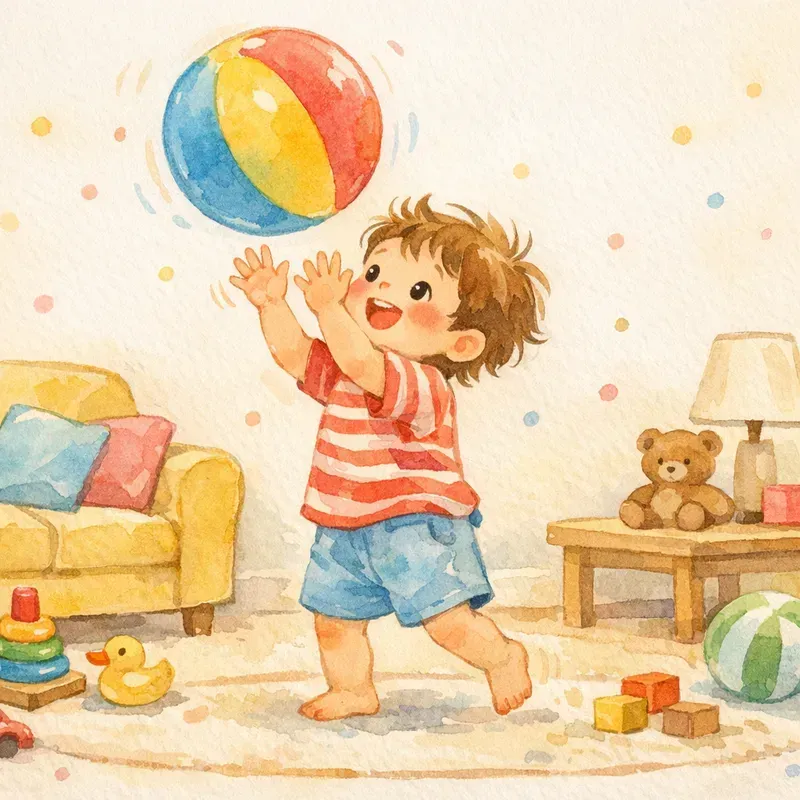
Balloon Keep Up
2–6 years · 5–15 min · Indoor
Slow-moving balloon allows success while building tracking skills and energy release.
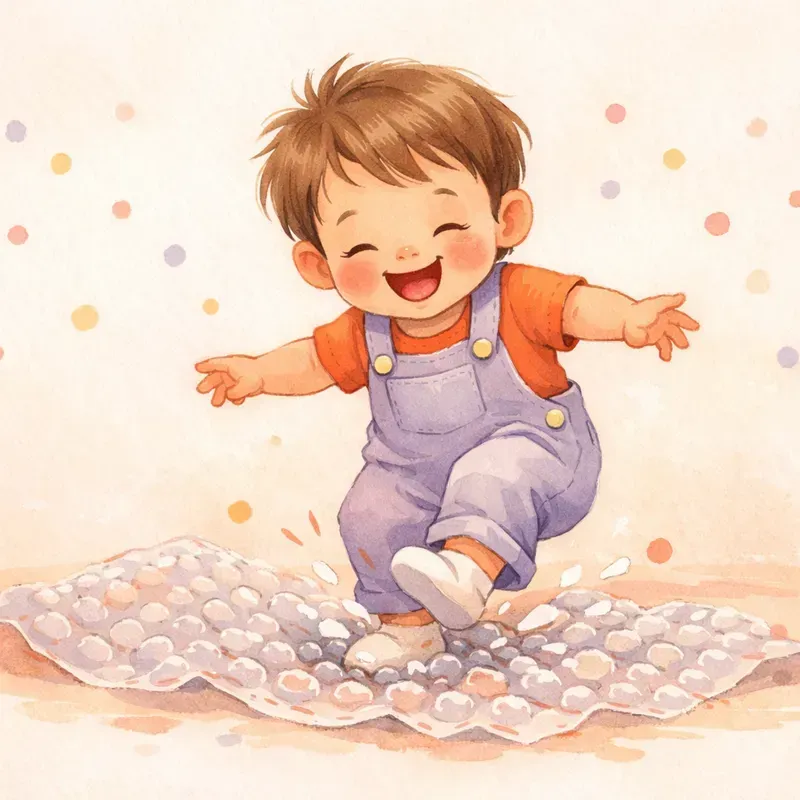
Bubble Wrap Stomp
1–5 years · 5–15 min · Indoor · Low energy
Gross motor movement releases energy while the popping provides satisfying sensory feedback.
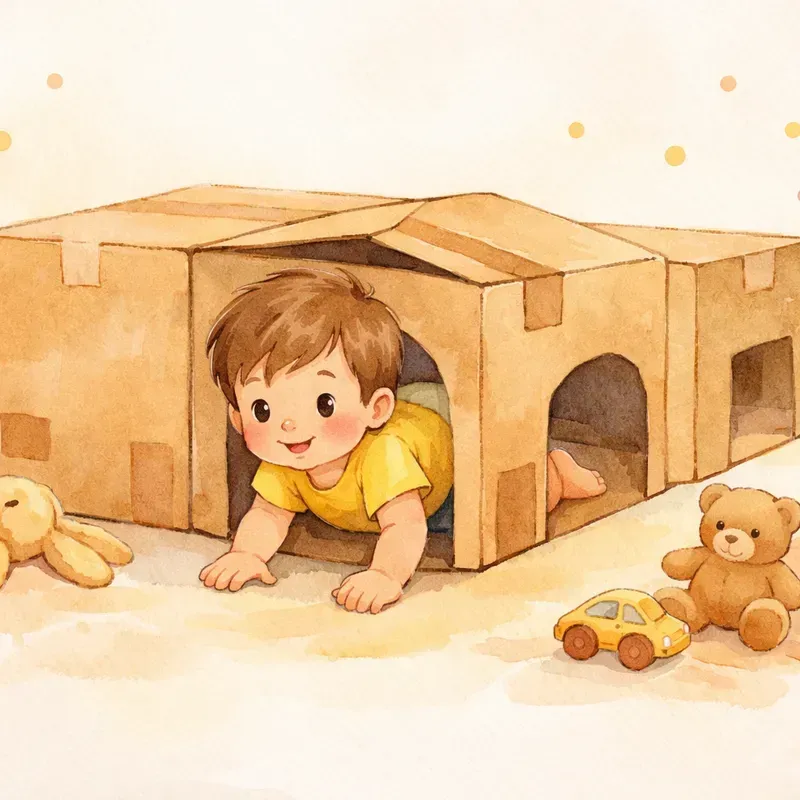
Cardboard Box Tunnel
1–4 years · 10–25 min · Indoor · Low energy
Crawling through a tunnel builds spatial awareness and core strength, and the in-one-end, out-the-other novelty keeps younger toddlers going back to it again and again.
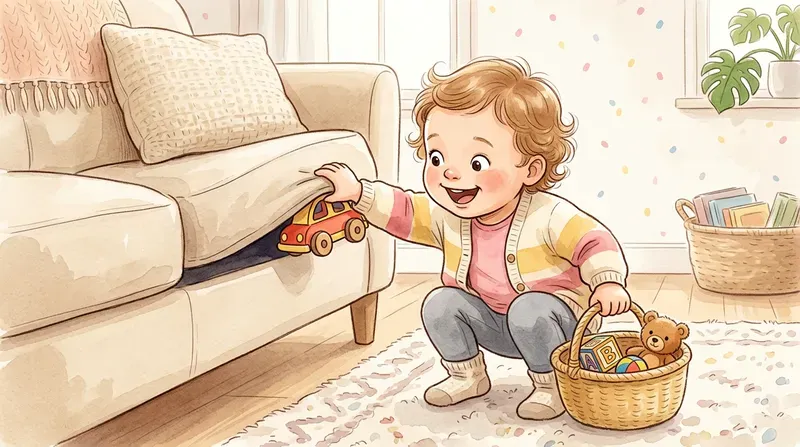
Counting Treasure Hunt
2–5 years · 10–20 min · Indoor
The treasure hunt format turns counting practice into an adventure, kids don't realize they're learning math because they're too busy searching. Finding and counting objects one-to-one builds number sense far more effectively than rote counting because each number connects to a real thing they can hold. Hiding objects for a grown-up reverses the dynamic and builds confidence.
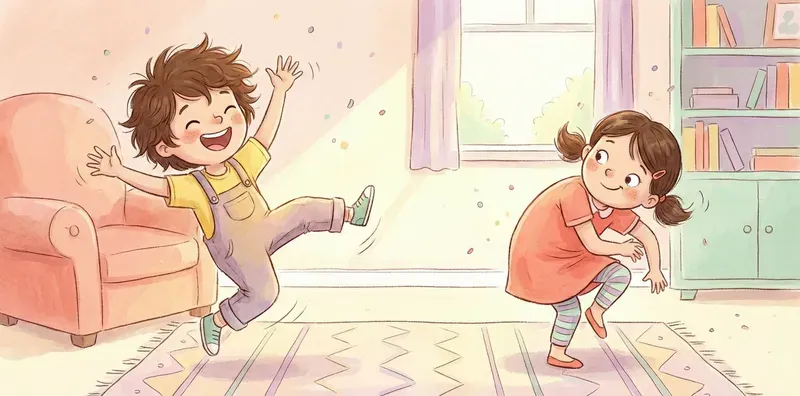
Dance and Freeze
1–6 years · 5–15 min · Indoor
Freeze dance is impulse control practice hiding inside a dance party. Stopping their body the instant the music cuts out is exactly the self-regulation skill toddlers need for waiting, listening, and handling transitions, and the constant start-stop holds their attention far longer than free dancing alone. It also burns real energy, so it doubles as a reset when the walls start closing in.
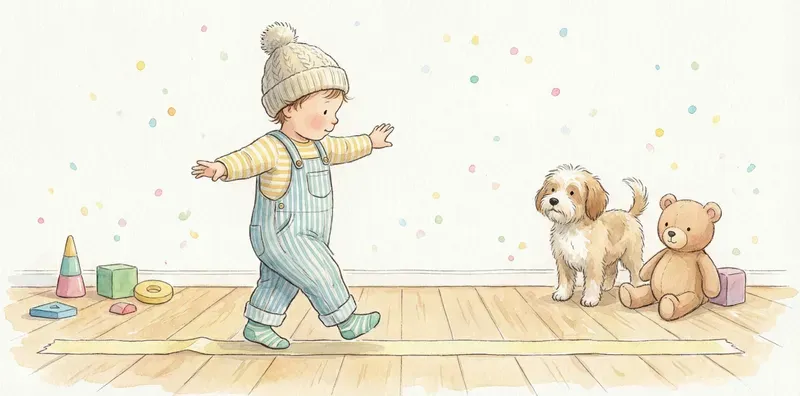
Floor Balance Beam
2–5 years · 5–15 min · Indoor · Low energy
Balance practice builds core strength and body awareness.
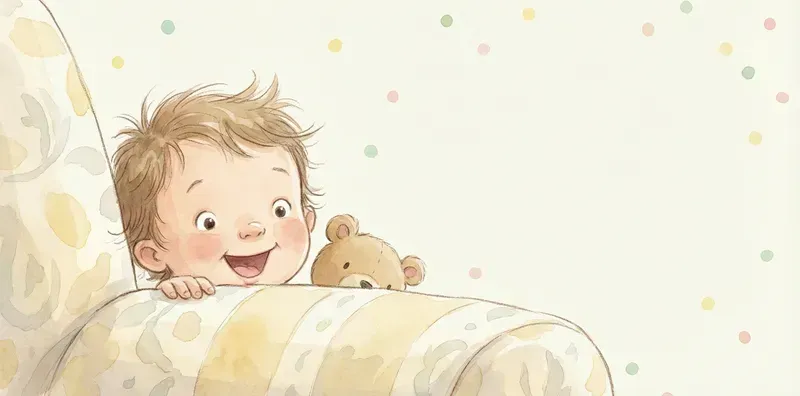
Hide and Seek Toys
1–4 years · 10–20 min · Indoor · Low energy
Treasure hunts build memory and spatial awareness through movement.
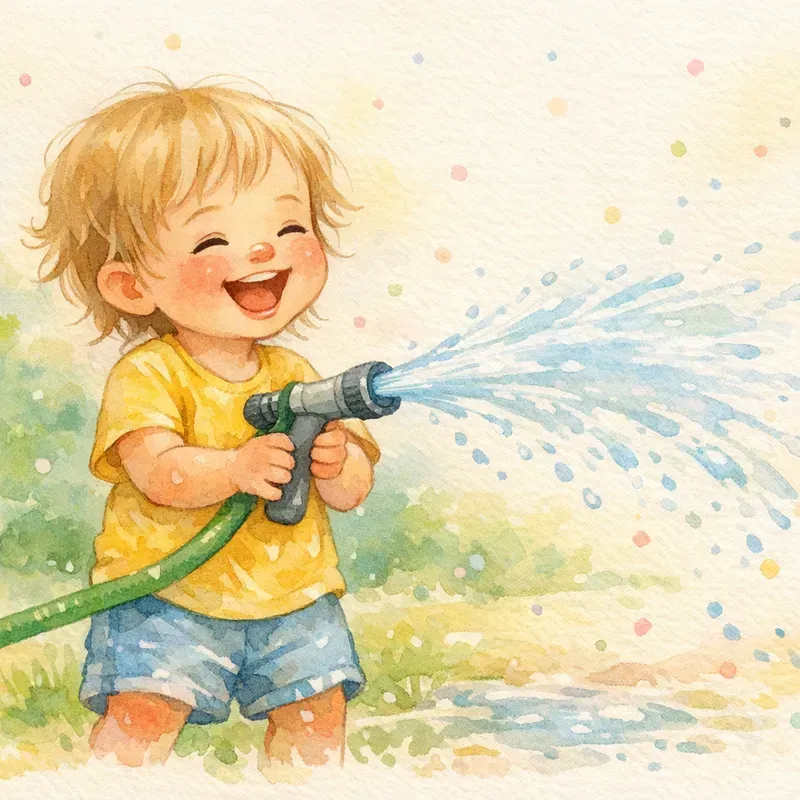
Hose Water Play
1–6 years · 15–45 min · Outdoor
Water play is universally calming and engaging for all ages.
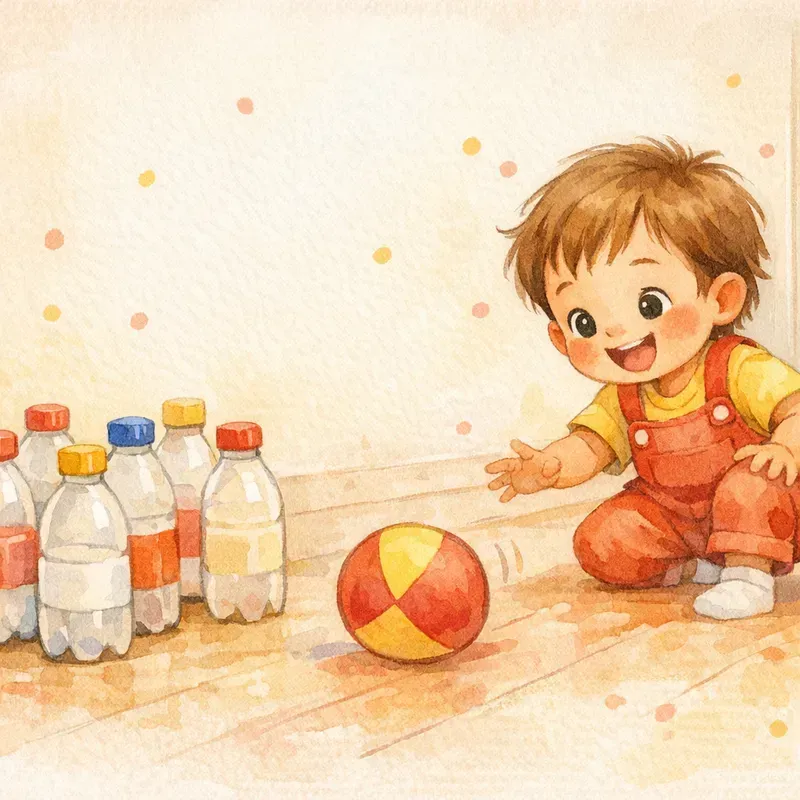
Indoor Bowling
2–6 years · 10–20 min · Indoor · Low energy
Develops hand-eye coordination and basic counting in a game format.
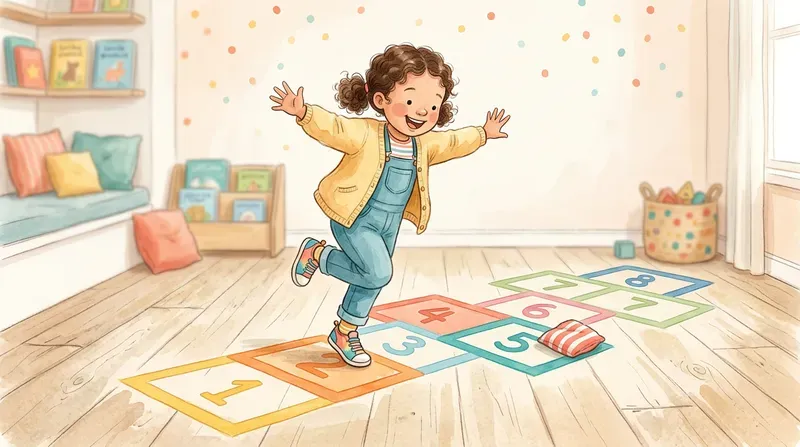
Indoor Hopscotch
2–6 years · 10–20 min · Indoor
Hopscotch builds balance, coordination, and leg strength while sneaking in number recognition and counting. The single-leg hopping is genuinely challenging for toddlers and preschoolers, they concentrate hard, which means they stay engaged. The tape grid stays put for days, so you set it up once and get multiple play sessions.
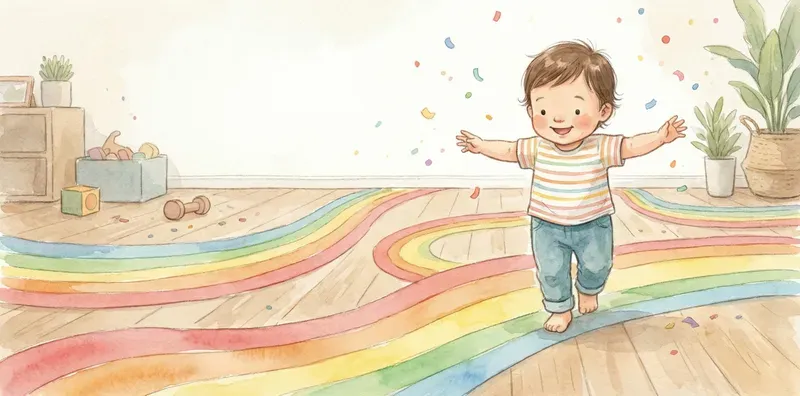
Indoor Rainbow Walk
2–5 years · 10–20 min · Indoor · Low energy
Hunting for each color gets your child up and moving while sharpening color recognition and visual scanning, the skill of searching a busy space for one specific thing. Naming what they find grows vocabulary, and holding the rainbow order in their head is early sequencing and memory practice. It needs zero supplies and zero setup, so it is the one you reach for when you have nothing but a few minutes to fill.
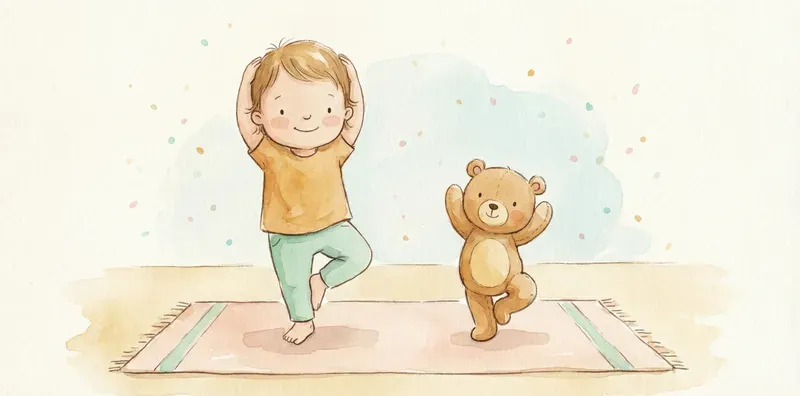
Kid-Friendly Yoga Poses
2–6 years · 10–20 min · Indoor · Low energy
Body awareness, flexibility, and calm all in one activity.
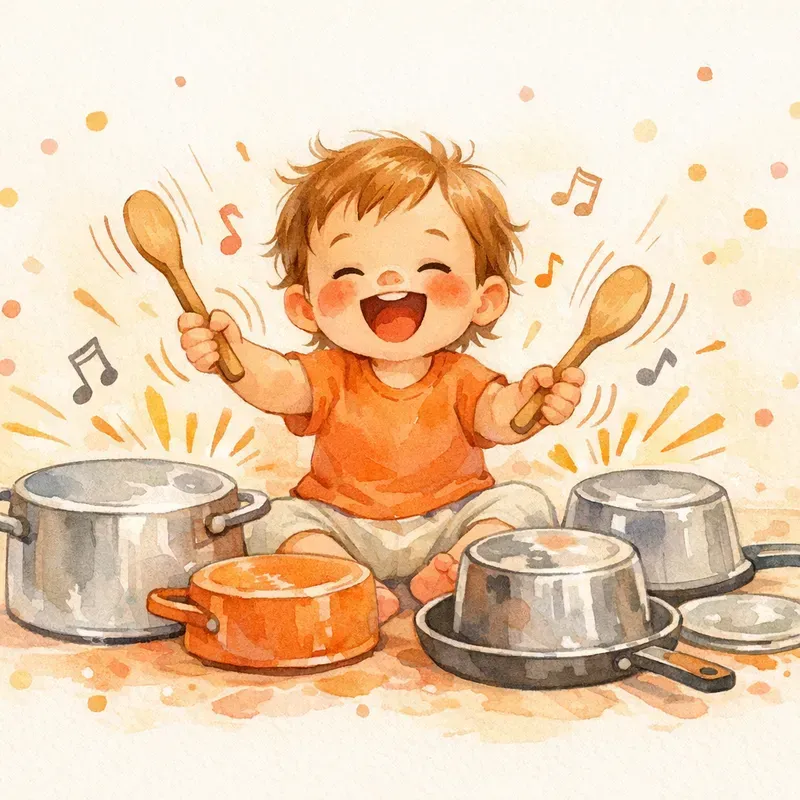
Kitchen Pot Band
1–4 years · 5–15 min · Indoor
Loud play releases energy and frustration in an acceptable way.
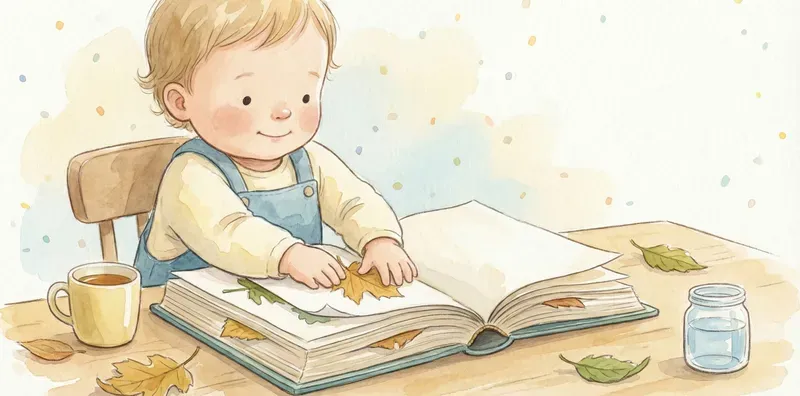
Leaf Collecting and Pressing
2–6 years · 15–30 min · Outdoor
Nature connection with patience lesson and keepsake creation.
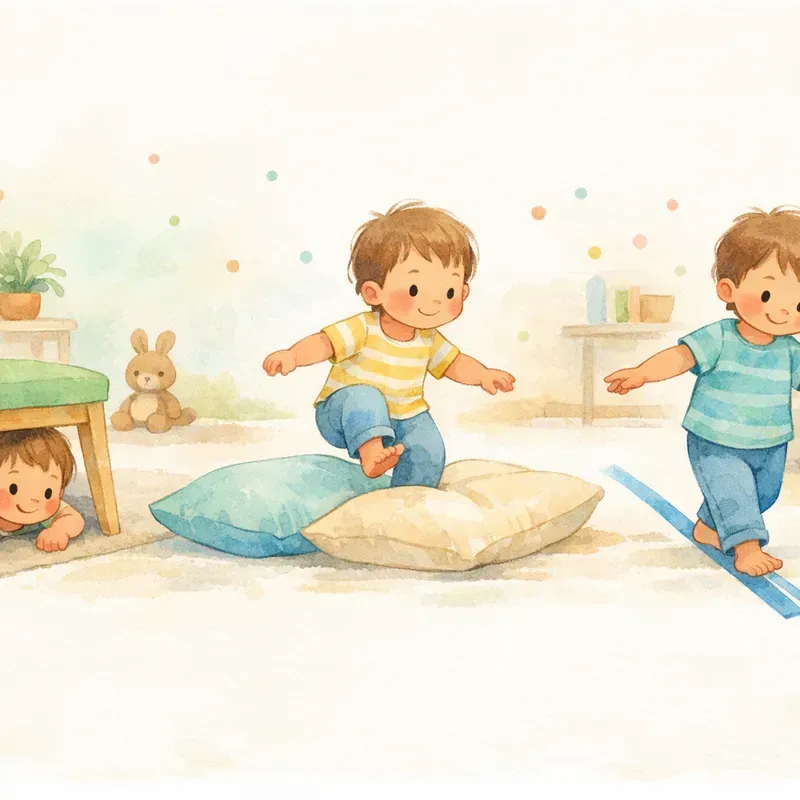
Living Room Obstacle Course
2–5 years · 15–30 min · Indoor
Following a sequence builds planning skills while burning lots of energy.
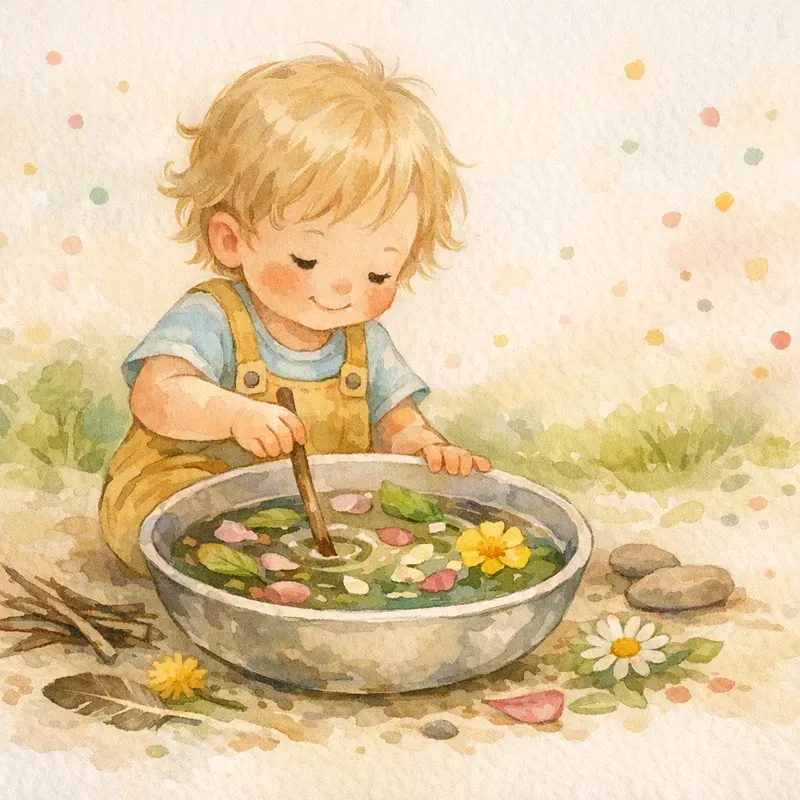
Outdoor Nature Soup
1–5 years · 15–30 min · Outdoor · Low energy
Nature exploration combined with imaginative cooking play.
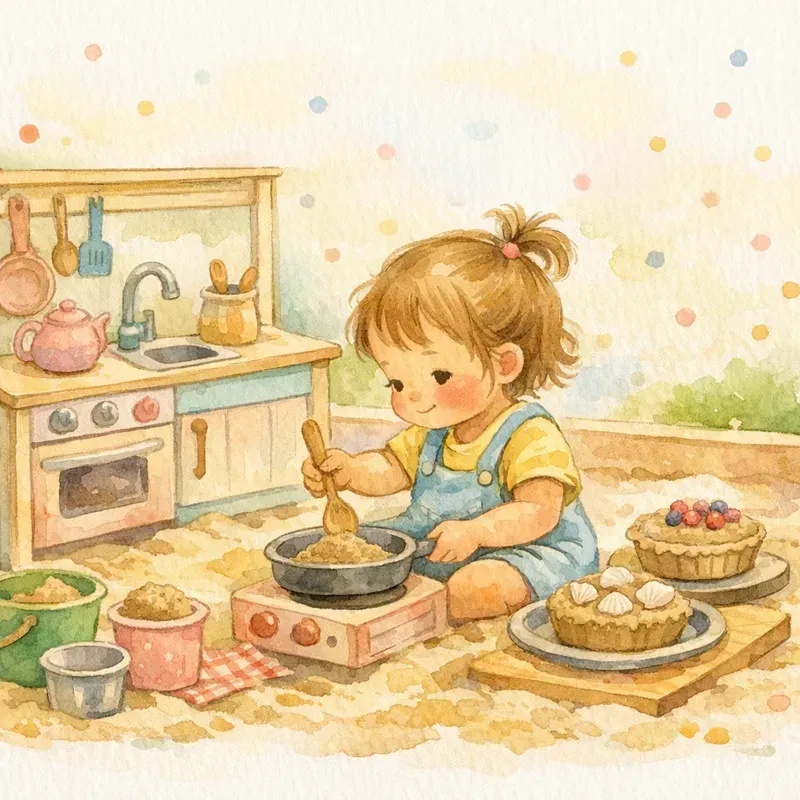
Outdoor Sand Kitchen
1–5 years · 15–45 min · Outdoor · Low energy
Open-ended sensory play with imaginative elements.
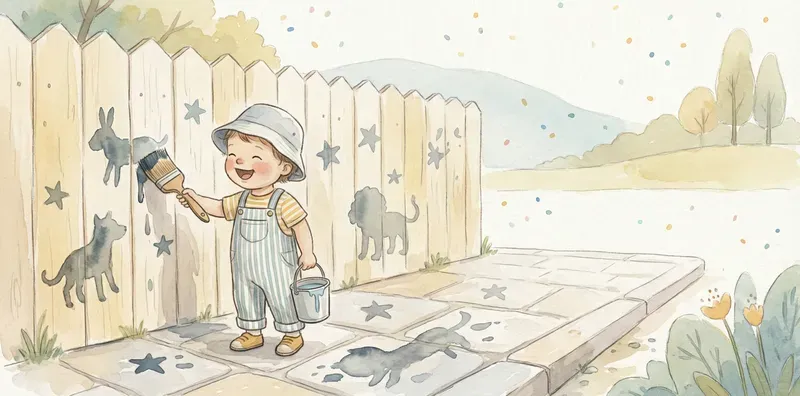
Outdoor Water Painting
1–5 years · 15–30 min · Outdoor · Low energy
Painting with plain water lets kids make big, bold strokes with nothing to clean up, and watching the marks fade as they dry keeps them painting the same spot over and over.
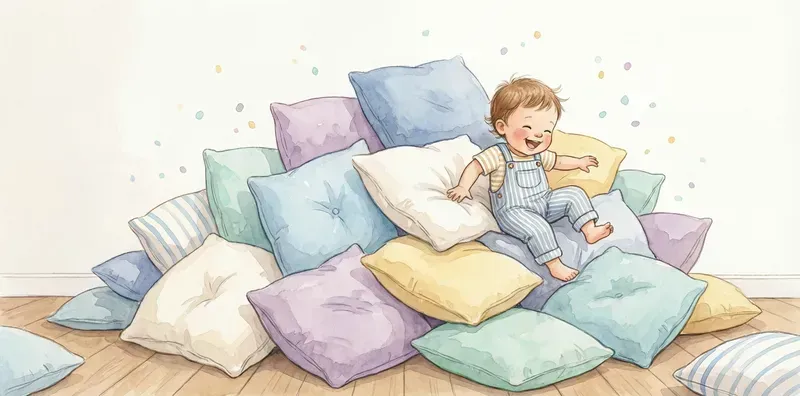
Pillow Mountain Climb
1–3 years · 10–20 min · Indoor · Low energy
Physical challenge builds confidence and burns energy safely indoors.
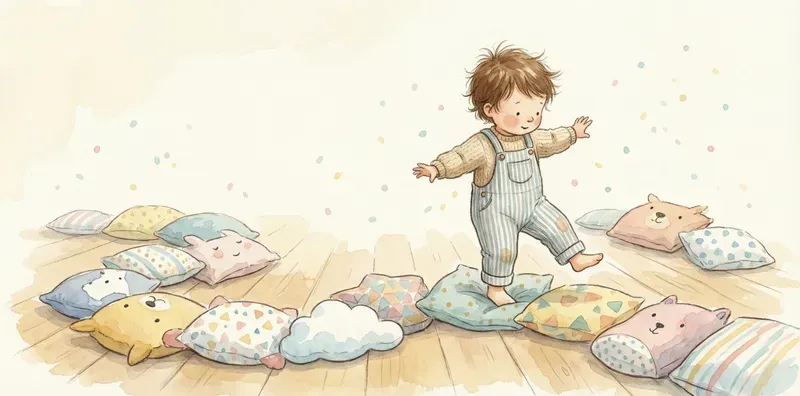
Pillow Stepping Path
1–4 years · 10–20 min · Indoor · Low energy
Balance challenge with low stakes makes failure fun.
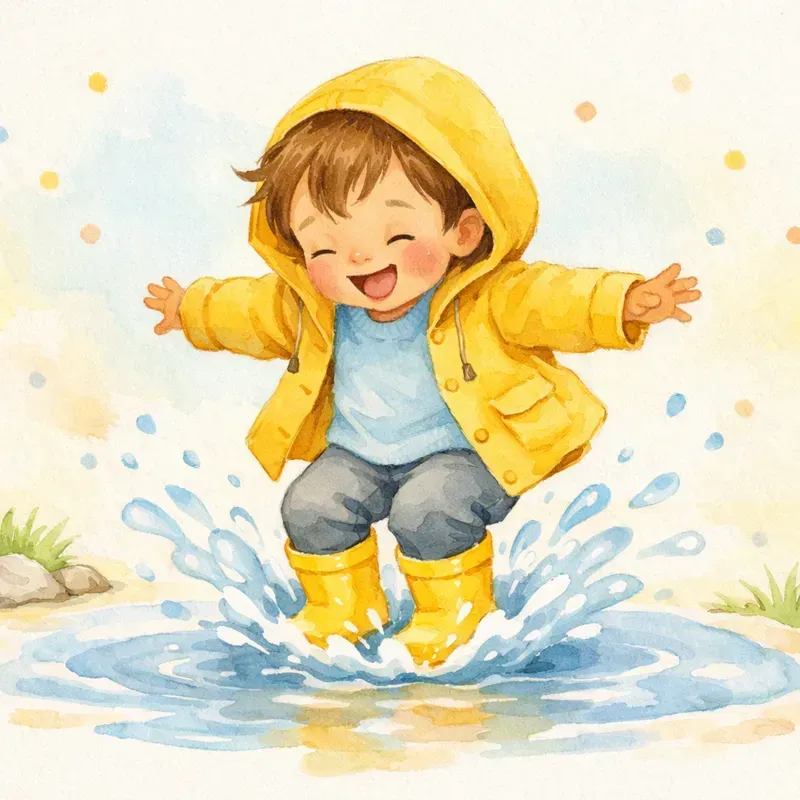
Puddle Jumping
1–6 years · 10–30 min · Outdoor
Stomping and splashing gives big sensory input and an easy way to burn energy. The rules could not be simpler, so it holds their attention with zero setup from you.
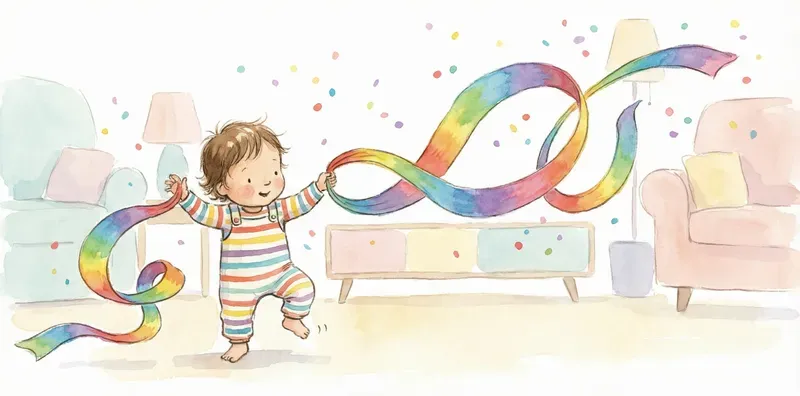
Scarf Dancing
1–4 years · 5–15 min · Indoor
Flowing fabric adds visual interest to movement while teaching rhythm.
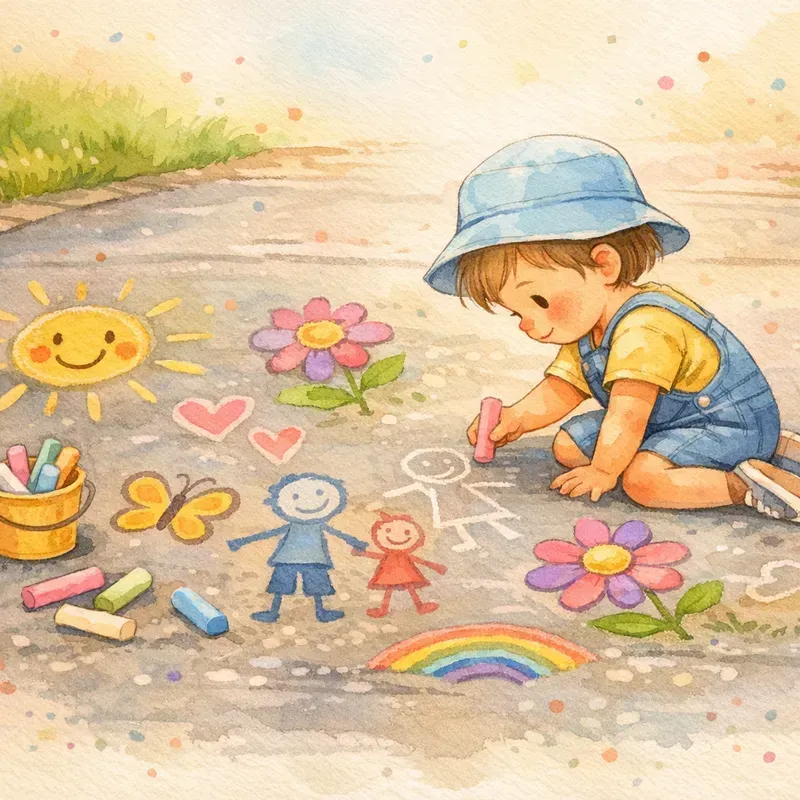
Sidewalk Chalk Art
1–6 years · 15–45 min · Outdoor · Low energy
Large motor drawing builds confidence with no mess to clean.
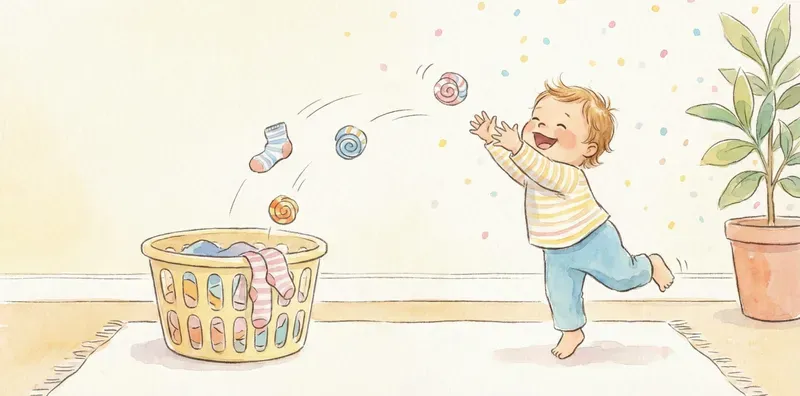
Sock Ball Basketball
2–6 years · 10–20 min · Indoor · Low energy
A soft sock ball lets kids throw, aim, and miss indoors without breaking anything, so they get real practice at throwing and hand-eye coordination in a small space.
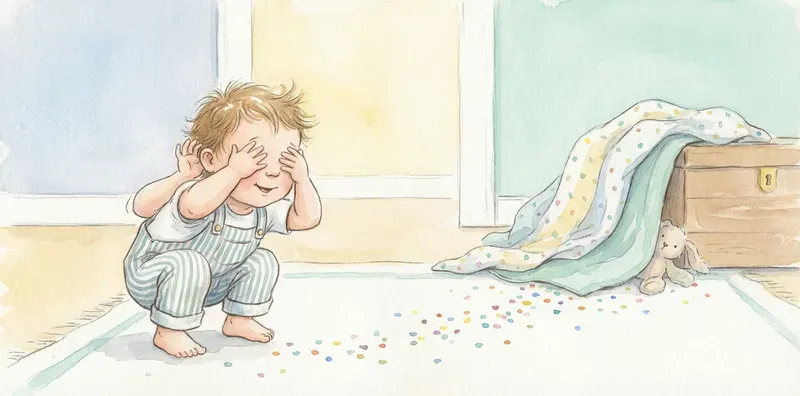
Sound Hide and Seek
2–5 years · 10–20 min · Indoor
Listening for a hidden sound develops auditory processing, the ability to isolate and locate sounds in space. This is the same skill that helps kids follow spoken instructions in noisy environments and distinguish similar speech sounds while learning to read. The treasure-hunt format keeps them moving and engaged while they practice spatial reasoning and problem-solving.
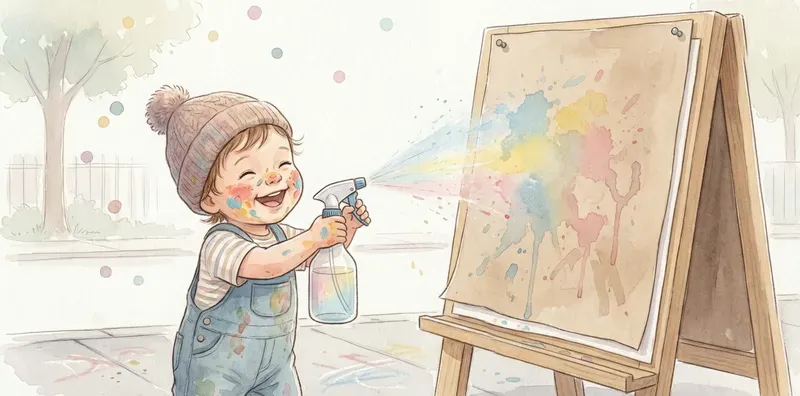
Spray Bottle Art
2–5 years · 10–20 min · Outdoor
Hand squeezing builds strength while creating satisfying visual results.
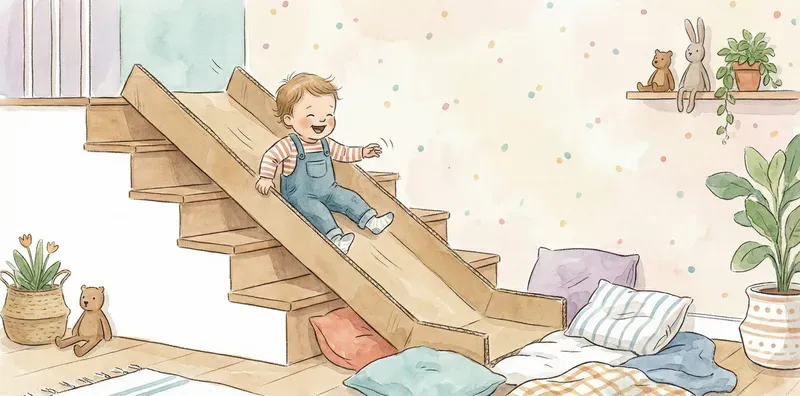
Stair Cardboard Slide
2–5 years · 10–25 min · Indoor
Sliding gives kids the big whoosh of fast movement they crave, but the carpet and cushions keep the stakes low. The climb back up and the balancing on the way down build gross motor strength, coordination, and body awareness, and the gentle speed and bumps feed the vestibular system, the sense that helps a child feel steady and grounded. It is a safer, indoor way to satisfy the urge to climb and launch off things.
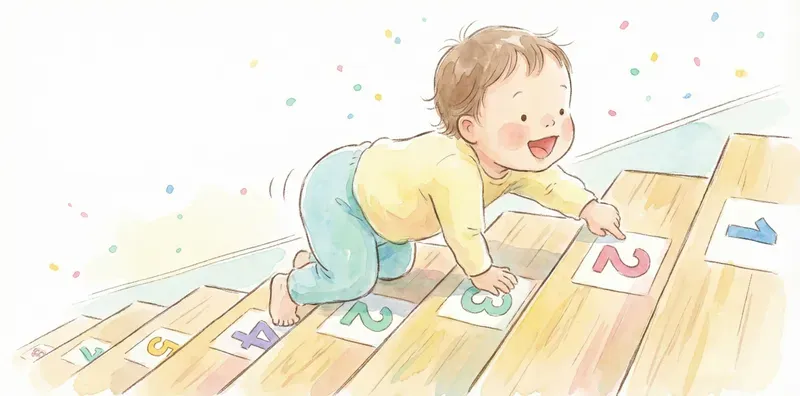
Stair Counting Game
1–4 years · 5–15 min · Indoor
Physical movement reinforces number learning naturally.
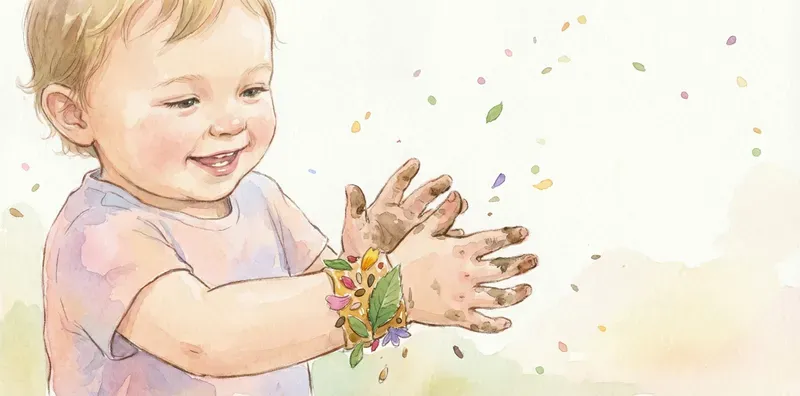
Sticky Nature Bracelet
2–6 years · 15–30 min · Outdoor
Combines outdoor exploration with wearable art creation.
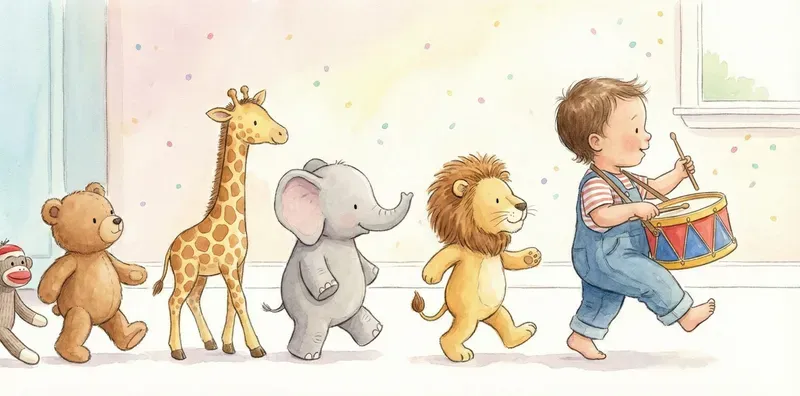
Stuffed Animal Parade
1–4 years · 10–20 min · Indoor · Low energy
Imaginative play with movement and music engagement.
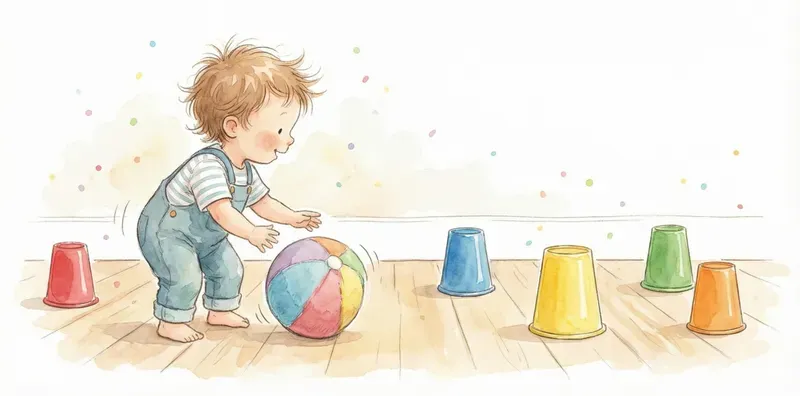
Target Ball Roll
1–4 years · 10–20 min · Indoor · Low energy
Rolling a ball toward a target builds hand-eye coordination, arm strength, and the concept of aim and distance, all while practicing turn-taking and patience. The sitting position makes this perfect for tired parents who can play from the couch or floor without getting up. Counting hits sneaks in early number skills.
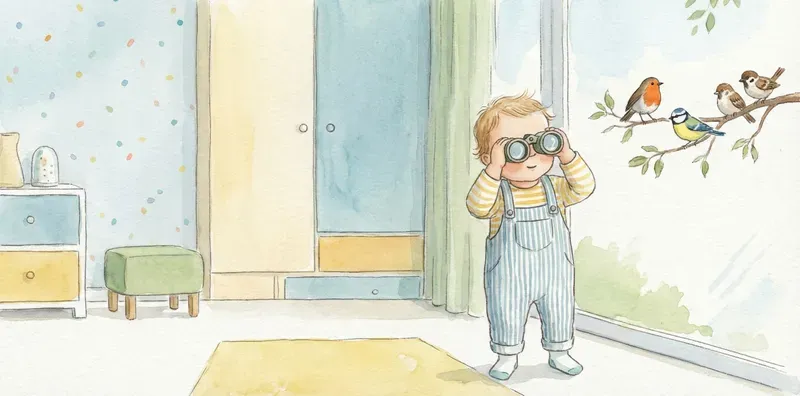
Window Bird Watching
1–6 years · 5–20 min · Indoor · Low energy
Calm observation builds focus and connects children to nature.
Read
Guides for this topic
General
Easy Outdoor Activities for Toddlers (No Equipment)
Simple backyard and park activities for toddlers using what is already outside. No special gear, no setup, just six easy ways to get a toddler playing in the fresh air.
Why read: A quick, practical read
Guide
5 Sensory Play Ideas for Fine Motor Skills
Sensory activities that double as fine motor practice. Rice bins, water transfer, play dough, and more, all with household items and zero prep stress.
Why read: A deeper, practical how-to
Guide
Play Dough Activities for Toddlers (That Build Hand Strength)
Play dough ideas for toddlers that build the hand strength behind writing and self-care. A no-cook recipe, simple setups by age, and mess that stays contained.
Why read: A deeper, practical how-to
Related categories
Browse by age
Questions parents ask
What can a 1-year-old do outside in spring?
Touch grass, splash in shallow puddles, watch birds, and feel flowers and leaves. New walkers also love simply practising walking on different surfaces. Keep outings short and stay close on uneven ground.
Is it okay to let a one-year-old play in puddles?
Yes, with wellies and supervision it’s great sensory and motor play. Keep puddles shallow, dry them off and change them afterwards, and avoid anything near roads or deep water.
Not sure where to start?
Let the generator pick a spring for 1-year-olds idea for you, no scrolling required.
Get an activity