Toddler Development Through Play
Every time your toddler plays, they're building skills that matter. Here's exactly what's happening in their brain, and how to support it.
Why this guide exists: Parents often feel guilty about “just playing” with their kids instead of doing something “educational.” The truth is that play IS education for toddlers. The American Academy of Pediatrics, the World Health Organization, and decades of developmental research all confirm: play-based learning is how young children develop cognitive, physical, social, and emotional skills. This guide breaks down exactly what's happening during each type of play.
Start from the day you actually have
The five play types below are the map. These collections are the short route when you already know the constraint.
Quick Overview: 5 Types of Play
Sensory Play
Learning through touch, smell, sight, and sound
Creative & Art Play
Expression through color, shape, and making things
Physical & Motor Play
Building strength, coordination, and body awareness
Fine Motor Play
Small movements that build big skills
Imaginative Play
Pretending, storytelling, and making sense of the world
Sensory Play
Learning through touch, smell, sight, and sound
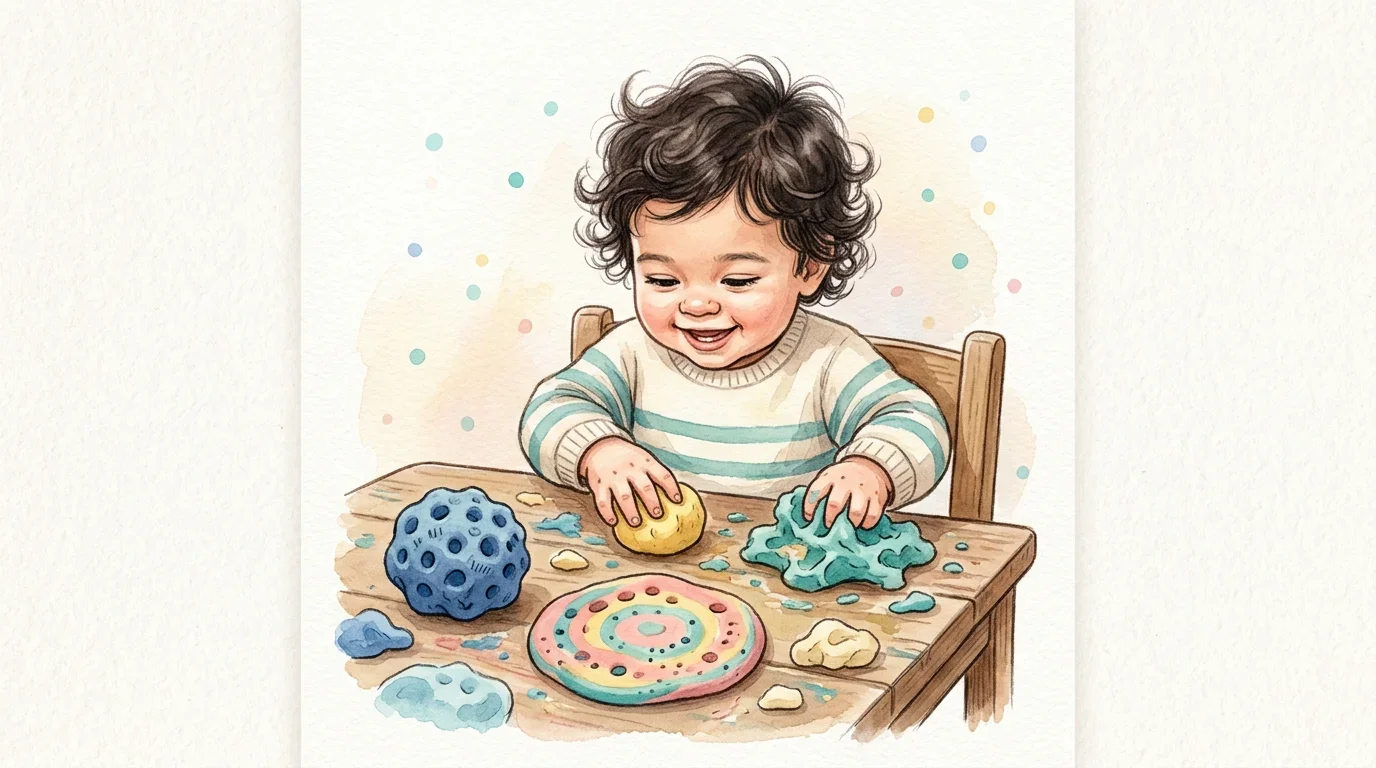
Sensory play involves any activity that stimulates the senses. When a toddler squishes play dough, pours rice, or splashes water, they're building neural pathways that form the foundation for all future learning. Research from the National Association for the Education of Young Children (NAEYC) shows sensory play supports language development, cognitive growth, and social-emotional skills.
Skills Developed
- Neural pathway development: new textures create new brain connections
- Language acquisition: describing what they feel ("squishy," "cold," "rough")
- Self-regulation: calming, repetitive sensory input helps manage emotions
- Scientific thinking: cause and effect, prediction, observation
- Fine motor strength: squeezing, pouring, pinching
What to Expect by Age
Explores single textures (water, sand, rice)
Combines materials, transfers between containers
Creates purposeful sensory scenes, describes textures
Experiments with mixing, predicts outcomes
Try These Activities
Parent tip: Let it be messy. Sensory play that's overly controlled ("Don't touch that," "Keep it in the bin") loses its developmental value. Lay down a sheet, dress for mess, and let them explore.
Creative & Art Play
Expression through color, shape, and making things
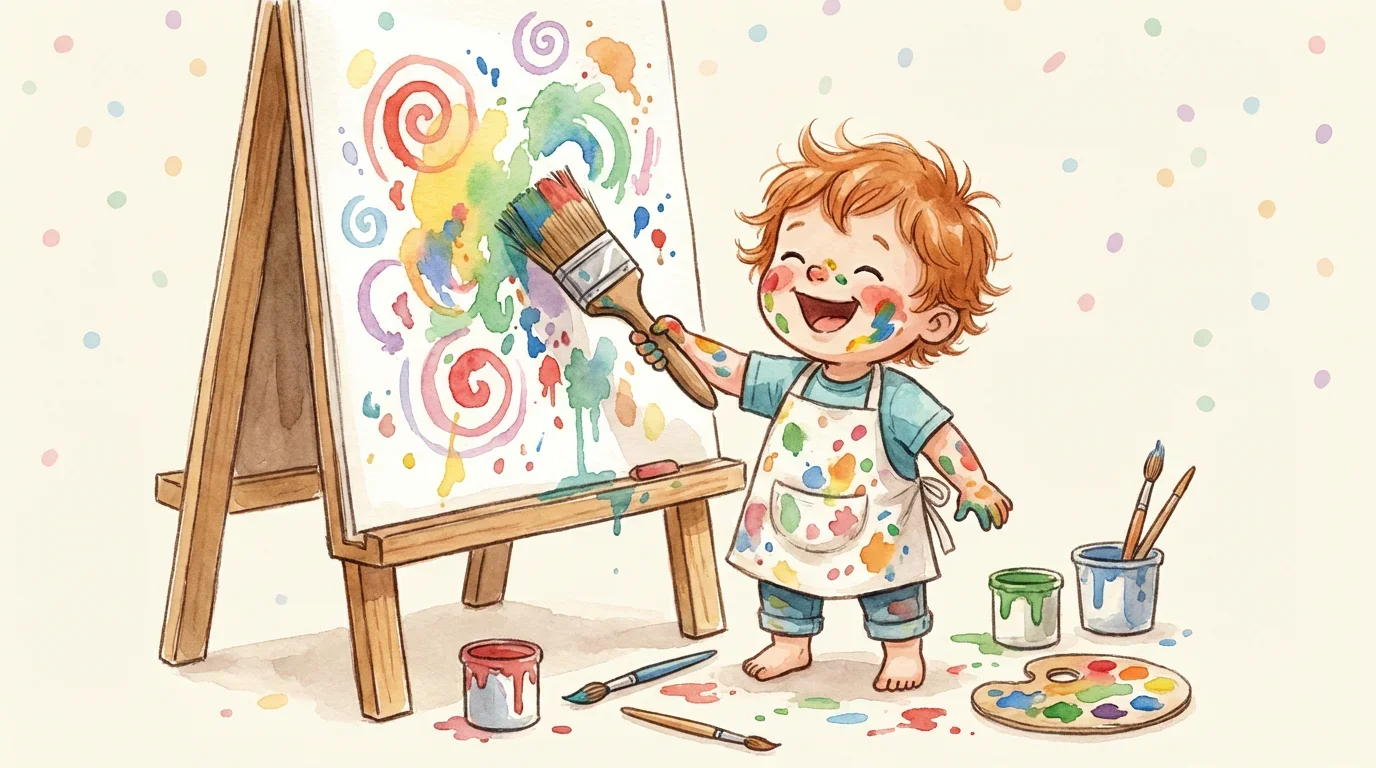
When a toddler finger paints, they're not making art. They're practicing hand control, learning cause and effect, making decisions, and expressing ideas they can't yet put into words. The American Academy of Pediatrics highlights creative play as essential for developing problem-solving skills and emotional expression in early childhood.
Skills Developed
- Fine motor control: gripping crayons, tearing paper, threading
- Hand-eye coordination: placing stickers, stamping, painting within areas
- Color and shape recognition: sorting, naming, matching
- Decision-making: choosing colors, deciding where to place things
- Emotional expression: art gives feelings a non-verbal outlet
- Confidence: process-focused art has no "wrong" outcome
What to Expect by Age
Whole-hand scribbling, finger painting, paper ripping
Controlled scribbles, stamping, sticker peeling
Circles and lines, dot markers, simple collage
Recognizable shapes, cutting with scissors, representational art
Try These Activities
Parent tip: Never ask "What is it?" Instead, say "Tell me about your picture." This validates the process and avoids putting pressure on the result.
Physical & Motor Play
Building strength, coordination, and body awareness
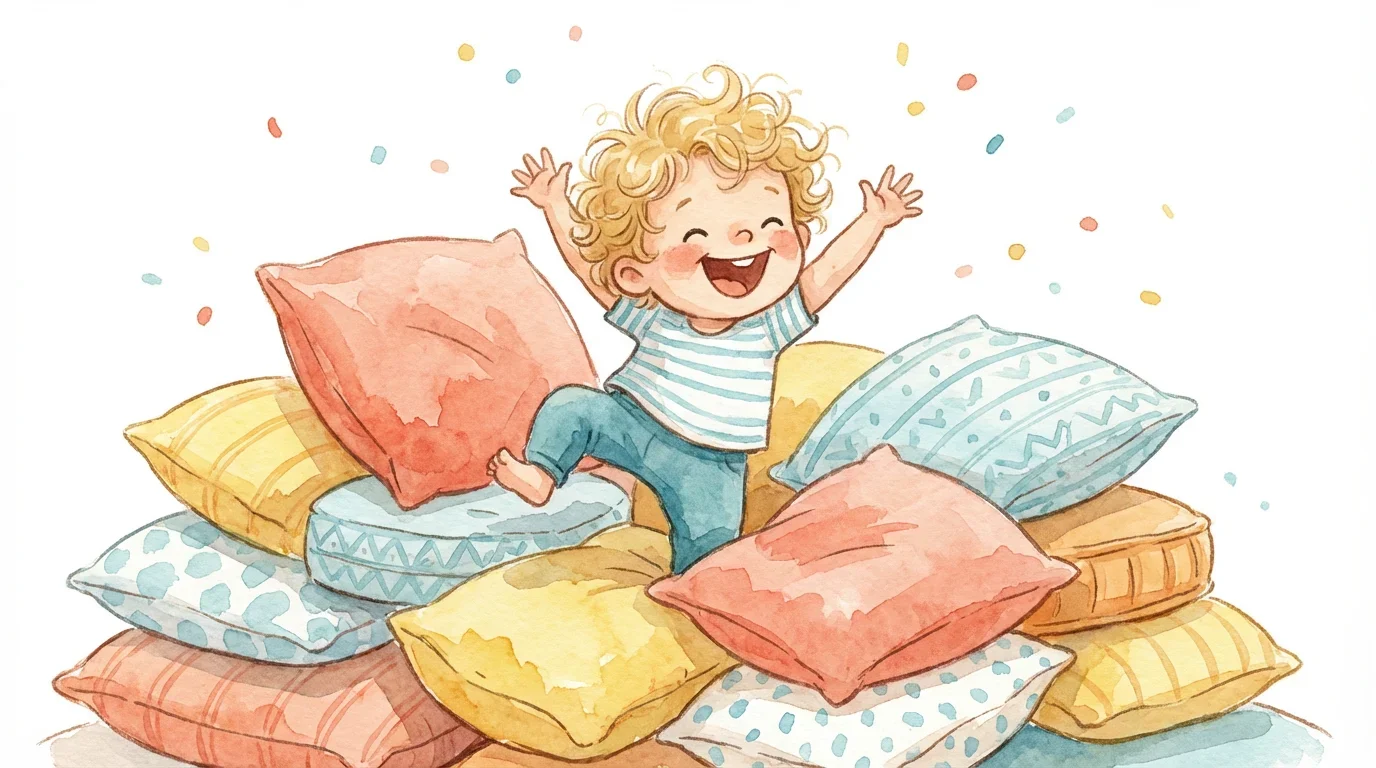
Gross motor play (running, climbing, jumping, balancing) builds the large muscle groups that support everything from sitting in a chair to writing with a pencil. The CDC's developmental milestones framework emphasizes that physical play is not optional; it's how toddlers develop the core strength and coordination needed for all other skills.
Skills Developed
- Core strength: climbing, balancing, crawling through tunnels
- Bilateral coordination: using both sides of the body together
- Spatial awareness: understanding where their body is in space
- Vestibular development: spinning, swinging, rolling (balance system)
- Proprioception: body awareness through pushing, pulling, jumping
- Risk assessment: learning physical limits safely
What to Expect by Age
Walking, climbing onto furniture, stacking 2-3 blocks
Running, kicking, climbing stairs with support
Jumping, balancing on one foot briefly, throwing with aim
Hopping, catching, pedaling, more complex obstacle courses
Try These Activities
Parent tip: Toddlers need at least 30 minutes of structured active play and 60+ minutes of unstructured active play daily (WHO guidelines). If they're bouncing off the walls, they probably need MORE movement, not less.
Fine Motor Play
Small movements that build big skills
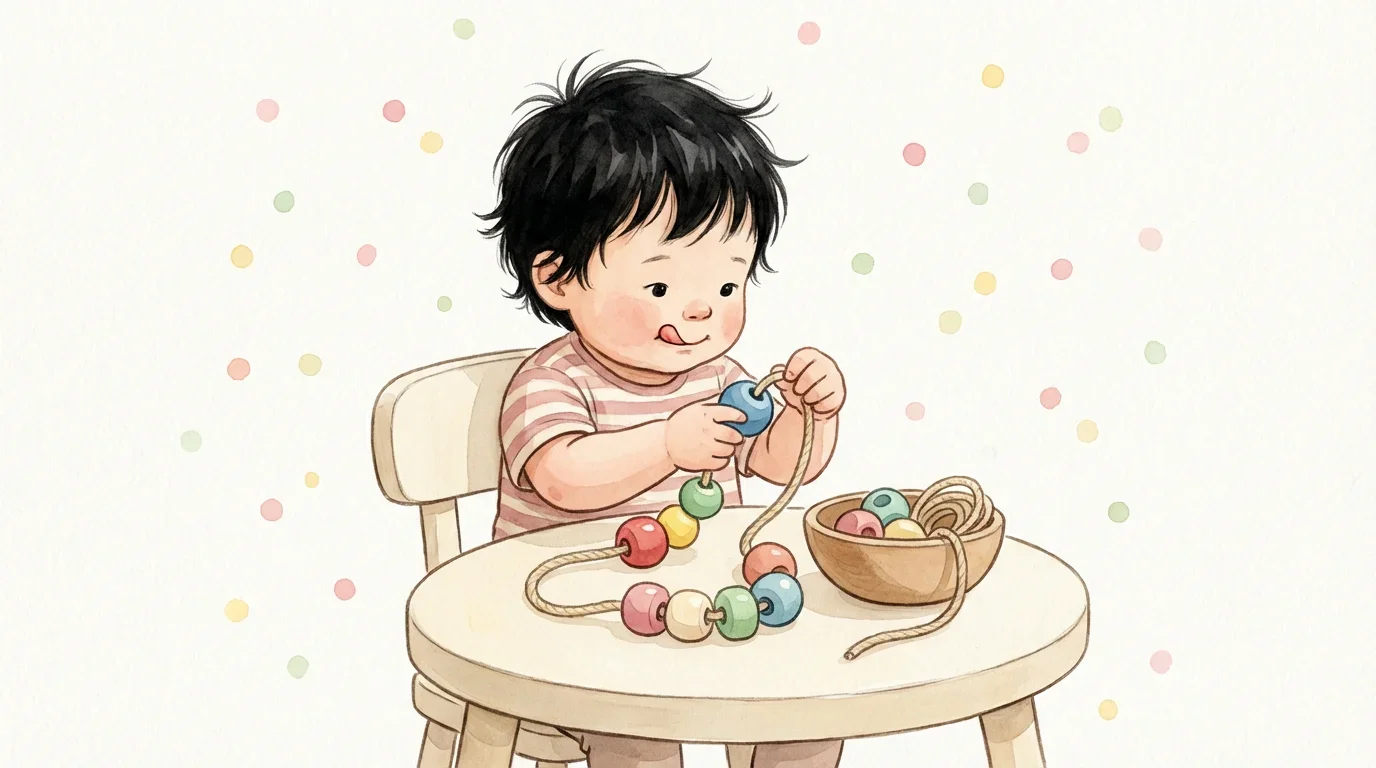
Fine motor skills use the small muscles of the hands and fingers. These are the skills that eventually become writing, buttoning shirts, and using utensils. Occupational therapists note that children who struggle with handwriting in school often missed fine motor play opportunities in their toddler years. The good news: it's never too late to start.
Skills Developed
- Pincer grasp: picking up small objects with thumb and forefinger
- Hand strength: squeezing, tearing, threading
- Bilateral coordination: one hand holds while the other works
- Pre-writing skills: controlled movements that lead to letter formation
- Self-care preparation: buttons, zippers, utensils, shoe laces
What to Expect by Age
Picking up pom poms, stacking rings, turning pages
Peeling stickers, scribbling, simple threading
Stringing beads, using scissors, drawing lines and circles
Cutting on lines, writing first letters, buttoning
Try These Activities
Parent tip: Struggling is the point. If your toddler is having a hard time threading pasta or peeling stickers, that means they're working the right muscles. Resist the urge to do it for them.
Imaginative Play
Pretending, storytelling, and making sense of the world
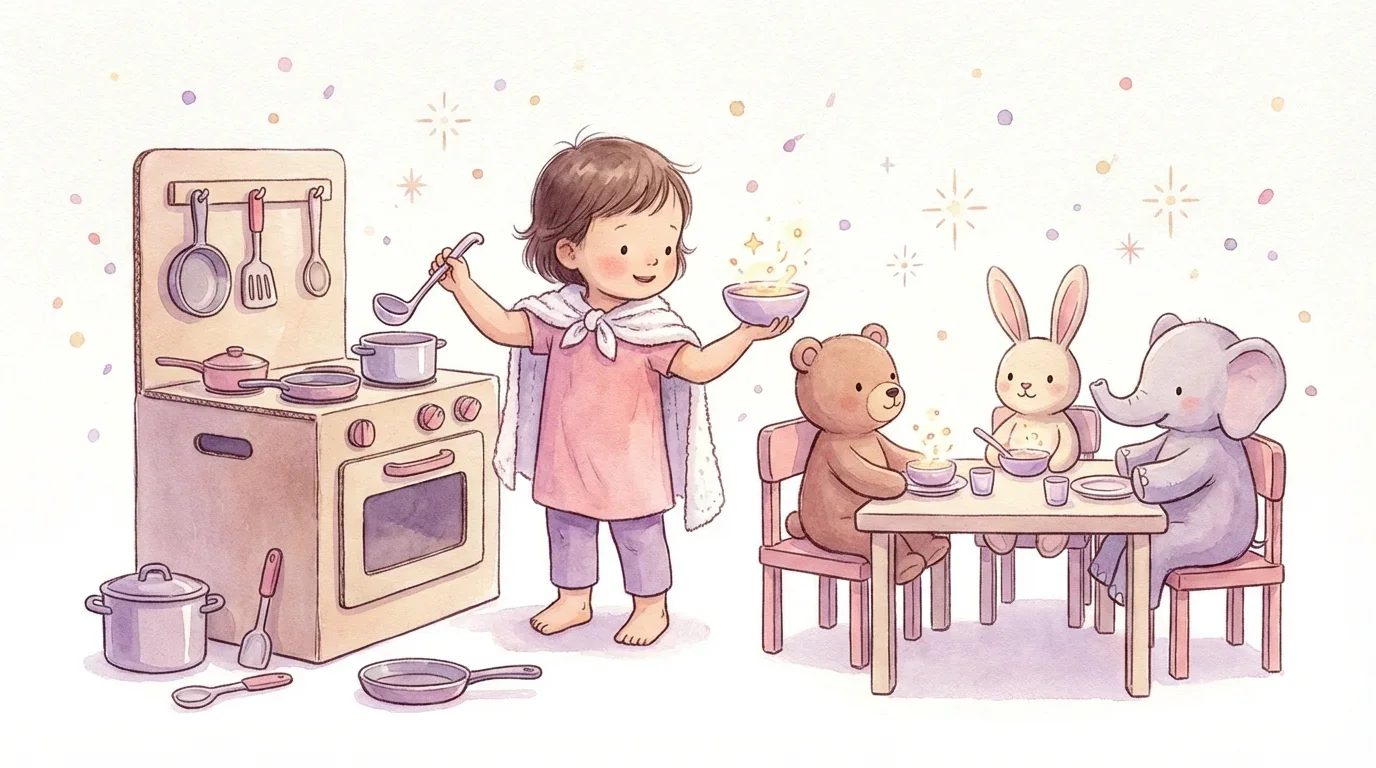
When a toddler pretends a box is a car or serves tea to stuffed animals, they're doing some of the most cognitively complex work of early childhood. Researchers at Yale's Center for Emotional Intelligence found that pretend play develops empathy, emotional regulation, and executive function, skills that predict academic and social success far more than early reading or math.
Skills Developed
- Executive function: planning, sequencing, flexible thinking
- Language development: narrating play, creating dialogue
- Empathy: seeing situations from another's perspective
- Emotional regulation: processing real emotions through pretend scenarios
- Social skills: negotiating roles, turn-taking, cooperation
- Abstract thinking: symbolic representation (box = car)
What to Expect by Age
Imitates simple actions (feeding a doll, talking on phone)
Uses objects symbolically (banana as phone, block as car)
Creates simple scenarios, involves others, assigns roles
Complex narratives, invisible props, multi-scene play
Try These Activities
Parent tip: Follow their lead. If they say the floor is lava, the floor is lava. Your job is to play along, not to direct the story. The developmental benefit happens when THEY are in charge of the narrative.
Frequently Asked Questions
How much play time do toddlers need each day?▾
The WHO recommends at least 180 minutes (3 hours) of varied physical activity per day for toddlers aged 1-2, with at least 60 minutes being energetic play. For ages 3-4, at least 60 minutes should be moderate-to-vigorous. This includes all movement, not just structured activities. Free play, running around, and even climbing furniture counts.
Is screen time worse than free play for development?▾
The AAP recommends avoiding screen time for children under 18 months (except video calls) and limiting to 1 hour of high-quality content for ages 2-5. Hands-on play builds neural connections that passive screen watching cannot replicate. However, don't guilt yourself. Some screen time in a balanced day is fine. The goal is ensuring play-based learning is the dominant activity.
My toddler only wants to do one type of play. Is that okay?▾
Yes, it's normal for toddlers to have strong preferences. A child who only wants sensory play is building deep expertise in that area. Gently introduce other play types alongside their favorite: if they love water play, add cups for pouring (fine motor), toy animals for storylines (imaginative), or food coloring for mixing (creative). Follow their interest and expand from there.
When should I be concerned about my toddler's development?▾
The CDC's milestone tracker (cdc.gov/milestones) is a good starting point. Talk to your pediatrician if your child isn't meeting multiple milestones for their age, especially around communication, social interaction, or physical coordination. Early intervention works best when it starts sooner. Play-based concerns alone are rarely a sign of a problem, but a professional can reassure you.
Do toddlers learn more from structured activities or free play?▾
Both matter. Structured activities (like following a craft or playing a game) build specific skills and teach children to follow instructions. Free play (unstructured time with open-ended materials) builds creativity, problem-solving, and self-directed learning. A healthy mix (roughly 50/50) gives toddlers the best of both worlds.
Put It Into Practice
Browse activities by developmental focus, or grab our printable checklist to keep on the fridge.
Sources & Further Reading
- American Academy of Pediatrics - “The Power of Play” (2018, reaffirmed 2022)
- World Health Organization - Guidelines on Physical Activity for Children Under 5 (2019)
- CDC Developmental Milestones - cdc.gov/milestones
- NAEYC - “Developmentally Appropriate Practice” (4th Edition, 2022)
- Yale Center for Emotional Intelligence - Research on Pretend Play and Executive Function