You'll need
- Painter's tape or masking tape
- Floor space (hallway or living room)
Steps
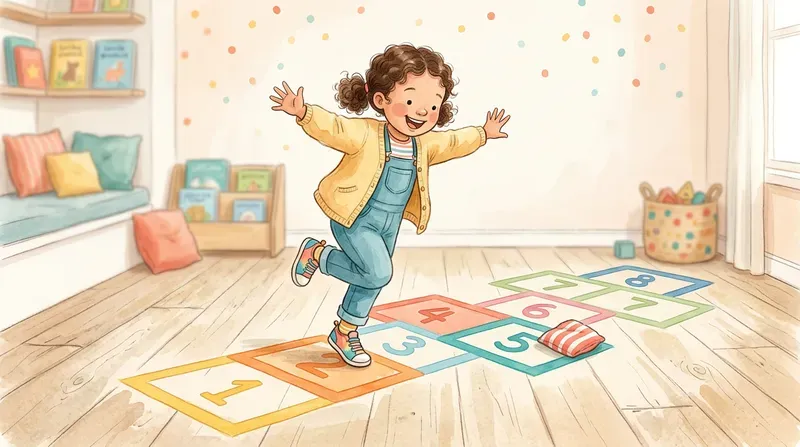
- 1Use painter's tape to make a hopscotch grid on the floor, 8 to 10 squares works well for most hallways
- 2Number each square with tape or write numbers on paper and tape them inside
- 3Show your child the pattern: hop on one foot for single squares, land with both feet for side-by-side doubles
- 4Start simple, just have them jump from square to square counting as they go
- 5Add a beanbag or balled sock to toss and land on a number before hopping
- 6Let them play independently once they get the rhythm, most kids will repeat the course over and over
Why this works
Hopscotch builds balance, coordination, and leg strength while sneaking in number recognition and counting. The single-leg hopping is genuinely challenging for toddlers and preschoolers, they concentrate hard, which means they stay engaged. The tape grid stays put for days, so you set it up once and get multiple play sessions.
Try also
- –Use colors instead of numbers, call out a color to hop to
- –Make a shape hopscotch with circles, squares, and triangles in each space
- –Letter hopscotch, call out a letter and they hop to it
- –Add animal movements: frog hop to 3, bear walk to 5, crab walk to 7
- –For older kids, make a math hopscotch where they hop to the answer of simple addition
Use painter's tape that won't damage floors. Clear the area of furniture with sharp corners. Socks can be slippery, barefoot is safest.