Play ideas
Fine Motor Activities for Toddlers
Your toddler doesn't need special toys or structured lessons to build hand strength. Sorting pom poms, threading noodles, peeling stickers, squishing play dough. These everyday games quietly develop the coordination needed for writing, getting dressed, and eating independently. The best part? Your child thinks they're just playing.
These 24+ fine motor skill games use common household items and work for ages 1 to 4. Whether your toddler is just learning to stack blocks or already threading beads, you'll find activities matched to their level. Many double as sensory play or quiet activities, great for calm-down time or when you need a few minutes of peace. For a contained, high-practice setup, start with play dough activities.
Every game on this page is the kind of play that occupational therapists actually recommend. The difference between a fine motor "drill" and a fine motor "game" is fun, and when it's fun, your child does it longer, which means more practice without anyone noticing.
What Are Fine Motor Skills?
Fine motor skills are the small, precise movements of the hands and fingers: pinching, gripping, threading, turning, and squeezing. Every time your child picks up a Cheerio, turns a page, or stacks blocks, they're using (and strengthening) these muscles.
These are the same skills behind buttoning a shirt, zipping a jacket, holding a pencil, and using scissors. Between ages 1 and 4, these muscles develop rapidly, and research consistently shows that hands-on play builds them faster than worksheets or screen-based alternatives.
Milestones by Age
Top 8 Fine Motor Games by Skill Type
Each game targets a different grip or hand movement.
Fine Motor + Sensory Play: Why They Go Together
Many of the best fine motor activities are also sensory experiences. When your toddler scoops rice, squishes play dough, or transfers water with a spoon, they're building hand strength while processing textures, temperatures, and weights. This dual-input strengthens the brain-hand connection faster than either type of play alone.
Rice & Bean Bins →
Scoop, pour, and hide objects in dry rice
Water Transfer →
Move water between bowls with spoons and sponges
Play Dough Squish →
Roll, flatten, poke, and tear for hand strength
Dry Pouring Station →
Pour rice or pasta between containers for wrist control
See more: Sensory Activities for Toddlers →
All Fine Motor Activities
24 activities. Scroll or browse by tag.
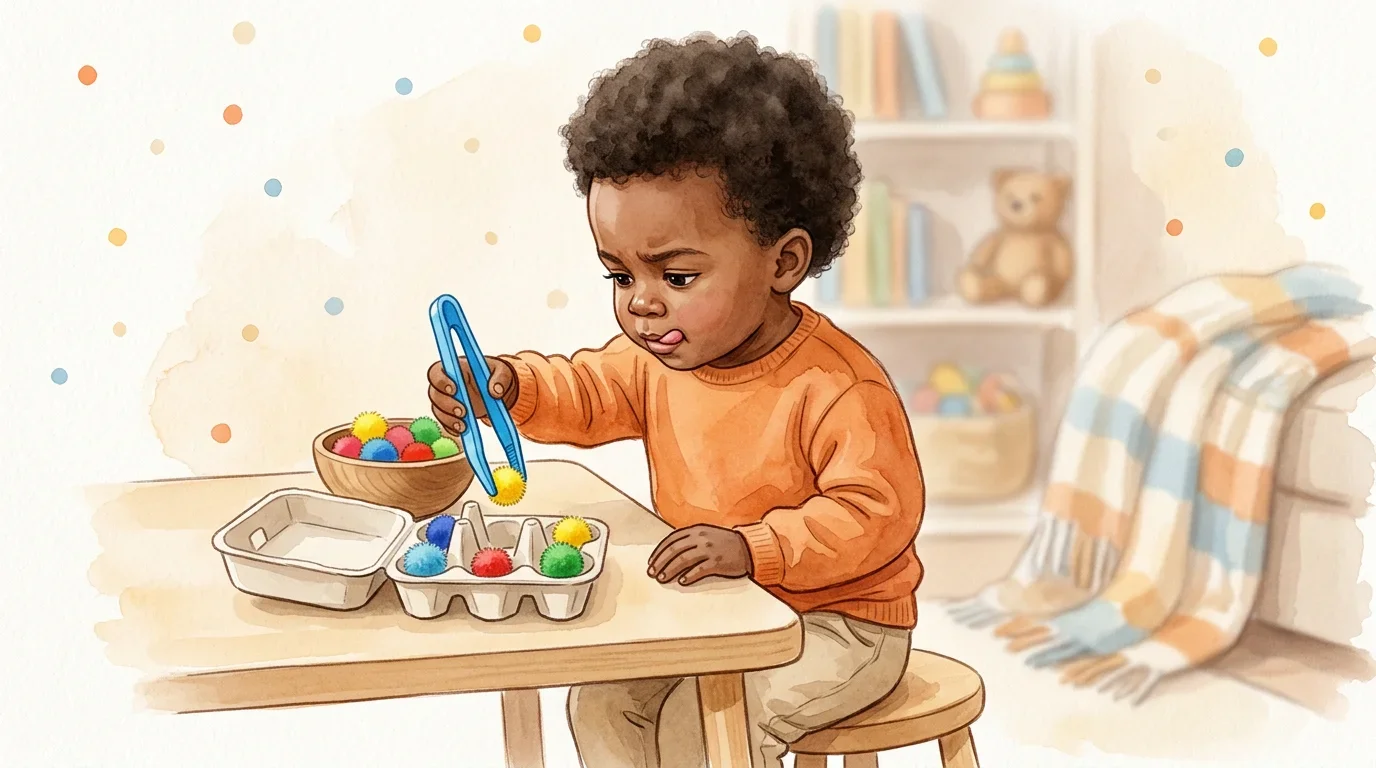
Featured fine motor activities

Button Art Pictures
- Age
- 3–6 years
- Time
- 15–30 min
- Energy
- Low-energy
- Mess
- Some mess
You'll need: Various buttons, Paper, Glue +1 more

Coin Sorting Bank
- Age
- 3–6 years
- Time
- 10–20 min
- Energy
- Low-energy
- Mess
- No mess
You'll need: Various coins, Containers for sorting, Piggy bank (optional)
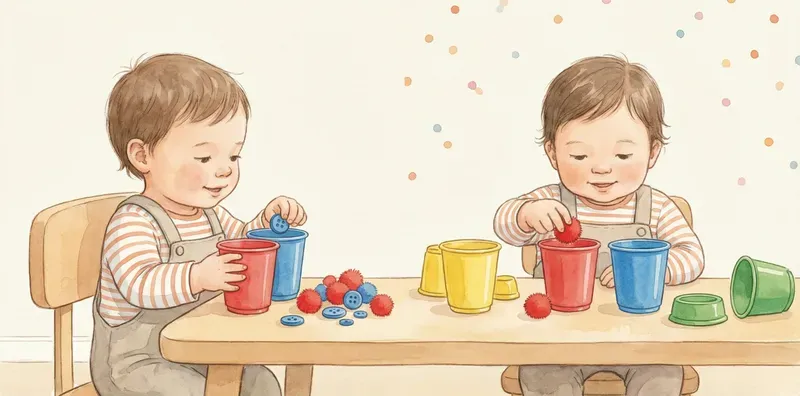
Color Sorting Cups
- Age
- 1–4 years
- Time
- 5–15 min
- Energy
- Low-energy
- Mess
- No mess
You'll need: Colored cups or bowls (3-5 colors), Small colorful items (pom poms, blocks, crayons, buttons), Tongs or spoon (optional)
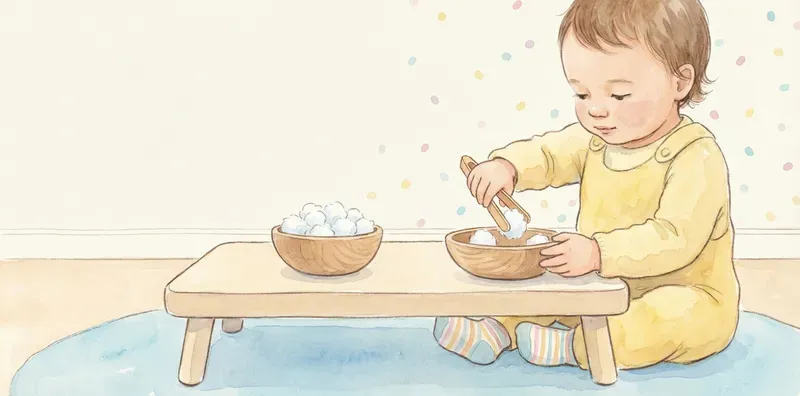
Cotton Ball Transfer
- Age
- 2–4 years
- Time
- 5–15 min
- Energy
- Low-energy
- Mess
- No mess
You'll need: Cotton balls, Two bowls, Spoon or tongs
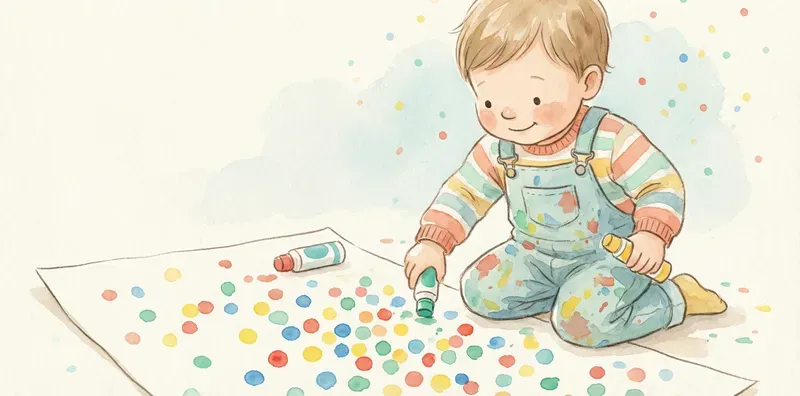
Dot Marker Art
- Age
- 1–5 years
- Time
- 10–25 min
- Energy
- Low-energy
- Mess
- No mess
You'll need: Dot markers or bingo daubers, Paper
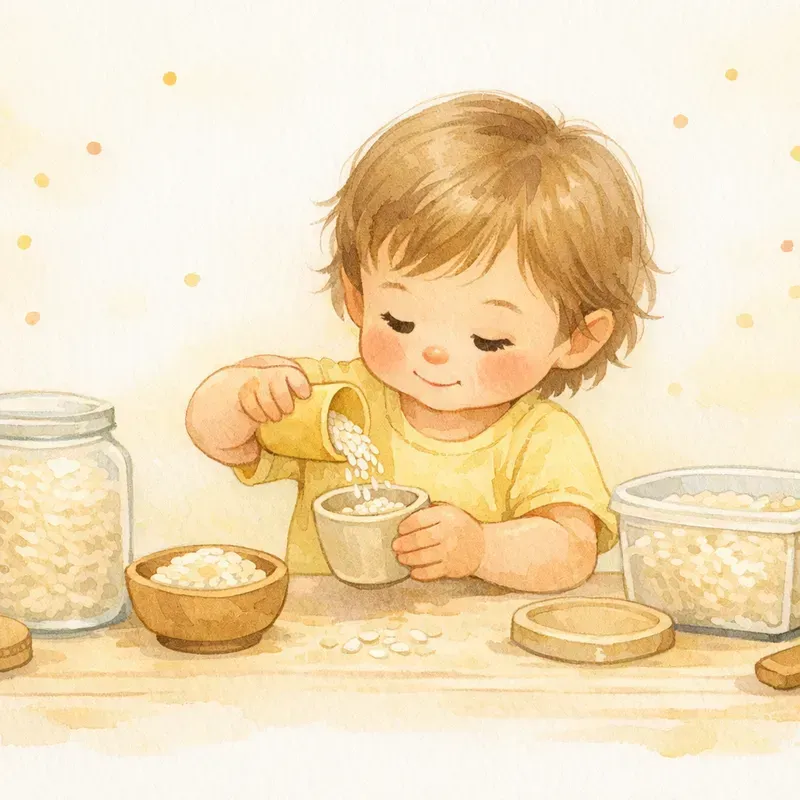
Dry Pouring Station
- Age
- 1–3 years
- Time
- 10–20 min
- Energy
- Low-energy
- Mess
- Some mess
You'll need: Dried beans, rice, or pasta (2-3 cups), Various containers (cups, bowls, jars), Spoons, funnels, scoops +1 more
7 Tips for Fine Motor Play with Toddlers
- 1Start with big, work small. Begin with large objects (blocks, big crayons, pom poms) and gradually introduce smaller ones (beads, tweezers, buttons) as their grip strengthens.
- 2Make it a game, not a drill. Sorting pom poms into a muffin tin is more engaging than "practice your pincer grasp." The motor benefit is the same. The fun keeps them going longer.
- 3Offer a variety of tools. Tongs, tweezers, clothespins, spoons, chopsticks. Each requires a different grip. Rotating tools builds different muscle groups in those tiny hands.
- 4Don't correct their grip. Toddlers develop their grip naturally through stages. Let them hold crayons with a fist. The mature pencil grip emerges around age 4-5 without forcing it.
- 5Celebrate effort, not results. "You picked up that tiny bead!" matters more than whether the threading looks neat. Confidence drives practice.
- 6Combine with sensory play. Activities that engage touch (rice bins, water transfer, play dough) strengthen fine motor skills while also processing sensory input, a double benefit.
- 7Follow their interest. If they love stickers, do more sticker play. If they gravitate toward sorting, set up more sorting games. Engaged toddlers practice longer.
More ideas in this collection
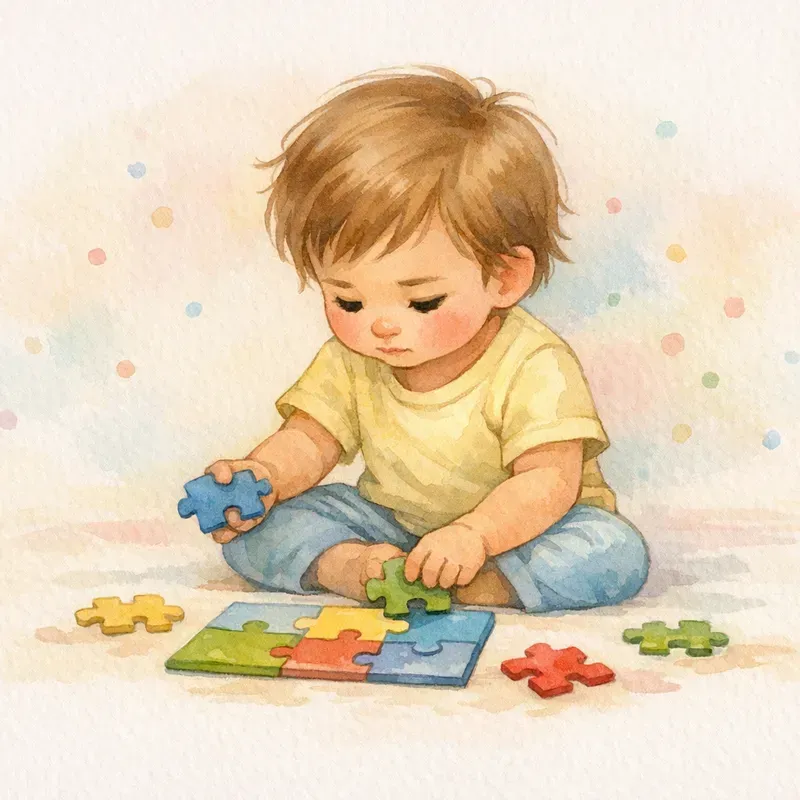
Floor Puzzle Time
1–5 years · 10–25 min · Indoor · Low energy
Puzzles build spatial reasoning, patience, and problem-solving.
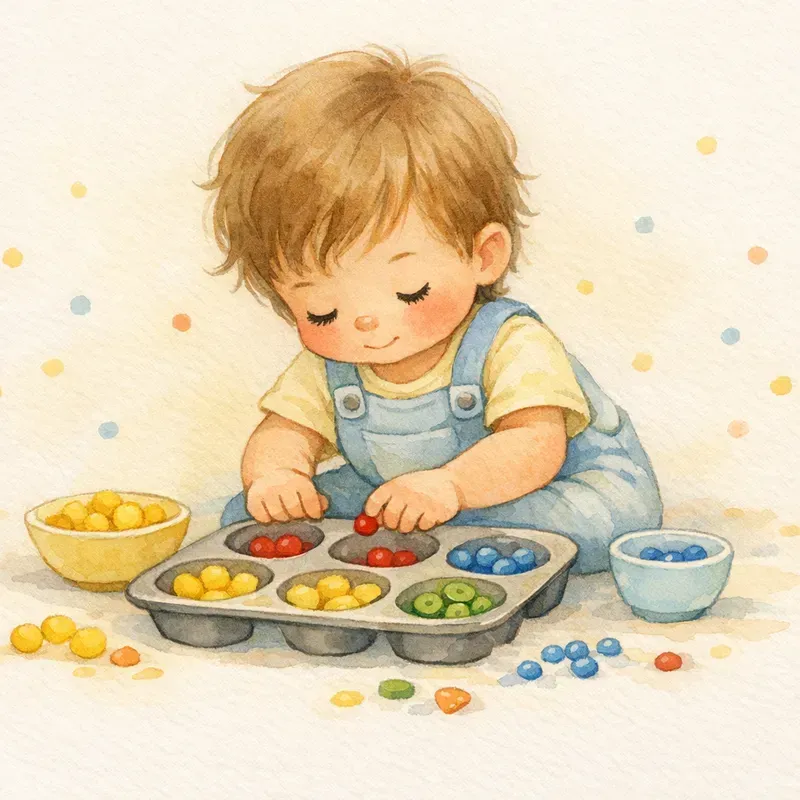
Muffin Tin Sorting
1–4 years · 10–20 min · Indoor · Low energy
Placing one item per cup teaches one-to-one correspondence, a foundational math concept that children need before they can count meaningfully. The pinch-and-drop motion builds the same finger strength and precision needed for writing. And because the muffin tin provides built-in structure (fill each cup!), toddlers stay focused longer than with open-ended sorting tasks.
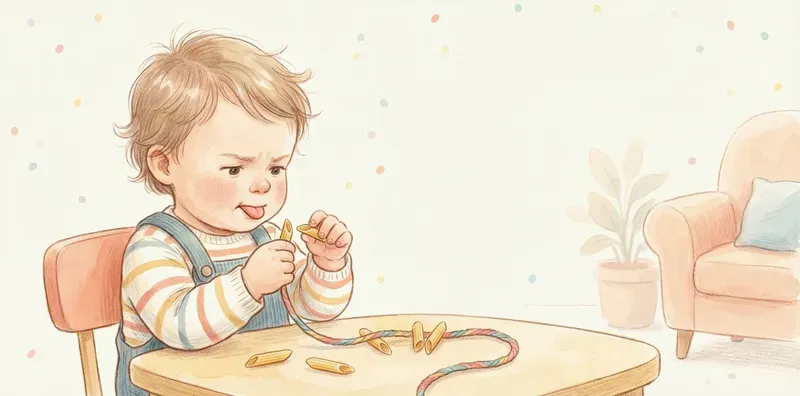
Noodle Threading
2–5 years · 10–20 min · Indoor · Low energy
Threading requires both hands working together in different roles (one holding, one pushing), which builds bilateral coordination. Lining up the string with the pasta hole demands precise hand-eye coordination and spatial awareness. It's also one of the most patience-building fine motor activities: each noodle requires careful, focused effort, teaching toddlers to persist through a multi-step task.
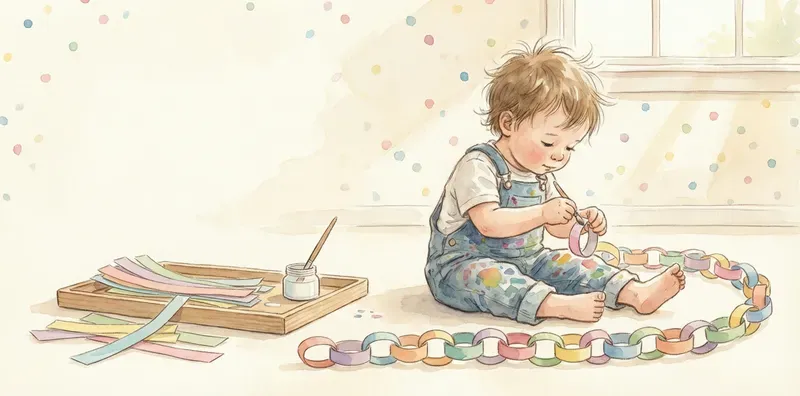
Paper Chain Making
3–6 years · 10–25 min · Indoor · Low energy
Repetitive craft teaches patterns while creating decoration.
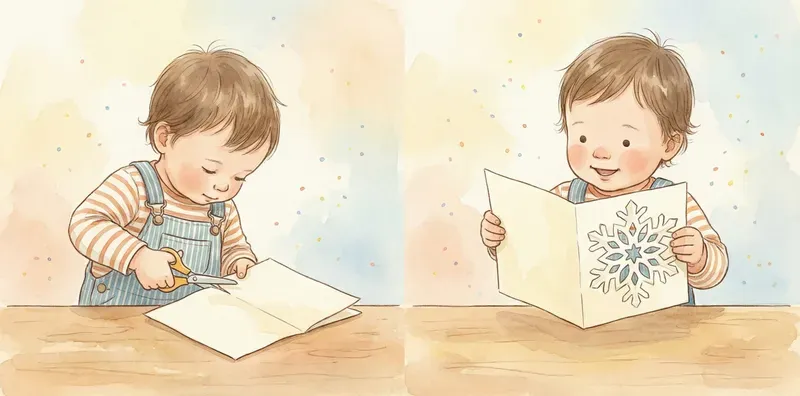
Paper Snowflake Cutting
4–6 years · 15–30 min · Indoor · Low energy
Satisfying reveal teaches symmetry and cutting skills.
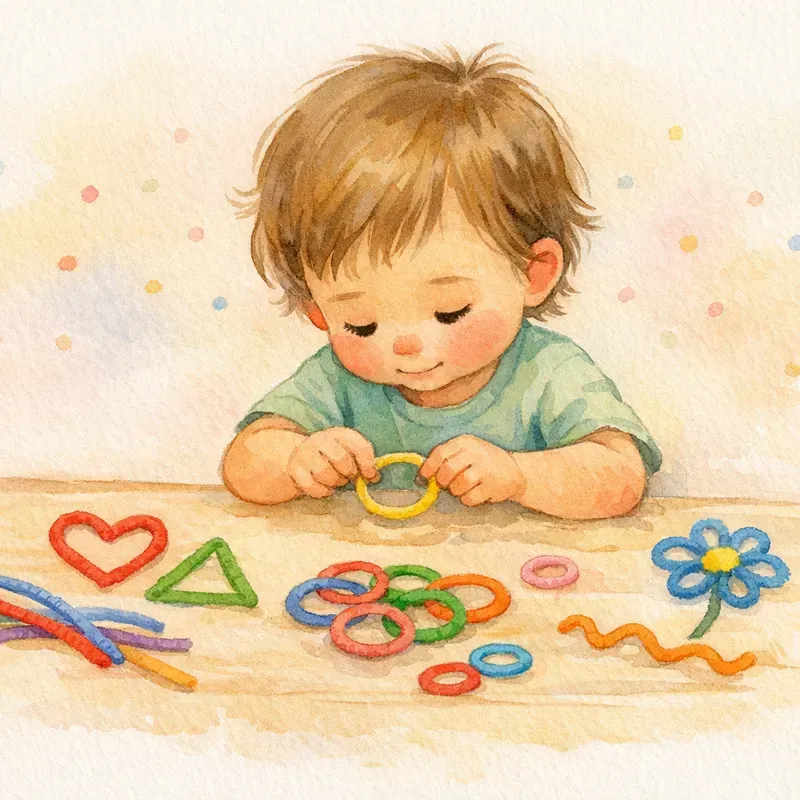
Pipe Cleaner Creations
2–6 years · 10–25 min · Indoor · Low energy
Pipe cleaners bend and hold their shape, so they give instant results that keep a child experimenting. Twisting, coiling, and threading them is concentrated fine motor and hand-strength work, the same control needed for buttons, zips, and pencils. Because there is no right answer, they also stretch creativity and early 3D thinking as your child works out how to turn a straight wire into the thing in their head.
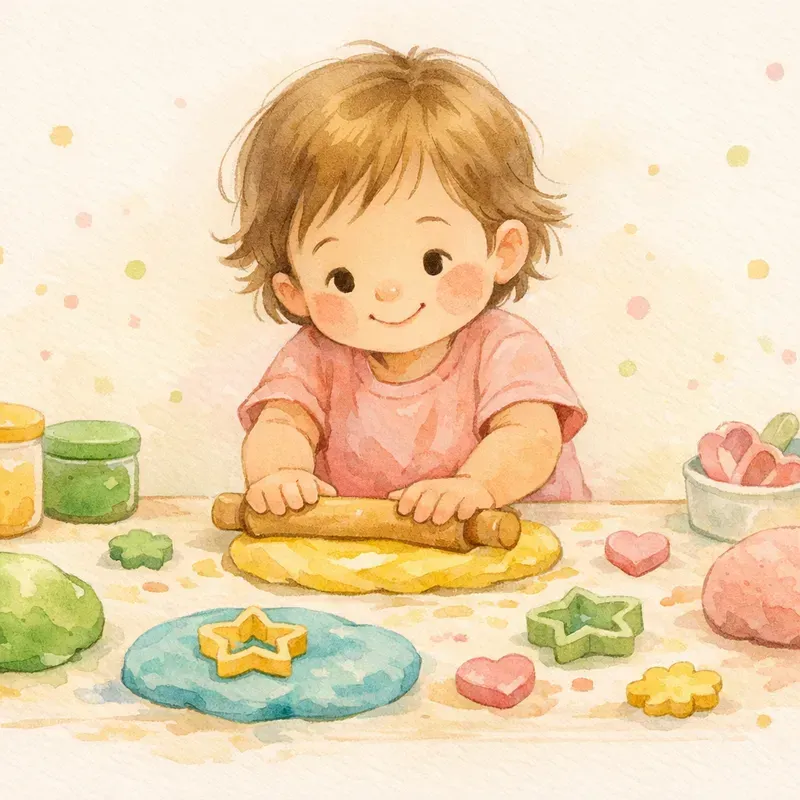
Play Dough Squish
1–5 years · 15–30 min · Indoor · Low energy
Squeezing, pinching, and rolling play dough works every small muscle in the hand. It's the same resistance training that occupational therapists prescribe for building writing-ready hand strength, but to a toddler, it's just fun. The sensory input from the soft, squishy texture is naturally calming, making this a go-to for winding down before nap or when emotions are running hot.
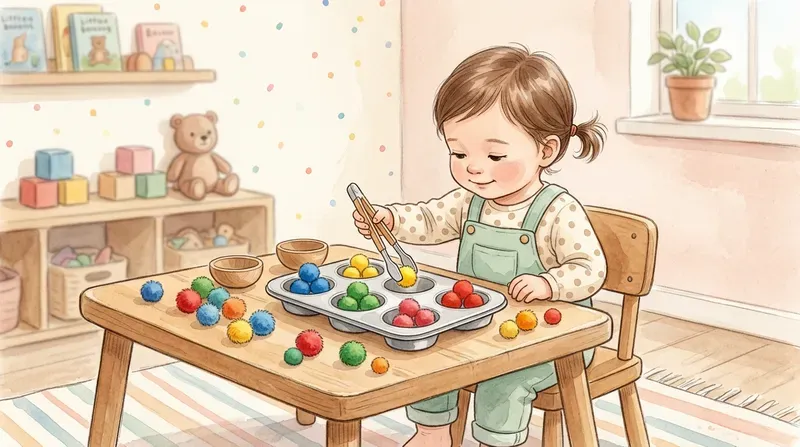
Pom Pom Sorting & Transfer
1–4 years · 10–20 min · Indoor · Low energy
Pom poms are squishy, colorful, and satisfying to grab, they don't roll away as easily as marbles and feel rewarding to pick up. Sorting by color builds early categorization skills, while the pinch-and-release motion with tongs or tweezers strengthens the same small hand muscles needed for writing and buttoning.
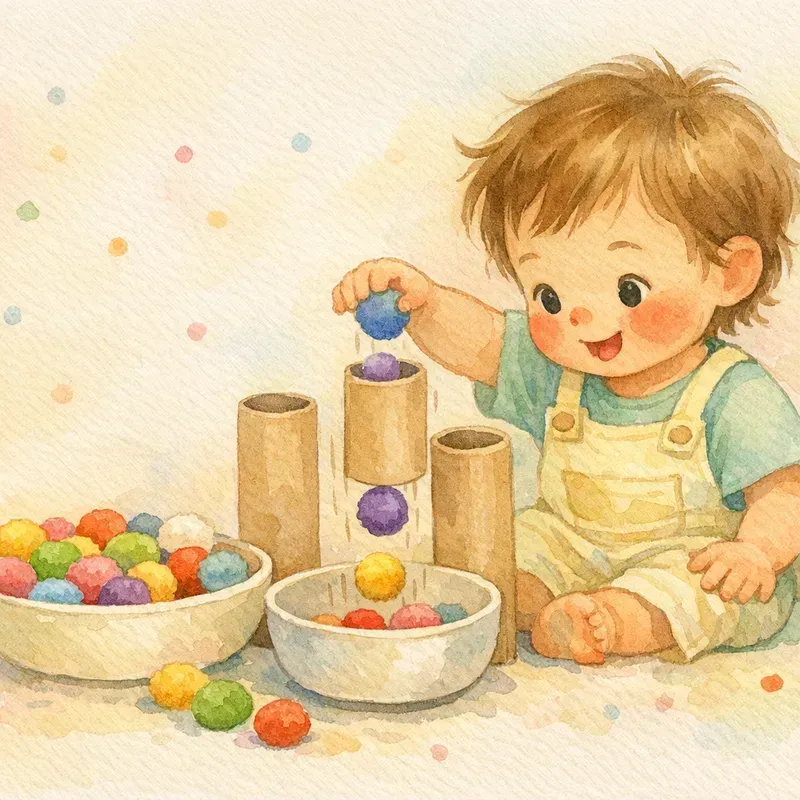
Pom Pom Tube Drop
1–3 years · 10–20 min · Indoor · Low energy
Cause and effect learning with visual tracking practice.
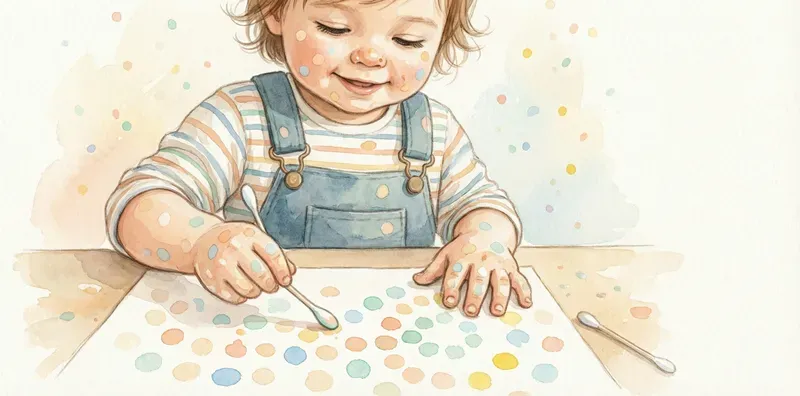
Q-Tip Dot Painting
1–5 years · 10–25 min · Indoor · Low energy
Easy grip tool allows precise art for small hands.
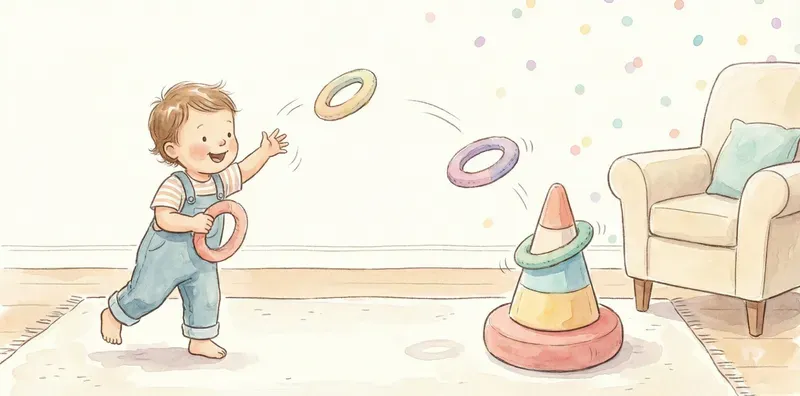
Ring Toss Game
2–6 years · 10–20 min · Indoor · Low energy
Ring toss develops hand-eye coordination, spatial awareness, and the controlled release motion that children need for throwing, catching, and eventually writing with controlled pressure. The instant visual feedback (ring on vs. ring off) gives toddlers clear success signals that motivate practice. It's also one of the few fine motor games that gets them moving and standing, making it great for active kids who won't sit for table activities.
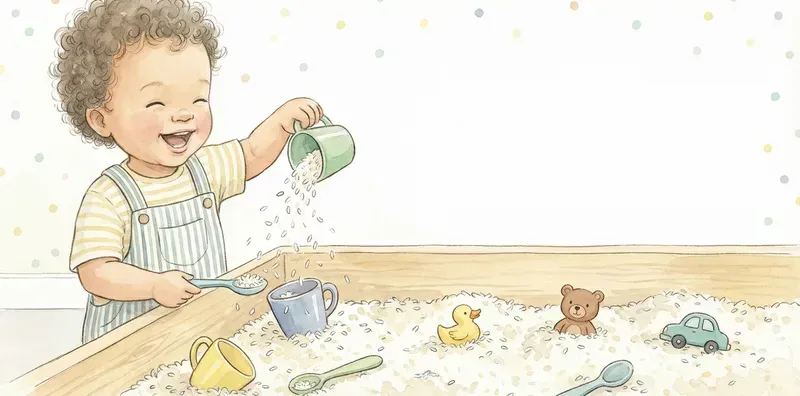
Sensory Rice Bin
1–4 years · 15–30 min · Indoor · Low energy
Running fingers through rice provides deep sensory input that calms the nervous system, while scooping and pouring build the hand strength and wrist control needed for self-feeding and writing. The repetitive fill-dump-fill cycle is meditative for toddlers. It's one of those activities where they'll zone in happily while you sit nearby.
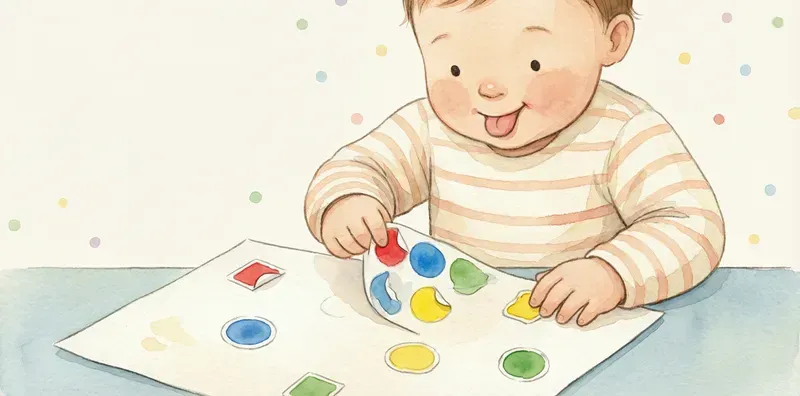
Sticker Free Play
1–4 years · 5–15 min · Indoor · Low energy
The peel-and-place motion is precision fine motor practice disguised as fun. Peeling a sticker requires pinching with the thumb and index finger (pincer grasp), controlling the pull strength, then placing it with intention. It's the same muscle coordination needed for buttoning shirts and holding pencils, and toddlers will do it for 15 minutes straight because stickers are inherently satisfying.
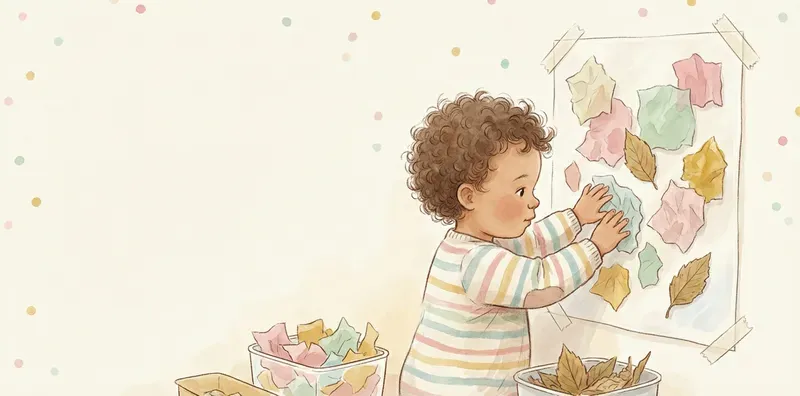
Sticky Contact Paper Collage
1–5 years · 10–25 min · Indoor · Low energy
Mess-free art builds confidence and fine motor skills without cleanup stress.
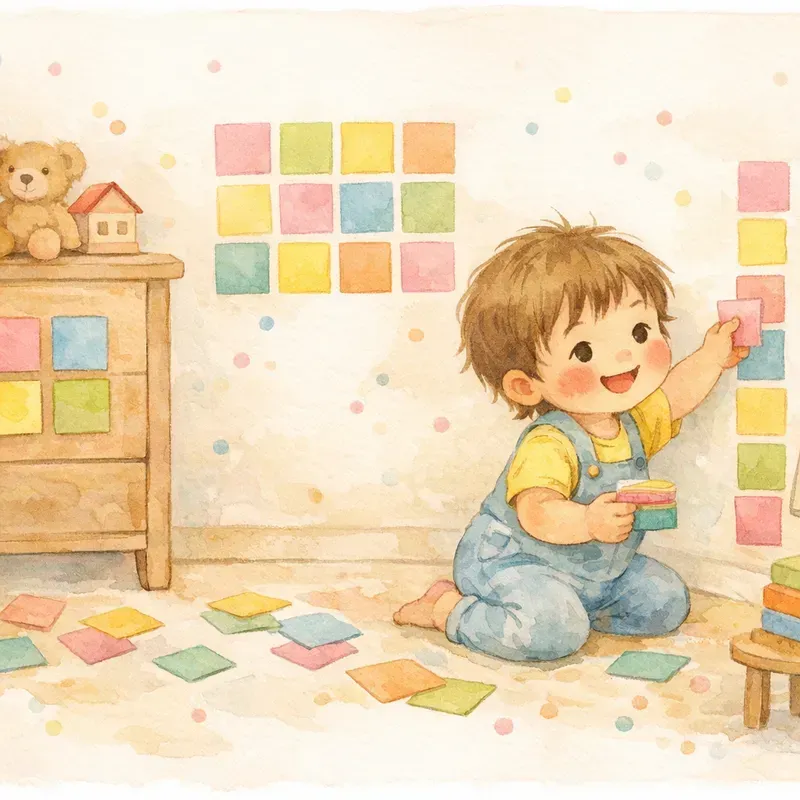
Sticky Note Fun
1–5 years · 10–25 min · Indoor · Low energy
Endless sticking and resticking with no mess.
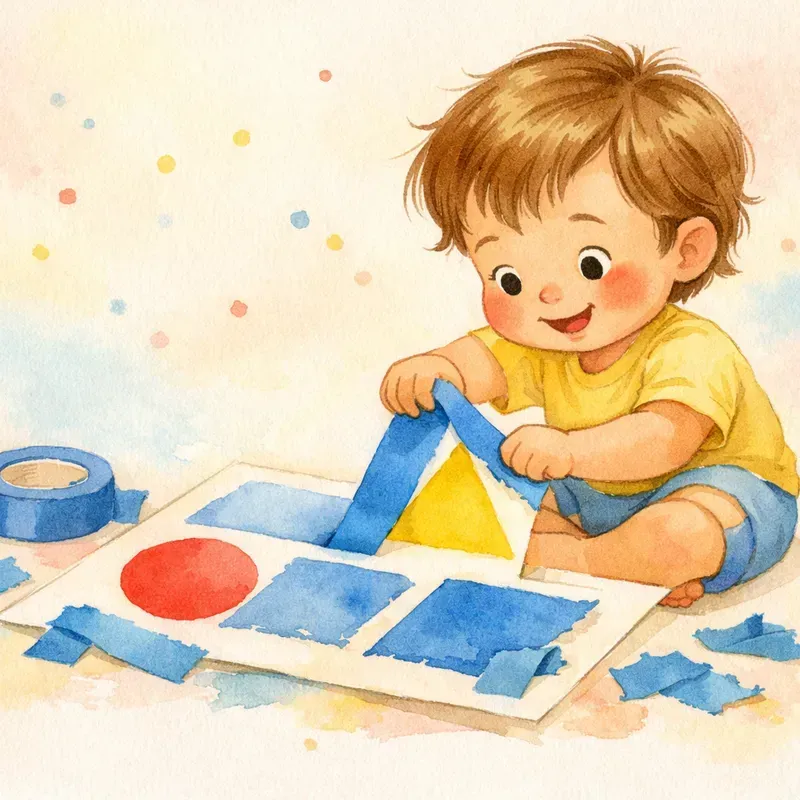
Tape Shape Peeling
2–4 years · 5–15 min · Indoor · Low energy
Peeling tape requires a precise pinch grip (thumb and index finger working together) followed by a controlled pulling motion: exactly the hand coordination needed for buttoning, zipping, and eventually writing. It's also deeply satisfying for toddlers: the visual feedback of tape lifting off a surface provides instant gratification that keeps them repeating the motion. Zero mess, zero setup, huge fine motor payoff.
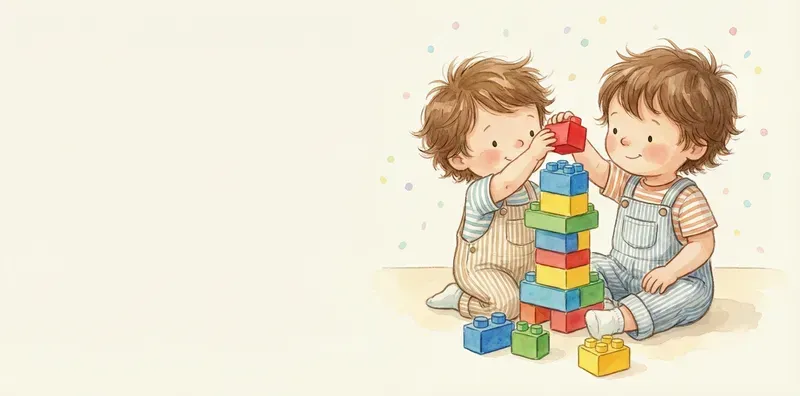
Tower Building Contest
1–4 years · 10–20 min · Indoor · Low energy
Stacking and toppling is cause-and-effect learning your child controls: they make it happen, watch the result, and do it again. Balancing each block builds the fine motor precision and hand-eye coordination that later show up in drawing and self-feeding, and counting the blocks slips in early number sense. Best of all it works when you are running on empty, because you can play it sitting down.
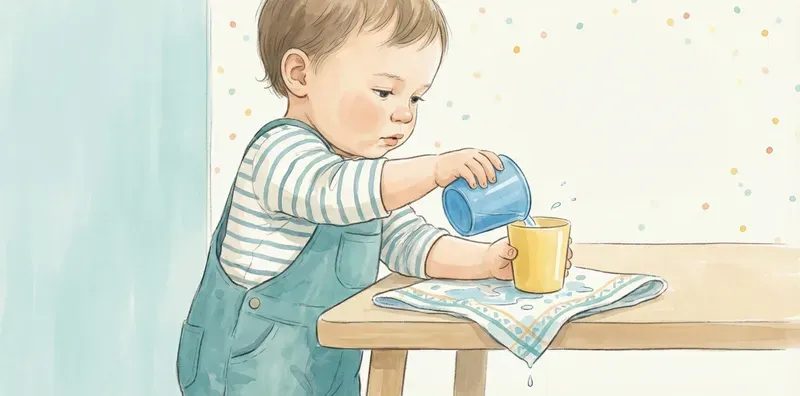
Water Transfer Game
2–5 years · 10–25 min · Indoor · Low energy
Water play is inherently calming: the sound and feel of water reduces stress in toddlers. Squeezing a sponge builds the exact hand muscles needed for pencil grip later. The baster requires a pinch-and-release motion that strengthens the thumb and index finger. And the focused, repetitive nature of transferring keeps toddlers engaged for surprisingly long stretches.
Read
Guides for this topic
Guide
Play Dough Activities for Toddlers (That Build Hand Strength)
Play dough ideas for toddlers that build the hand strength behind writing and self-care. A no-cook recipe, simple setups by age, and mess that stays contained.
Why read: A deeper, practical how-to
General
Water Play Activities for Toddlers (Indoor and Out)
Simple water play for toddlers you can run at the sink, in the tub, or in the yard. What water play builds, how to keep the mess contained, and seven easy setups.
Why read: A quick, practical read
Guide
5 Sensory Play Ideas for Fine Motor Skills
Sensory activities that double as fine motor practice. Rice bins, water transfer, play dough, and more, all with household items and zero prep stress.
Why read: A deeper, practical how-to
Related categories
Browse by age
Questions parents ask
What are fine motor skills and why do they matter?
Fine motor skills involve small muscle movements in the hands and fingers: pinching, gripping, threading, cutting, and drawing. These skills are essential for writing, buttoning clothes, using utensils, and tying shoes. Between ages 1 and 4, these muscles develop rapidly through play-based activities like sorting, threading, and squishing. Strong fine motor skills also support independence and school readiness.
What are the best fine motor skill games for toddlers?
The most effective fine motor games use simple household items: cotton ball transfer (using spoons or tongs between bowls), pom pom sorting by color, noodle threading onto string, sticker peeling and placing, play dough squishing and rolling, muffin tin sorting with small objects, and tape peeling from surfaces. Each targets different hand muscles and grips. The key is making it feel like play, not practice.
Are online games good for fine motor skills?
Screen-based games primarily train finger tapping and swiping, which uses very limited hand movements. Physical play (sorting, threading, squishing, pouring, peeling) engages the full range of hand and finger muscles that children need for writing, buttoning, and self-care. Occupational therapists consistently recommend hands-on activities over screen-based alternatives for developing fine motor skills.
How does sensory play help fine motor development?
Sensory play (rice bins, water transfer, play dough, sand) naturally builds fine motor skills because children scoop, pour, squeeze, pinch, and manipulate materials. The tactile feedback helps the brain map hand movements more precisely. When a child scoops rice with a spoon or squishes play dough, they're strengthening hand muscles while processing textures and weights. That dual benefit is something pure fine motor drills don't provide.
When should toddlers start fine motor activities?
From about 12 months, toddlers can start simple fine motor activities like stacking blocks, putting objects in containers, and finger painting. By 18-24 months, they can try transferring with spoons and peeling stickers. By 2-3 years, threading, sorting with tongs, and using dot markers become appropriate. Follow your child's interest. If they can grasp it and it's safe, it's fine motor practice.
How do I know if my toddler's fine motor skills are on track?
Every child develops at their own pace, but general milestones include: stacking 2-3 blocks by 15 months, scribbling with crayons by 18 months, turning book pages by 2 years, using scissors with help by 3 years, and drawing simple shapes by 4 years. If your child seems significantly behind these milestones or avoids using their hands during play, mention it to your pediatrician. Early support can make a big difference.
Not sure where to start?
Let the generator pick a fine motor activities idea for you, no scrolling required.
Get an activity