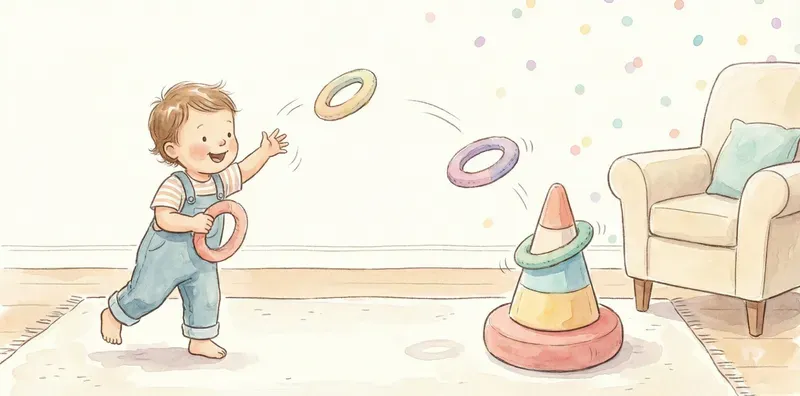
You'll need
- Paper plates (2-4, centers cut out to make rings)
- Paper towel roll, bottle, or stick for the post
- Tape to secure the post
Steps
- 1Cut the centers out of 2-4 paper plates to create rings, let your child help tear out the middles if they're old enough
- 2Set up a post: a paper towel roll taped to a plate base, a water bottle, or a stick in a play dough ball
- 3Stand your child a few feet from the post and show them how to toss a ring toward it
- 4Let them throw, celebrate near-misses as much as direct hits to keep frustration low
- 5After each round, let them collect the rings and try again from the same distance
- 6Gradually move farther back as they improve, or add a second post to aim at
Why this works
Ring toss develops hand-eye coordination, spatial awareness, and the controlled release motion that children need for throwing, catching, and eventually writing with controlled pressure. The instant visual feedback (ring on vs. ring off) gives toddlers clear success signals that motivate practice. It's also one of the few fine motor games that gets them moving and standing, making it great for active kids who won't sit for table activities.
Try also
- –Use pool noodle slices or ribbon rings instead of paper plates for softer, quieter throws
- –Set up multiple posts with different point values, '1 point, 2 points, 3 points!'
- –Move farther back after each successful toss for progressive difficulty
- –Decorate the rings with markers before playing, adds a craft element to the setup
- –Play in teams or take turns with a sibling, builds turn-taking and counting skills
Use soft materials. Keep distance appropriate for skill level.