Skip to content

Play recipe

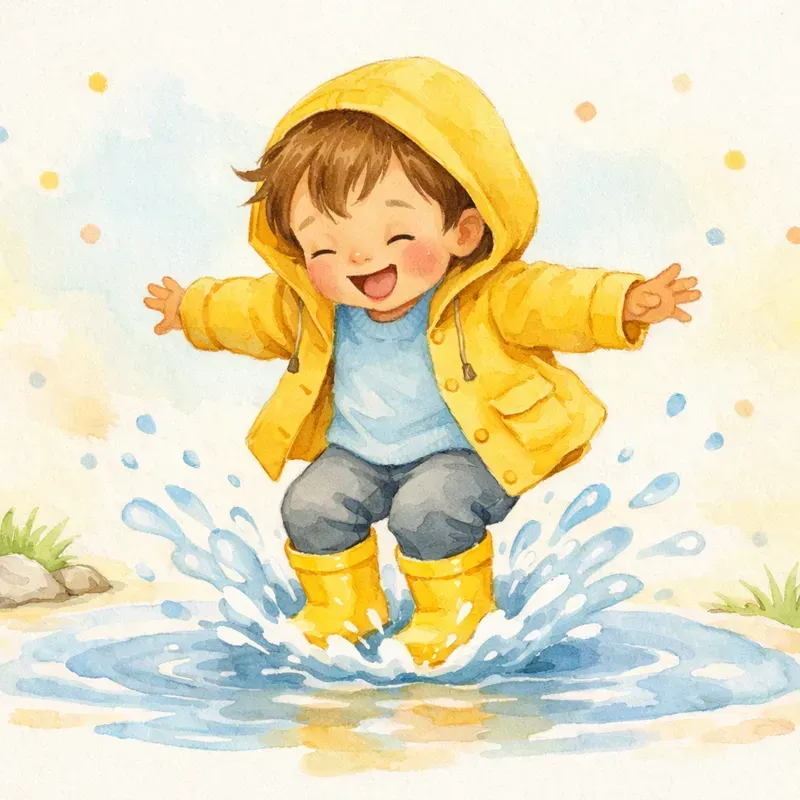
Puddle Jumping

Age1–6 years
Time10–30 min
MessSome mess
EnergySome energy
SettingOutdoor
Puddle Jumping

You'll need

  • Rain boots
  • Rain jacket (optional)
  • Puddles!

Steps

  1. 1Put on boots after rain
  2. 2Find puddles outside
  3. 3Jump in them!
  4. 4Splash and stomp freely

Why this works

Stomping and splashing gives big sensory input and an easy way to burn energy. The rules could not be simpler, so it holds their attention with zero setup from you.

Try also

  • –Throw rocks to make splashes
  • –Measure puddle depths with a stick
  • –Look for reflections

Check puddle depth first. Avoid street puddles. Change wet clothes promptly.
A closer look

After rain, the puddles are the activity. Jumping gives a big, satisfying splash for very little effort, so even a tired toddler gets a burst of movement and a lot of sensory feedback from the cold water, the sound, and the spray.

Different puddles behave differently. A shallow one sprays wide, a deep one goes up the legs, a muddy one turns brown. Comparing them gets toddlers noticing and talking about cause and effect without any setup.

Make it easier

  • Hold hands for the first few jumps, or let them stomp from standing instead of jumping.
  • Start with small, shallow puddles on a path, where the footing is flat and predictable.
  • Go out with spare socks and a towel ready, so wet feet don't end the fun early.

Make it harder

  • Measure each puddle with a stick and guess which will make the biggest splash.
  • Jump from one puddle to the next without touching the dry ground in between.
  • Drop leaves or small sticks in and watch whether they float or sink.

Skills this builds

Jumping with both feet together is a gross motor milestone around age two, and puddles give that practice a clear target.

Common questions

Is puddle jumping safe in any weather?
Skip it during thunder and lightning, and avoid puddles near roads or with oil sheen. Check depth with your own boot first. In cold weather, keep sessions short and change wet clothes straight away.
What if we don't have rain boots?
Old sneakers or water shoes work for shallow puddles. Accept that the feet will get wet, bring dry socks, and keep it short. Waterproof trousers or rain pants help more than boots on a cold day.

More activities like this

Read

Guides that go with this

Browse by category