Making Letters With Your Body: Best Alphabet Game
Teach letter recognition through whole-body movement. How to play, why kinesthetic learning works, and 10+ variations for ages 2-6.
Your child is bouncing off the walls and you need to burn some energy, but you also wouldn’t mind sneaking in a little learning. Making letters with your body is one of those rare activities that does both at the same time. No worksheets, no sitting still, just whole-body movement that happens to build letter recognition.
Why Whole-Body Letters Work Better Than Flashcards
When your child shapes their body into the letter T, arms stretched wide, standing tall, they’re not just seeing the letter. They’re feeling it. That’s kinesthetic learning, and research shows it creates stronger memory traces than visual learning alone.
Think about it: a P and a B look almost identical on paper. But when you form them with your body, they feel completely different. That physical distinction is what helps letter recognition click, especially for kids who struggle to sit and focus on worksheets.
It’s also a sneaky gross motor workout. Balancing in letter poses builds core strength, body awareness, and coordination, all while your child thinks they’re just playing a game.
How to Play: Body Letter Making
The basic version is beautifully simple. All you need is clear floor space and a willing kid.
- Start with straight lines. I (stand straight, arms at sides), T (arms wide), and L (one arm up, one to the side) are the easiest letters to form.
- Call out a letter and give your child a moment to figure it out before helping. The thinking is part of the learning.
- Move to curves. C (bend sideways into an arc), O (curl into a ball on the floor), S (stand and make a wiggle shape).
- Add letter sounds. As they form each shape, say the sound together: “S says sssss” while making the S. This bridges movement to phonemic awareness.
- Team up for letters that need two people. M, W, and H are fun to build together.
- Spell words. Start with their name, one letter at a time. Then try MOM, DAD, CAT.
Get the full step-by-step with all variations:
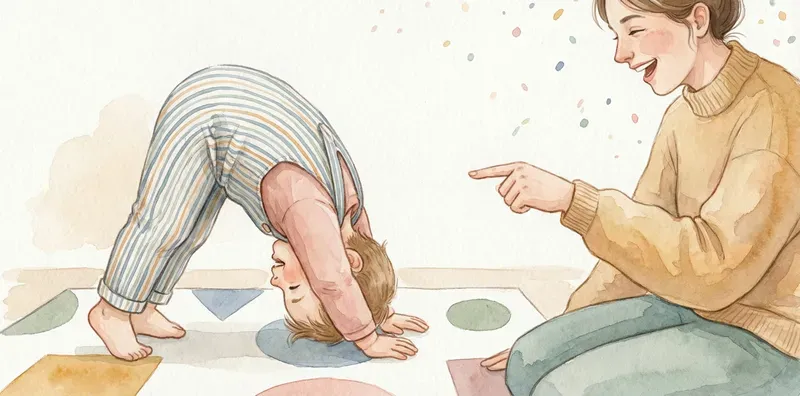
Body Letter Making - Full Activity Guide
7 steps, 7 variations, ages 3-6
Level Up: Alphabet Freeze Dance
If your child loves music (and what toddler doesn’t?), this variation is even more engaging. It combines a dance party with letter formation, so they get the energy burn of dancing and the literacy practice of body letters.
- Put on some music with a good beat.
- Let them dance freely.
- Pause the music and call out a letter.
- They freeze in that letter shape.
- Resume, dance, repeat with a new letter.
The freeze moment is the magic. It creates a micro-challenge that keeps kids locked in. They’re listening for the pause and thinking about which letter to form, all while having the time of their lives.
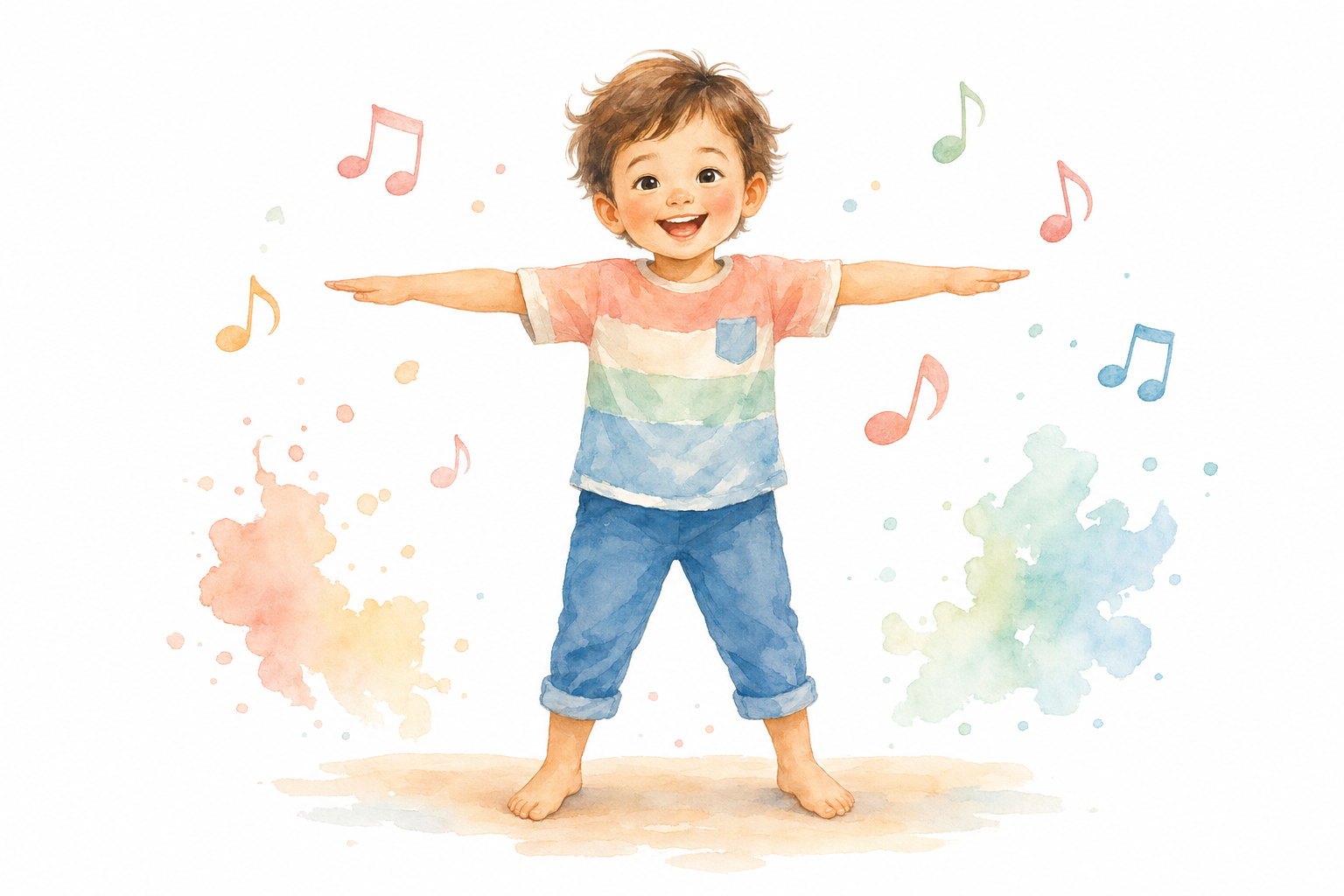
Alphabet Freeze Dance - Full Activity Guide
Music + movement + letters, ages 2-6
Tips by Age
- Ages 2-3: Focus on the freeze dance version. At this age, the movement and music matter more than letter accuracy. Celebrate any attempt at a shape. Stick to I, T, X, and O.
- Ages 3-4: The sweet spot for body letter making. They can handle most straight and simple curved letters. Add letter sounds (“this is S, it says sssss”) to start building phonemic awareness.
- Ages 5-6: Ready for spelling words, team letters, and the “spotlight show” variation where they perform letters while others guess. They can also try making uppercase and lowercase versions.
10 Variations to Keep It Fresh
- Photo alphabet book: Take a photo of each letter pose and print or assemble a digital collage.
- Spell your name: Work through their name one letter at a time. Instant personalization.
- Floor letters: Lie down to form letters. S, B, and D are much easier on the ground.
- Number shapes: Try 1, 4, 7, and 0. Same concept, different learning domain.
- Sound freeze: Call out the letter sound instead of the name: “Freeze in the letter that says buh!”
- DJ swap: Let your child control the music and call letters while you make the shapes.
- Flashcard freeze: Hold up a letter card at each music pause so they can see the shape they’re making.
- Team letters: Two kids form M, W, or H together. Great for siblings or playdates.
- Speed round: Shorter music bursts with faster letter calls for older kids.
- Spotlight show: Take turns being the performer while others guess the letter.
More Movement Activities
If your child loves moving while learning, these activities use the same whole-body approach:
Put it into practice
Try these activities
Body Letter Making
- Age
- 3–6 years
- Time
- 10–20 min
- Energy
- Hands-on
- Setting
- Indoor
You'll need: Clear floor space, Letter cards (optional), Music player (optional, for freeze dance version)
Alphabet Freeze Dance
- Age
- 2–6 years
- Time
- 10–20 min
- Energy
- Hands-on
- Setting
- Indoor
You'll need: Music (phone or speaker), Clear floor space
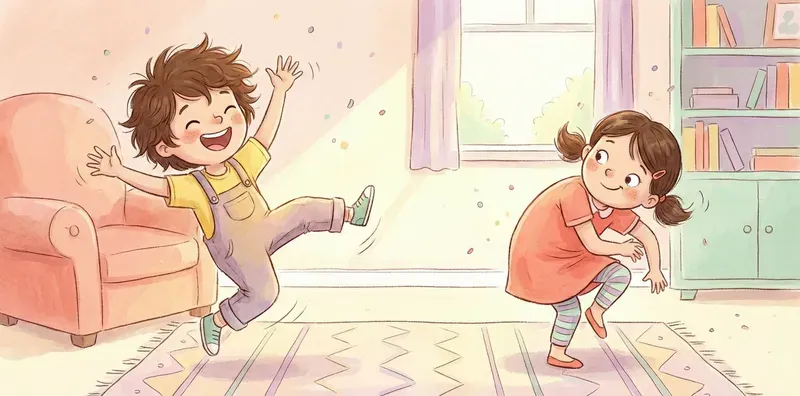
Dance and Freeze
- Age
- 1–6 years
- Time
- 5–15 min
- Energy
- Hands-on
- Setting
- Indoor
You'll need: Music (phone or speaker), Clear floor space
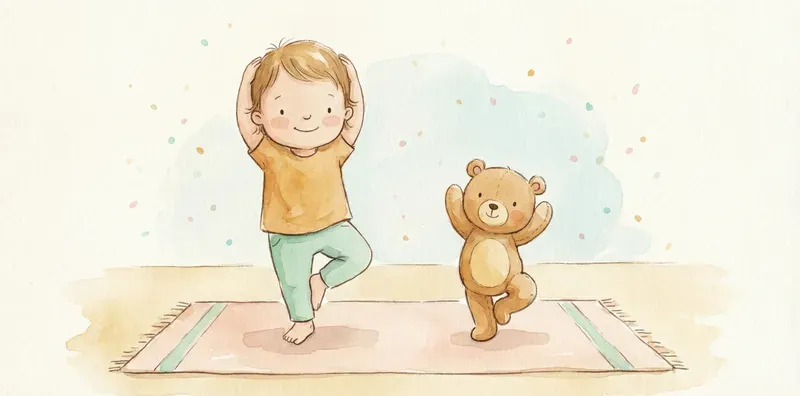
Kid-Friendly Yoga Poses
- Age
- 2–6 years
- Time
- 10–20 min
- Energy
- Low-energy
- Setting
- Indoor
You'll need: Yoga mat or soft surface (optional)
Keep reading
Related guides & topics
Common questions
What age can kids start making letters with their body?
Does making letters with your body actually help with reading?
What if my child can't form the letter shapes?
Need an idea right now?
Skip the scrolling, tell the generator your child's age and how long you've got.
Get an activityStay stocked with ideas
A few fresh play ideas, every now and then.
Practical activities and short parenting reads, no spam, no fluff, unsubscribe anytime.
Written by the TinyPlay team
We're parents who got tired of complicated activity ideas. Everything here is practical, low-prep, and built around how toddlers actually play, no ads in your face, no sign-up walls, no Pinterest pressure.