Skip to content

Play recipe

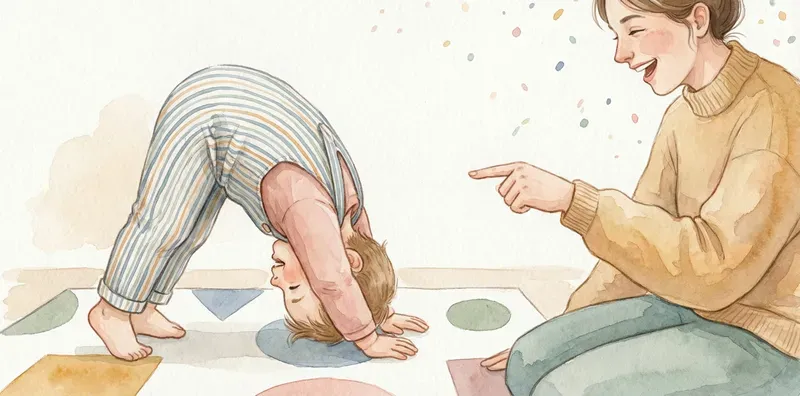
Body Letter Making

Age3–6 years
Time10–20 min
MessLow-mess
EnergySome energy
SettingIndoor
Body Letter Making

You'll need

  • Clear floor space
  • Letter cards (optional)
  • Music player (optional, for freeze dance version)

Steps

  1. 1Start with straight-line letters that are easiest to form: I (stand straight, arms at sides), T (arms out wide), and L (one arm up, one to the side)
  2. 2Call out a letter and let your child try to shape their body into it, give them a moment to figure it out before helping
  3. 3Move to curved letters: C (bend sideways into an arc), O (curl into a ball on the floor), S (stand and make a wiggle shape)
  4. 4Try letters that need arms and legs: X (spread everything wide), Y (arms up in a V, legs together), K (one arm up, one leg out to the side)
  5. 5Add a few more solo letters: A (feet apart, arms above head touching), V (arms up in a V), F (one arm up, one bent at chest)
  6. 6Team up for letters that need two people, M and W are fun to make together, and H needs someone to be the crossbar
  7. 7Add letter sounds: as your child forms each letter, say the sound together, 'S says sssss' while making the S shape helps connect the body movement to reading
  8. 8Spell out short words one letter at a time, start with their name, then try MOM, DAD, CAT, or DOG
  9. 9Use the printable letter pose guide below when your child gets stuck on a tricky shape

Why this works

Making letters with your body is kinesthetic learning, shaping each letter with the whole body creates stronger memory than writing alone. Kids who learn letters through movement recognize them faster and retain them longer. They physically feel the difference between a P and a B, which builds letter recognition and pre-reading skills. It's also a sneaky gross motor workout that burns energy while building literacy.

Try also

  • Ages 2-3: skip accuracy and try the freeze dance version, music and movement matter more than perfect shapes
  • Take photos of each letter pose and assemble an alphabet book or collage
  • Spell out family names, pet names, or favorite foods
  • Make numbers too, 1, 4, 7, and 0 are great starting shapes
  • Try it with a sibling or friend to form letters that need multiple bodies
  • Lie on the floor to make letters, some shapes like S, B, and D are easier lying down
  • Play 'letter freeze': dance to music, pause it, and call out a letter to form
  • Hold up letter flashcards instead of calling out letters, great for visual learners
  • Have a 'spotlight show', take turns being the performer while others guess the letter

Clear space of obstacles and sharp furniture corners. Remind kids not to overstretch or fall backward.
All 26 Body Letter Poses

Letters are grouped by difficulty. Start with straight lines, then add curves as your child gets comfortable. Not every letter needs to be perfect, approximations still build recognition. Tap the print button above to save this as a PDF reference.

Start Here, Straight Lines

All standing, all solo. Best for first sessions and ages 2-3.

I
Stand straight, arms at your sides
L
One arm up, other arm straight out to the side
T
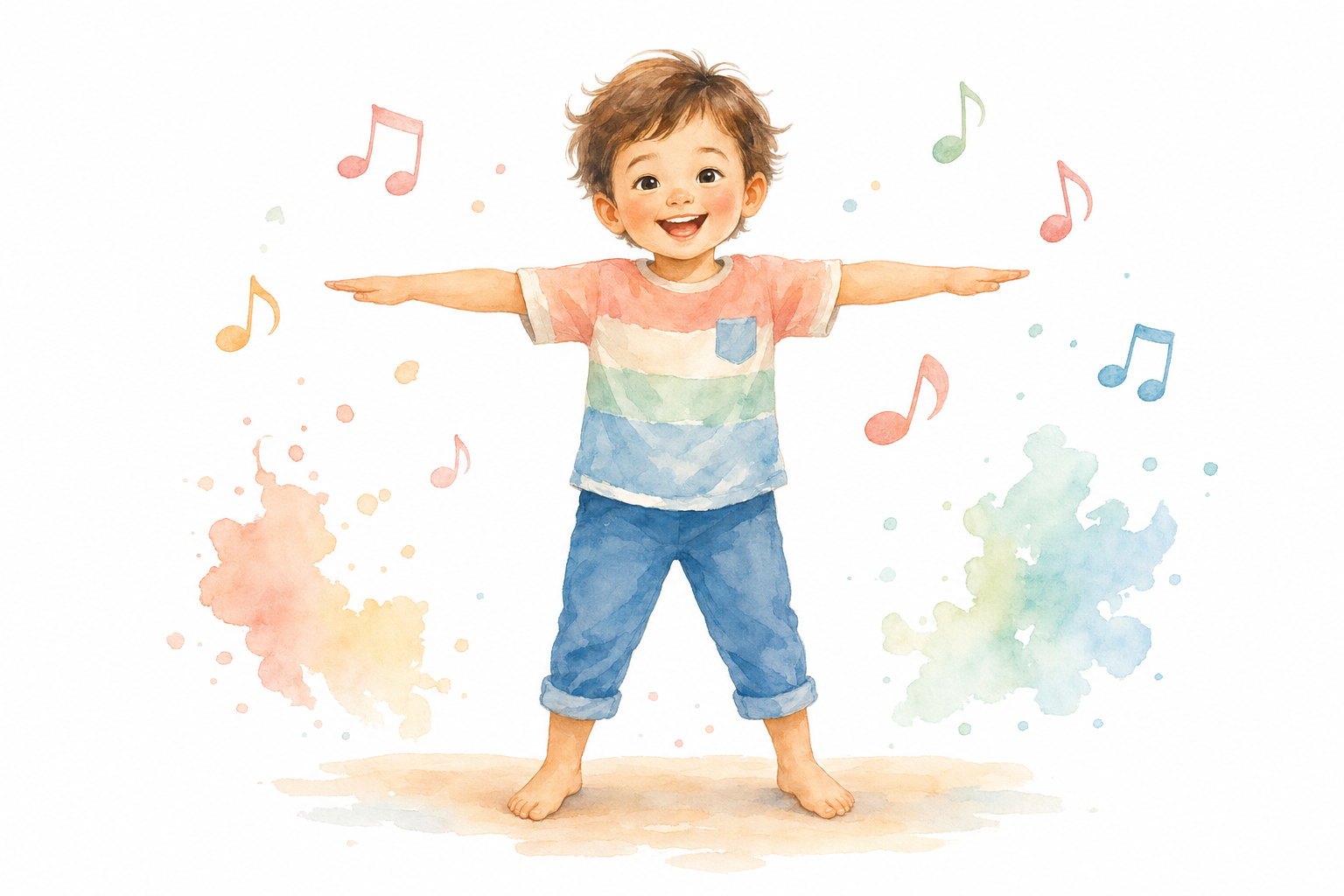
Arms stretched wide, stand tall
V
Arms up in a V above your head
X
Spread arms and legs wide like a starfish
Y
Arms up in a Y, feet together

Level Up, Curves and Bends

Solo letters that need curves, bends, or floor work. Ages 3-5.

A
Feet apart, arms above head, fingertips touching (triangle)
B
One arm curved at your side; easier lying on the floor
C
Bend your whole body sideways into a curve
D
Stand tall with one arm curving around your side
E
Stand tall, one arm out, one arm bent at waist height
F
One arm up, other arm bent forward at chest height
G
C shape with one leg poked out to the side
J
One arm hooks down; one leg steps out
K
One arm up, opposite leg out to the side
N
Stand tall with one arm high and opposite foot stepped out
O
Curl into a ball on the floor
P
One arm curved over your head like a lollipop
Q
O shape plus one leg pointing out
R
P shape with one leg kicked out to the side
S
Stand and wiggle into an S curve
U
Arms curved overhead like holding a beach ball
Z
Arms diagonal across your body like a lightning bolt

Team Letters, Grab a Partner

These work best with two people. Great for siblings or group play.

H
Two people side by side with arms as the crossbar
M
Two people each make one arch, or both arms up in peaks
W
Two people make V shapes side by side

Tips by Age

  • Ages 2-3: Try the freeze dance version with music. Movement matters more than accuracy. Stick to I, T, X, and O. Celebrate any shape attempt.
  • Ages 3-4: The sweet spot for body letter making. Add letter sounds (“S says sssss”) while forming each shape to build phonemic awareness.
  • Ages 5-6: Ready for spelling words, team letters, and the spotlight show where one person performs while others guess. Try uppercase and lowercase versions.

Add Letter Sounds

While holding each pose, chant the letter sound together: “T says tuh, tuh, T” as they stand with arms wide. This bridges body movement to phonemic awareness, the skill that connects letter shapes to reading. Even one sound per letter adds up over time.

Group and Classroom Games

Body letters work for two kids, a birthday party, or a full classroom. Here are four ways to scale the activity beyond one child:

  • Spelling relay: Split into teams. Each team member forms one letter of a word in sequence while the other team guesses what is being spelled.
  • Letter bingo: Give each child a bingo card with letter names. Call a letter, everyone makes the body shape, then marks it on their card.
  • Name challenge: Each child spells their own name, one letter at a time. The group guesses after each pose. Short names go first.
  • Brain break: Between lessons or tasks, call out three letters. Everyone freezes in each shape for five seconds. Takes under two minutes, resets focus.

Try the Music Version

Put on a song, let your child dance, pause the music, and call out a letter to freeze in. The freeze moment keeps kids listening and thinking about letter shapes at the same time.

Alphabet Freeze Dance

Questions

What age can kids start making letters with their body?
Most kids can start with simple straight-line letters (I, T, L) around age 3. By age 4-5, they can handle curved letters and team formations. Even 2-year-olds enjoy the freeze dance version where the focus is on music and movement rather than letter accuracy.
Does making letters with your body help with reading?
Yes. Research on kinesthetic learning shows that children who learn letters through whole-body movement recognize them faster and retain them longer than through worksheets alone. The physical sensation of forming a letter creates a stronger memory trace than just seeing it on paper.
What if my child can't form the letter shapes?
That's normal, especially for curved letters. Start with the easiest shapes (I, T, X) and let them approximate. The goal is connecting movement to letters, not exact poses. Lying on the floor makes many letters easier, and teaming up with a sibling or parent helps with tricky ones like M or H.
How do body letters work for a group or classroom?
Split kids into teams and take turns spelling words one letter at a time. The watching team guesses what is being spelled. For a whole class, try a letter relay where each child forms one letter of a word in sequence. Body letters also work as a two-minute brain break between lessons, call a letter, everyone freezes in that shape, then back to work.
Which letters should I skip for younger kids?
Start with straight-line letters only: I, L, T, V, X, and Y. These need no curves, no floor work, and no partner. Skip B, G, Q, R, and S until age 4 or so, they require curves and balance that younger kids find frustrating. Team letters (H, M, W) work for any age as long as a parent or sibling joins in.

More activities like this

Read

Guides that go with this

Browse by category

Want a different idea?

Tell the generator your child's age and how much time you've got, get a fresh play idea in seconds.

Get an activity