Indoor Gross Motor Activities (No Equipment)
Indoor gross motor activities for toddlers who need to move. Jumping, crawling, balancing, and animal walks using furniture and floor space you have.
Your toddler needs to move. The weather says no. The park is too far. The living room is smaller than you would like. Gross motor activities, the big-body movements that build strength, balance, and coordination, do not require a backyard or a gym. These seven ideas use floor space, couch cushions, and a roll of tape.
Why Indoor Movement Matters
Gross motor skills are the foundation for everything else: sitting at a table, climbing playground equipment, riding a bike, even holding a pencil with a stable core. When kids are stuck inside, they lose the natural movement opportunities that outdoor play provides. Short, structured bursts of active play fill that gap.
The activities below are sorted from highest energy to lowest. Start with something active when your child is bouncing off the walls. Save the calmer ones for after lunch or before bed. For the full collection, browse gross motor activities for toddlers.
High Energy (Start Here)
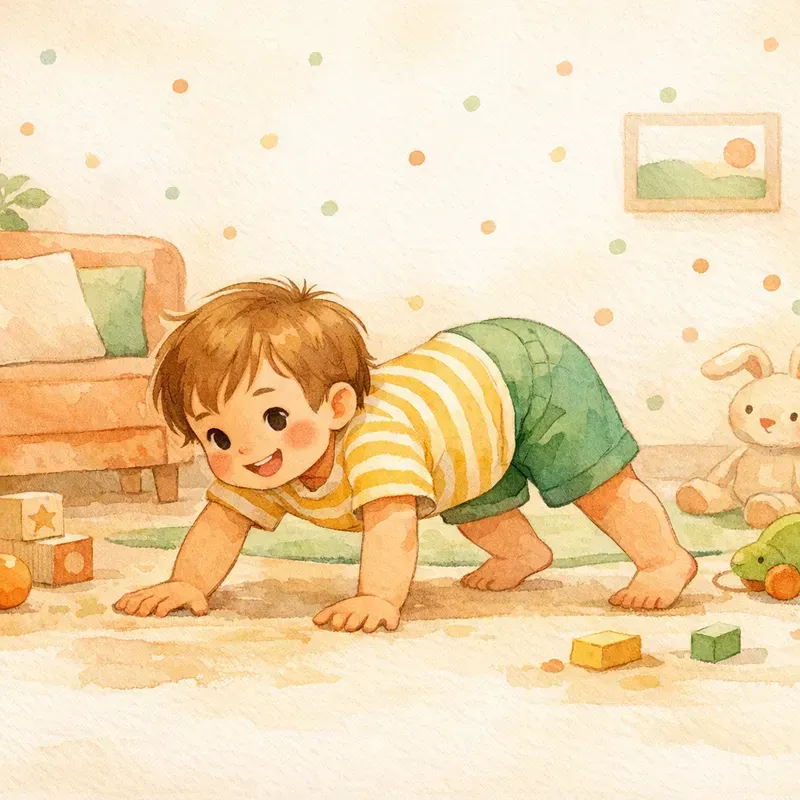
1. Animal walks
Bear crawl on hands and feet. Frog hop with both feet together. Crab walk sideways. Snake slither on the belly. Each animal uses different muscles and keeps kids engaged because they are pretending, not exercising.
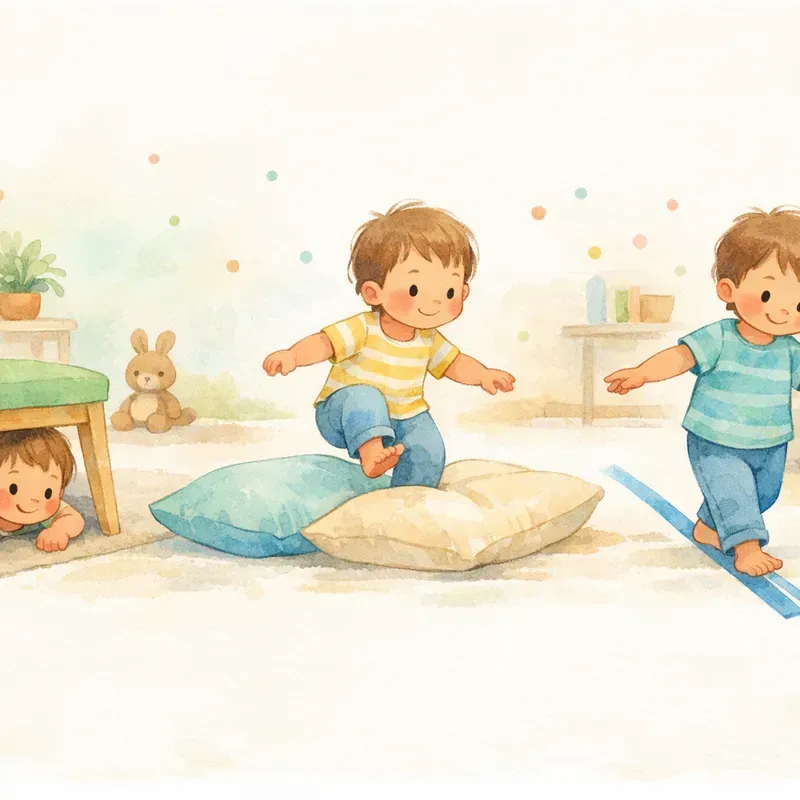
2. Obstacle course
Line up pillows to climb over, a chair to crawl under, and a hula hoop to step through. Walk the course together first, then let them run it solo. Rearrange it every few rounds so it feels new. A roll of painter’s tape on the floor can mark the path.
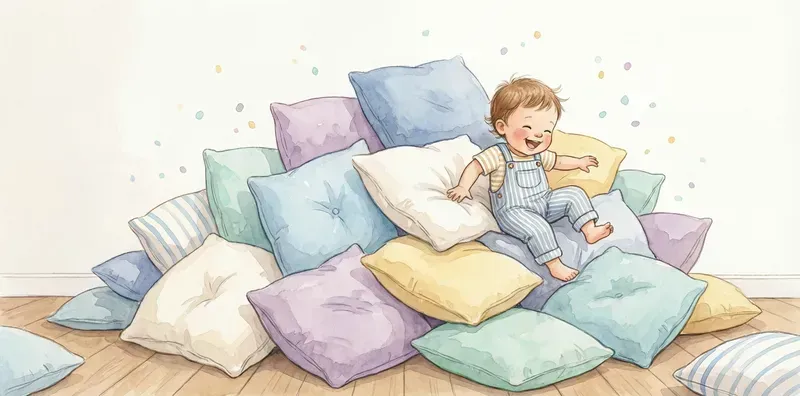
3. Pillow mountain
Pile every couch cushion and throw pillow on the floor. Climb, jump, roll, tumble. This burns a surprising amount of energy in a small space and requires zero setup beyond pulling cushions off the couch.
Medium Energy
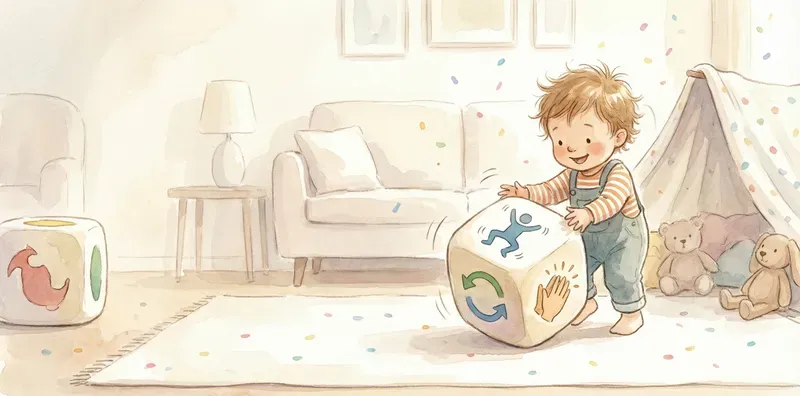
4. Action dice
Write actions on each side of a cube: jump, spin, clap, hop on one foot, touch your toes. Roll the dice, everyone does the action together. The randomness keeps it fresh. Kids can draw the actions instead of writing them.
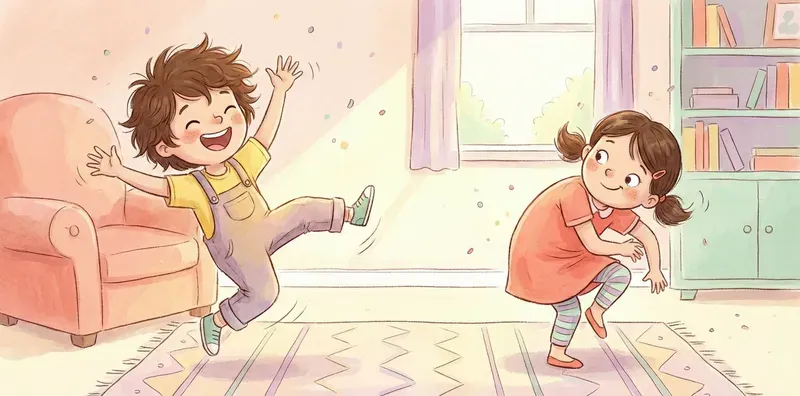
5. Dance and freeze
Play music, dance wildly, pause the music, freeze in place. Simple, effective, and works in any room with a clear floor. Add animal poses or silly faces to the freeze for variety.
6. Balloon keep-up
Tap a balloon up in the air and keep it from touching the floor. Slow enough for success, active enough to burn energy. Try using only elbows, only knees, or only one hand to change the challenge.
Low Energy (Wind Down)
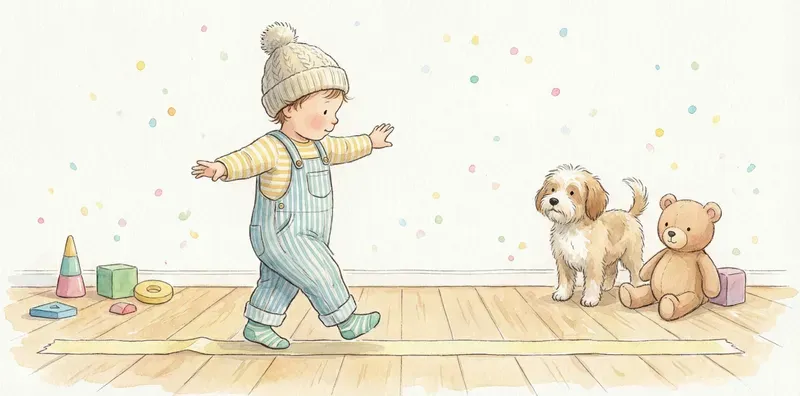
7. Balance beam
Tape a straight line on the floor. Walk along it heel to toe without stepping off. Try backwards, carrying a stuffed animal, or walking on tiptoes. Builds core strength and body awareness without running or jumping.
A Simple Indoor Movement Rhythm
You do not need a formal schedule. A rough pattern that works for most families:
- Morning: One high-energy activity (animal walks or pillow mountain) before breakfast
- Midday: Medium energy after lunch (action dice or dance and freeze)
- Afternoon: Another burst if needed, or balance beam to wind down
Three ten-minute sessions across the day is more realistic than one thirty-minute block. Toddlers move in short bursts anyway.
Safety Notes for Indoor Play
Clear the floor of tripping hazards before any active play. Push furniture against walls. Skip activities that involve stairs unless you are right there. Balloon pieces are a choking hazard, discard popped balloons immediately.
For rainy-day combinations that mix active and calm play, see rainy day activities without a store trip. For body-based learning that doubles as movement, try body letter making.
Put it into practice
Try these activities
Animal Walks
- Age
- 2–5 years
- Time
- 5–15 min
- Energy
- Hands-on
- Setting
- Indoor
You'll need: Clear floor space
Living Room Obstacle Course
- Age
- 2–5 years
- Time
- 15–30 min
- Energy
- Hands-on
- Setting
- Indoor
You'll need: Pillows, Chairs, Hula hoop or rope +1 more
Action Dice Game
- Age
- 2–6 years
- Time
- 10–20 min
- Energy
- Hands-on
- Setting
- Indoor
You'll need: Paper cube or dice, Markers
Pillow Mountain Climb
- Age
- 1–3 years
- Time
- 10–20 min
- Energy
- Low-energy
- Setting
- Indoor
You'll need: Couch cushions, Pillows, Blankets
Dance and Freeze
- Age
- 1–6 years
- Time
- 5–15 min
- Energy
- Hands-on
- Setting
- Indoor
You'll need: Music (phone or speaker), Clear floor space
Floor Balance Beam
- Age
- 2–5 years
- Time
- 5–15 min
- Energy
- Low-energy
- Mess
- Some mess
You'll need: Painter's tape or jump rope
Keep reading
Related guides & topics
Common questions
What are gross motor skills?
How much active play does a toddler need indoors?
Can gross motor activities work in a small apartment?
Need an idea right now?
Skip the scrolling, tell the generator your child's age and how long you've got.
Get an activityStay stocked with ideas
A few fresh play ideas, every now and then.
Practical activities and short parenting reads, no spam, no fluff, unsubscribe anytime.
Written by the TinyPlay team
We're parents who got tired of complicated activity ideas. Everything here is practical, low-prep, and built around how toddlers actually play, no ads in your face, no sign-up walls, no Pinterest pressure.