Rainy Day Activities for Toddlers (No Supplies)
Stuck inside with a toddler and no craft supplies? These rainy day activities use household items you already have. Cardboard, pillows, pots, and tape.
It’s raining. Your toddler is climbing the walls. You don’t have pipe cleaners or finger paint or any of the things the internet assumes you have on hand. You have cardboard, pillows, kitchen utensils, and about five minutes before someone has a meltdown. These activities are for exactly that situation.
The Household Item Approach
Most rainy day activity lists assume you have a well-stocked craft cabinet. In reality, you have a recycling bin, a couch, and a kitchen. That’s plenty. Toddlers don’t care about the materials. They care about what they can do: climb, stack, fill, pour, bang, and build. Your house is already full of things that let them do all of that.
Active Play (Burn the Energy First)
When a toddler has been cooped up inside, start with something physical. Get the wiggles out before you attempt anything that requires sitting still.
1. Pillow mountain
Pull every couch cushion, throw pillow, and blanket onto the floor in a heap. That’s it. Your toddler will climb it, jump into it, roll off it, and bury themselves in it. This burns a surprising amount of energy and is one of the few “active” activities that works in a small living room.
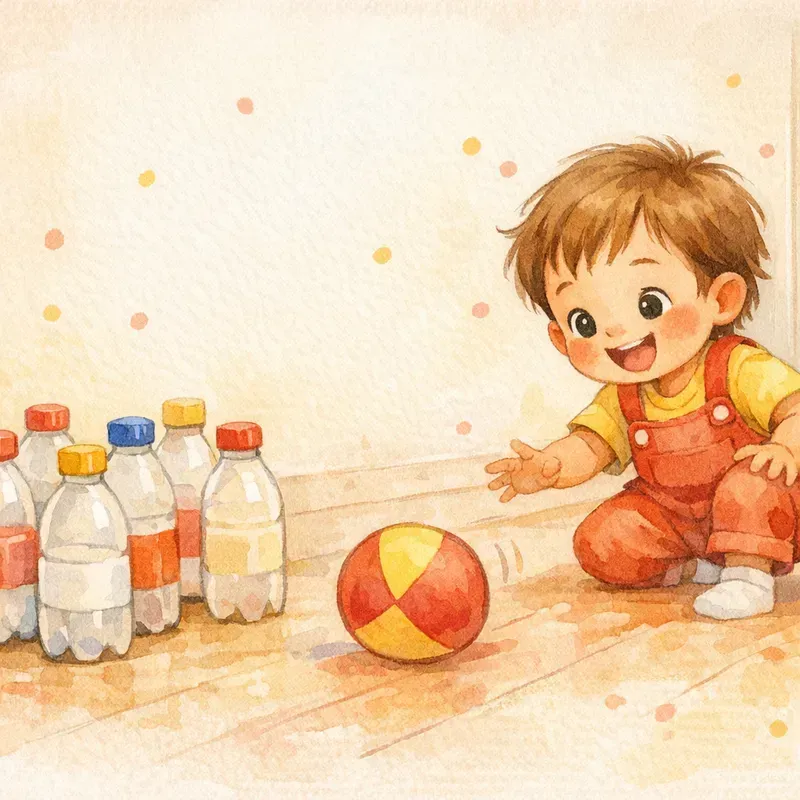
2. Indoor bowling
Line up 6-10 empty plastic bottles or tall containers in a triangle. Roll a ball (any ball, even a rolled-up sock works) and knock them down. Reset and repeat. Toddlers will do this for a remarkably long time. It’s the satisfaction of knocking things over without getting in trouble for it.
3. Kitchen band
Pots, wooden spoons, plastic containers with lids, a metal baking sheet. Give your toddler permission to bang on them. Yes, it’s loud. But it’s also rhythmic, physical, and uses both hands. If the noise is too much, try “quiet drumming” with a towel laid over the pots.
Calm Play (After the Energy Is Spent)
Once your toddler has climbed, rolled, and drummed their way through the first hour, they’ll be more willing to sit with something calmer.
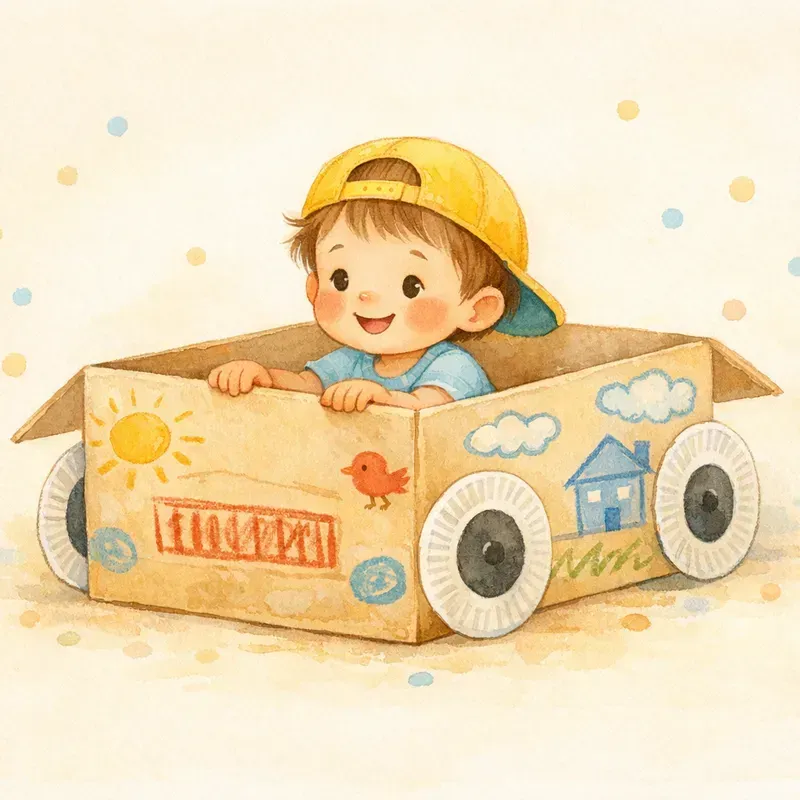
4. Cardboard box car (or boat, or house)
Any box big enough for your child to sit in becomes a vehicle. Hand them crayons or markers to draw wheels, windows, and a steering wheel. Add a paper plate steering wheel if you want to go the extra step. They’ll sit in there for ages, driving to imaginary places.
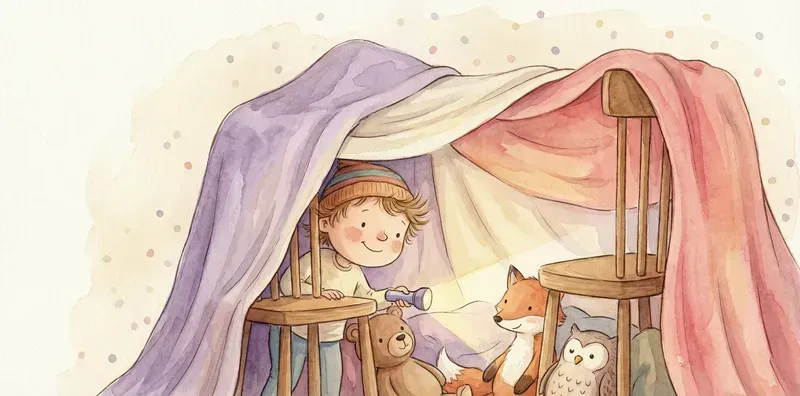
5. Blanket fort + books
Drape a blanket between two chairs, tuck in a pillow and a torch (flashlight), and stack a few books inside. The enclosed space changes the whole feeling of reading. Your child feels like they’re in a secret den, and you get a quiet 15 minutes.
6. Laundry basket boat
Put a laundry basket on the floor. Your toddler climbs in. Add a few stuffed animals as passengers and a wooden spoon as an oar. They’re now sailing the ocean. This is imaginative play with zero materials beyond what’s already in your house.
The Active-Quiet Rotation
On long rainy days, alternate between active and calm activities. A rough schedule might look like:
- Morning: Pillow mountain (active) → cardboard box decorating (calm) → snack break
- Midday: Kitchen band or indoor bowling (active) → blanket fort with books (calm) → lunch
- Afternoon: Free play → one more activity if needed → wind down
Don’t try to fill every gap. Boredom is fine. A bored toddler with a cardboard box and some cushions will invent their own game within minutes.
When the Rain Won’t Stop
If you’re on day two (or three) of indoor days, switch to activities that feel new even with the same materials. Turn the cardboard box into something different. Rearrange the pillow mountain. Add a ball to the blanket fort. Novelty comes from context changes, not new supplies.
For more ideas that work in small spaces, browse all rainy day activities or try screen-free activities for another angle on indoor play.
If your toddler is ready for something with a learning twist, body letter making uses no materials at all and turns energy into letter recognition practice.
Put it into practice
Try these activities
Cardboard Box Car
- Age
- 1–4 years
- Time
- 10–20 min
- Energy
- Low-energy
- Mess
- No mess
You'll need: Large cardboard box, Crayons or markers, Paper plates (optional wheels)

Pillow Mountain Climb
- Age
- 1–3 years
- Time
- 10–20 min
- Energy
- Low-energy
- Setting
- Indoor
You'll need: Couch cushions, Pillows, Blankets

Kitchen Pot Band
- Age
- 1–4 years
- Time
- 5–15 min
- Energy
- Hands-on
- Setting
- Indoor
You'll need: Pots and pans, Wooden spoons, Plastic containers
Indoor Bowling
- Age
- 2–6 years
- Time
- 10–20 min
- Energy
- Low-energy
- Setting
- Indoor
You'll need: Empty plastic bottles (6-10), Soft ball or rolled sock
Cozy Blanket Fort
- Age
- 1–6 years
- Time
- 15–45 min
- Energy
- Low-energy
- Mess
- No mess
You'll need: Blankets, Chairs or couch, Pillows +1 more

Laundry Basket Boat
- Age
- 1–3 years
- Time
- 10–20 min
- Energy
- Low-energy
- Mess
- Some mess
You'll need: Laundry basket, Blanket (water), Wooden spoon (oar)
Keep reading
Related guides & topics
Common questions
How do I keep my toddler busy indoors all day?
What household items work best for toddler activities?
My toddler has too much energy for quiet indoor play. What do I do?
Need an idea right now?
Skip the scrolling, tell the generator your child's age and how long you've got.
Get an activityStay stocked with ideas
A few fresh play ideas, every now and then.
Practical activities and short parenting reads, no spam, no fluff, unsubscribe anytime.
Written by the TinyPlay team
We're parents who got tired of complicated activity ideas. Everything here is practical, low-prep, and built around how toddlers actually play, no ads in your face, no sign-up walls, no Pinterest pressure.