Skip to content

Play recipe

Barefoot Texture Walk

Age1–4 years
Time10–20 min
MessSome mess
EnergySome energy
SettingIndoor
Barefoot Texture Walk

You'll need

  • Bubble wrap
  • Towel
  • Aluminum foil
  • Sandpaper or cardboard
  • Tape

Steps

  1. 1Gather 4-6 different textured items, bubble wrap, a towel, aluminum foil, sandpaper, a doormat, a plastic bag, or even a damp sponge
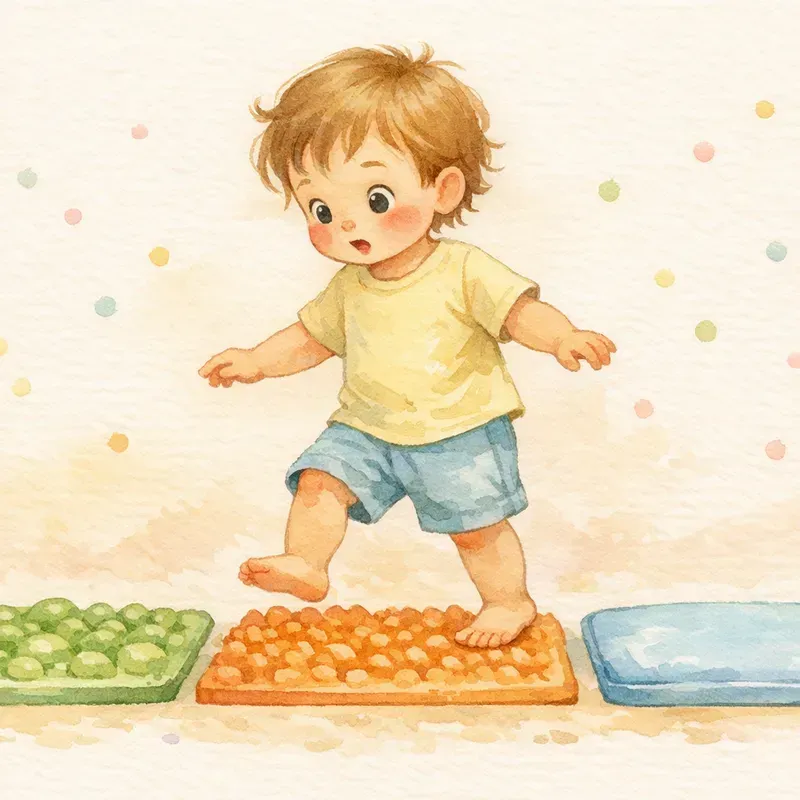
  2. 2Tape each item flat on the floor in a row to create a walking path, leaving a small gap between each one
  3. 3Take off shoes and socks, yours too if you want to join in
  4. 4Walk slowly across each texture together, pausing on each one to feel it with your feet
  5. 5Ask your child to describe what they feel: Is it bumpy? Smooth? Cold? Scratchy? Squishy?
  6. 6Walk the path again, this time backwards, or on tiptoes, or stomping

Why this works

Sensory input through the feet develops proprioception, the body's ability to sense where it is in space. This is the same skill that helps kids navigate stairs, climb playground equipment, and move confidently in the dark. Naming each texture also builds descriptive vocabulary and teaches kids to pay attention to subtle sensory differences.

Try also

  • –Add grass, sand, and pebbles if you take it outside
  • –Try a blindfolded walk, guide your child's hand and let them guess each texture by feel alone
  • –Make it a matching game: feel a texture with feet, then find the same texture with hands
  • –Add a wet sponge or ice pack for a temperature surprise
  • –Let your child build the path and choose the textures for you to walk on

Check all textures for sharp edges before starting. Clear the walking path of obstacles and keep the floor dry around the path to prevent slipping.

A closer look

Shoes off, a row of taped-down textures on the floor, and you walk it slowly together. Bubble wrap, a towel, foil, cardboard, a doormat: each one feels different underfoot, and naming that (bumpy, cold, scratchy) is the language part.

Feet are an underused sensory surface. The input helps a child notice where their body is, which is the same awareness they need on stairs and playground climbers. Keep the path short, four to six stations, and dry around the edges so it stays a walk, not a slip.

Make it easier

  • Start with three familiar textures (towel, carpet square, bubble wrap) and skip anything scratchy.
  • Hold their hand and name the feeling yourself the first pass.
  • Let them sit and press feet into one texture if walking the row is too much.

Make it harder

  • Walk it backwards, on tiptoes, or with eyes covered while you guide them.
  • Add a damp sponge or a cool pack for temperature.
  • Let them build the path and quiz you.

Skills this builds

Feeling and naming textures through the feet builds proprioception and descriptive vocabulary at the same time.

Common questions

What if my child hates the scratchy ones?
Skip them. A path of towel, foil, bubble wrap, and cardboard is plenty. The point is noticing difference, not enduring something they dislike. Offer sandpaper as an optional last station they can step around.
Can we do this outside?
Yes. Grass, a paving slab, a patch of dirt, and a doormat make a good outdoor version. Check for sharp bits first, and keep it short so feet don't get too cold or too hot.

More activities like this

Read

Guides that go with this

Browse by category