What Physical Play Actually Teaches Toddlers
Physical play builds more than energy burn. How running, climbing, and balancing develop coordination, confidence, and skills that support learning later.
Physical play looks like chaos from the outside. Your toddler is running in circles, jumping off the couch, and refusing to walk when they could run. It feels like the opposite of learning. But movement is one of the main ways young children build the skills they need for everything that comes later, including sitting still long enough to learn their letters.
What Counts as Physical Play
Physical play is any activity that gets the whole body moving: running, jumping, climbing, crawling, balancing, throwing, dancing, and wrestling with a parent on the floor. It includes both structured games (obstacle courses, animal walks) and unstructured free play (running around the yard, climbing on playground equipment).
For toddlers, physical play is not separate from learning. It is learning. Every time your child balances on a line of tape or crawls through a cardboard tunnel, they are building body awareness, spatial reasoning, and muscle control that supports later academic skills.
Four Things Physical Play Builds
1. Body awareness (proprioception)
Proprioception is your brain’s sense of where your body is in space. It is why you can walk without watching your feet. Toddlers are still developing this sense. Crawling through tunnels, walking on balance beams, and animal walks all give the brain rich feedback about limb position and force.
Kids with well-developed proprioception tend to navigate classrooms and playgrounds more confidently. They bump into things less and handle physical tasks (like opening doors or carrying a lunchbox) more easily.
2. Balance and coordination (vestibular system)
The vestibular system lives in the inner ear and controls balance. Spinning, jumping, hanging upside off the couch, and walking on uneven surfaces all stimulate it. A well-stimulated vestibular system helps kids sit upright at a table, track words across a page, and stay regulated during transitions.
This is why kids who have had a good run around the park often settle better afterward. The movement satisfied a physical need, and their nervous system can downshift.
3. Planning and sequencing
An obstacle course is a sequence: over the pillow, under the chair, through the hoop. Following that order requires planning, the same cognitive skill used for getting dressed, following a recipe, and eventually solving math problems. Physical play teaches sequencing in a way that feels like a game, not a lesson.
4. Confidence and risk assessment
Climbing a pillow mountain and jumping off teaches your child how high they can go, how to land safely, and when to ask for help. These small physical risks build judgment. A toddler who has practiced climbing and balancing at home approaches playground equipment with more confidence and less fear.
Physical Play by Age
The type of movement that helps most shifts as your child grows. Here is a rough guide:
- 12-18 months: Cruising along furniture, climbing on cushions, pushing and pulling toys. Focus on exploration.
- 18 months - 2 years: Running (sort of), throwing balls, dancing to music, simple climbing. Energy bursts are short but intense.
- 2-3 years: Jumping with both feet, balancing on lines, following simple movement sequences. Animal walks and action dice work well.
- 3-4 years: Hopscotch, more complex obstacle courses, catching and throwing with aim. Can follow multi-step movement instructions.
- 4-6 years: Organized games with rules, team activities, bike riding, structured sports. Still needs plenty of free play too.
For a full breakdown of all five play types (sensory, creative, physical, fine motor, and imaginative) with age milestones, see our toddler development through play guide.
Easy Ways to Add More Movement
You do not need a gym membership or a big backyard. Small changes add up:
- Walk to the mailbox instead of driving, even when it is raining (with boots)
- Dance while waiting for food to microwave
- Let your child climb stairs instead of using the stroller
- Set up one indoor active activity per day, even ten minutes counts
- Join in. Your toddler moves more when you move with them
For specific indoor ideas, see gross motor activities for indoors or browse all gross motor activities.
Physical Play and the Other Skills
Physical play does not replace fine motor practice, sensory exploration, or imaginative play. They work together. A child who has burned energy through animal walks sits longer for sticker play. A child who has crawled through a tunnel has warmed up the core muscles that help them hold a pencil.
Think of physical play as the foundation layer. Body letter making is a good example, it bridges gross motor movement and literacy in a single activity. Fine motor activities like noodle threading and sticker play build on top of it. For the full picture of how all play types connect, the development through play resource covers sensory, creative, fine motor, and imaginative play too.
Put it into practice
Try these activities
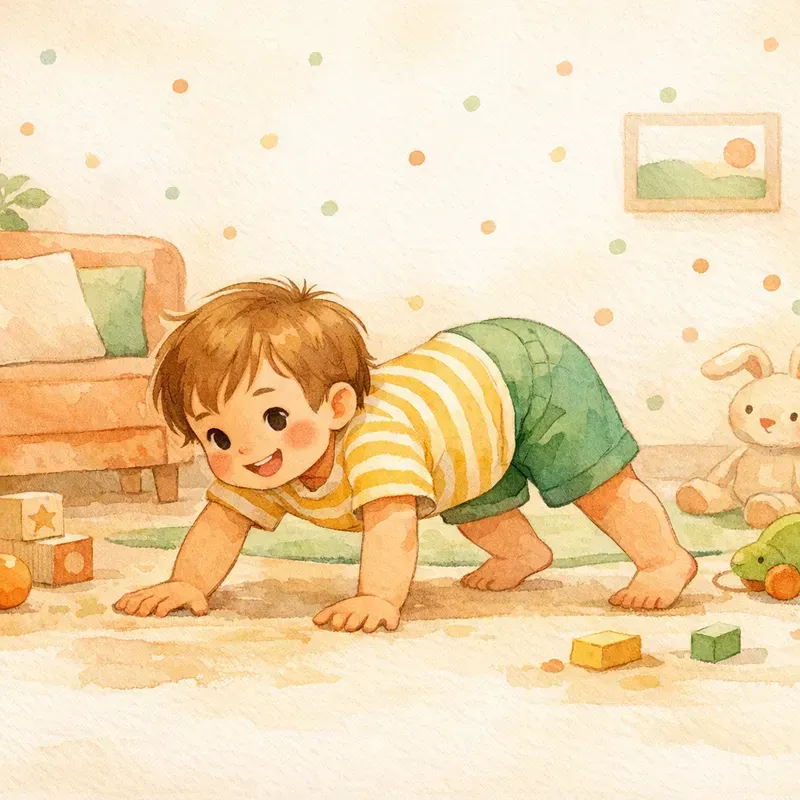
Animal Walks
- Age
- 2–5 years
- Time
- 5–15 min
- Energy
- Hands-on
- Setting
- Indoor
You'll need: Clear floor space
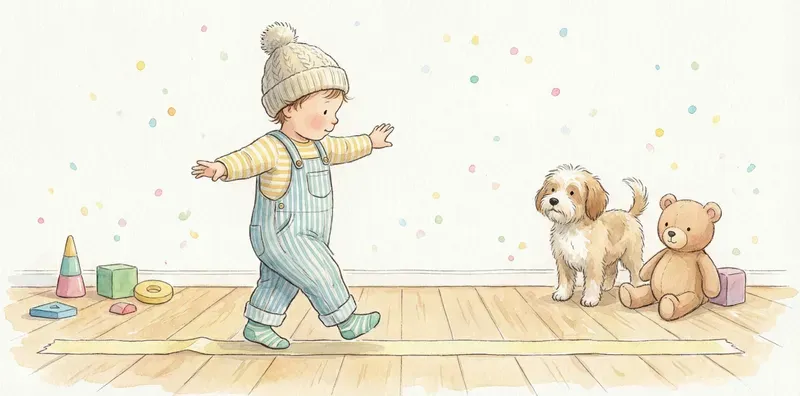
Floor Balance Beam
- Age
- 2–5 years
- Time
- 5–15 min
- Energy
- Low-energy
- Mess
- Some mess
You'll need: Painter's tape or jump rope
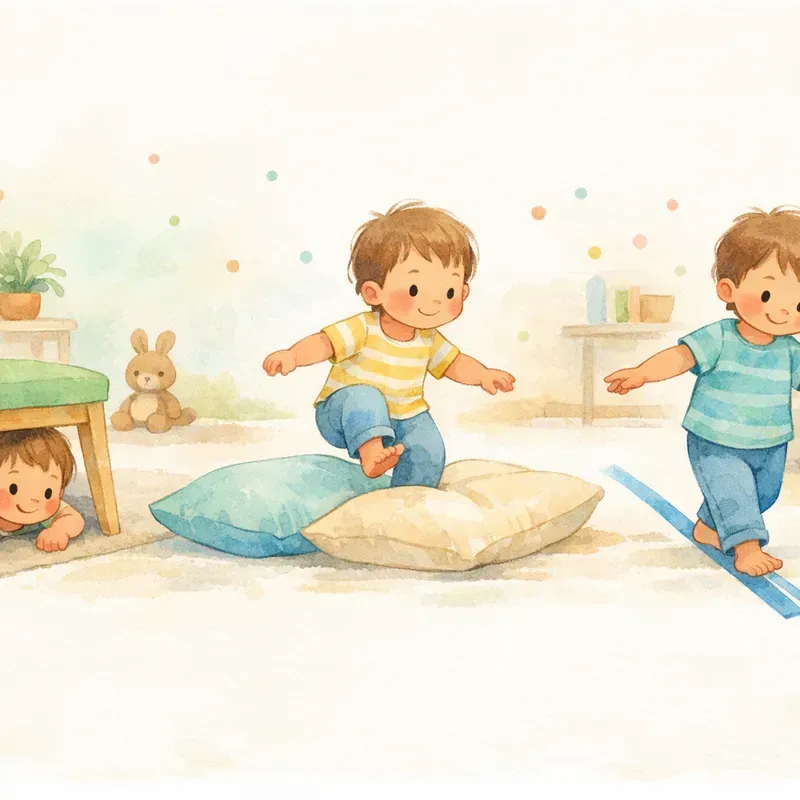
Living Room Obstacle Course
- Age
- 2–5 years
- Time
- 15–30 min
- Energy
- Hands-on
- Setting
- Indoor
You'll need: Pillows, Chairs, Hula hoop or rope +1 more
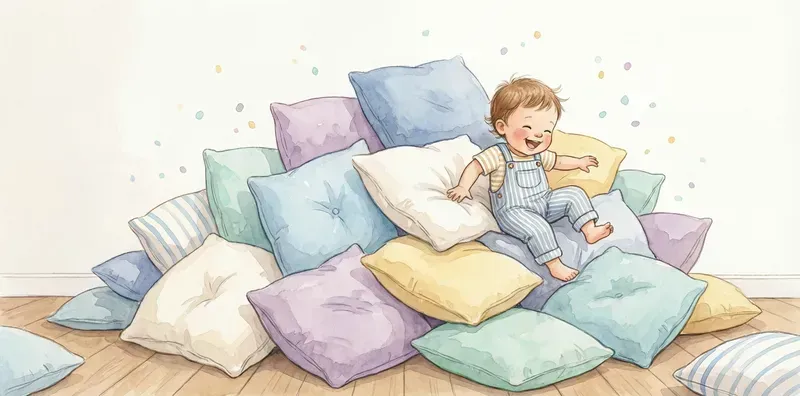
Pillow Mountain Climb
- Age
- 1–3 years
- Time
- 10–20 min
- Energy
- Low-energy
- Setting
- Indoor
You'll need: Couch cushions, Pillows, Blankets
Keep reading
Related guides & topics
Common questions
Does physical play really help with learning?
How much physical play does a toddler need per day?
My toddler just runs around chaotically. Does that count?
Need an idea right now?
Skip the scrolling, tell the generator your child's age and how long you've got.
Get an activityStay stocked with ideas
A few fresh play ideas, every now and then.
Practical activities and short parenting reads, no spam, no fluff, unsubscribe anytime.
Written by the TinyPlay team
We're parents who got tired of complicated activity ideas. Everything here is practical, low-prep, and built around how toddlers actually play, no ads in your face, no sign-up walls, no Pinterest pressure.