What to Do With a Toddler All Day at Home
A realistic rhythm for home days with toddlers: anchor times, low-prep play blocks, and where to grab ideas fast. No Pinterest marathon.
The morning stretches ahead of you. No playdate, no errands, just you and a small human for 12 unbroken hours. If that sentence made your stomach clench a little, you’re not alone. Here’s a realistic framework (not a rigid schedule) for getting through a full day at home with a toddler.
Forget the Minute-by-Minute Schedule
Toddlers don’t follow itineraries. Instead of planning every 15-minute slot, think in anchor times (the fixed points your day revolves around) and play blocks that fill the gaps between them.
Your anchors are probably: wake-up, breakfast, nap, lunch, snack, dinner, bedtime. Everything else is a play block, and play blocks don’t all need to be structured.
A Realistic Home-Day Rhythm
This isn’t a schedule to follow to the letter. It’s a pattern that gives your day shape.
Morning play block (after breakfast)
This is usually peak energy. Use it for something active: an obstacle course, dance freeze, body letter making, or balloon keep-up. Burn off the big energy first.
Late morning wind-down
Transition toward nap with something calmer: play dough, sticker play, or puzzles. This is also a great time for a snack and a book.
Nap / quiet time
Your recharge window. Use it however you need to.
Afternoon play block
Post-nap energy is usually medium. Try something sensory or creative: water transfer, tape road, or a rice bin. Involve them in snack prep if you can.
Pre-dinner wind-down
The “witching hour” is real. Keep things simple: a tea party, a blanket fort, or just put them in the kitchen with a bowl of soapy water while you cook.
The 3 Types of Play to Rotate
You don’t need variety for variety’s sake, but rotating between three play modes keeps things balanced and avoids meltdowns:
- Active play: running, jumping, climbing. Burns energy and regulates mood.
- Focused play: sorting, building, puzzles. Builds concentration and fine motor skills.
- Sensory / creative play: water, dough, paint. Calming and exploratory.
You don’t need all three every day. But if your toddler is melting down after a morning of only focused play, they probably need to move their body.
What to Do When the Plan Falls Apart
It will. That’s normal. Here are the emergency resets:
- Change rooms: moving from the living room to the kitchen can feel like a new environment to a toddler.
- Add water: bath, sink, spray bottle, ice cubes. Water is almost always interesting.
- Go outside for 5 minutes: even stepping onto a balcony or porch resets the mood.
- Involve them in your task: folding laundry, wiping counters, stirring ingredients. Toddlers love to “help.”
You Don’t Have to Fill Every Minute
Boredom is not a parenting failure. Unstructured time (when a child wanders, pokes at things, or talks to a stuffed animal) is when creativity and independence grow. Your job is to provide a safe environment and a few open-ended materials, not a constant stream of entertainment.
Need a full routine template? Check our daily routine guide for printable schedules. Or browse all indoor activities when you need a quick idea.
Put it into practice
Try these activities
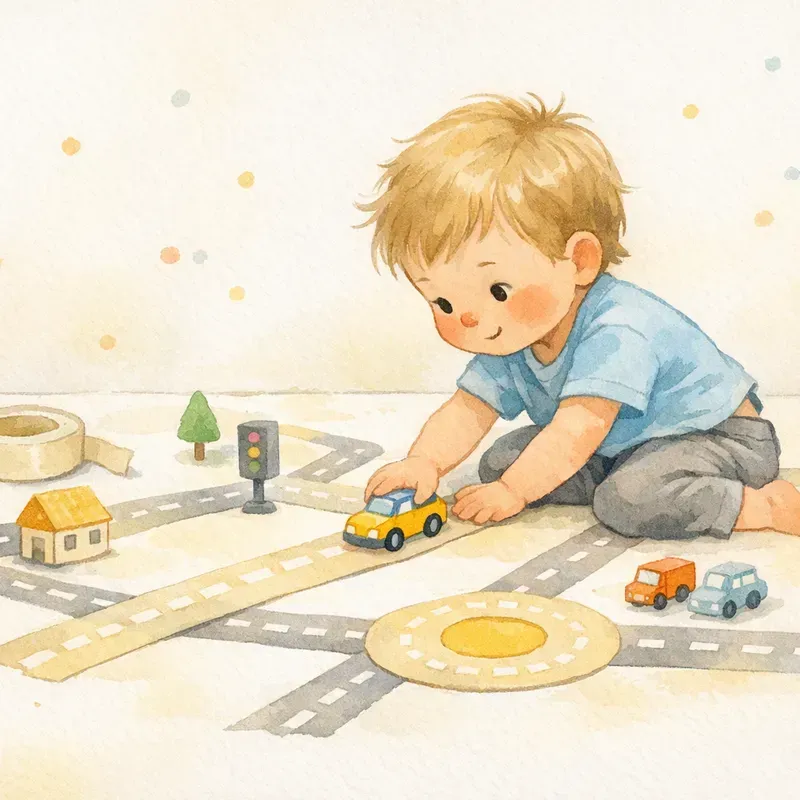
Masking Tape Road
- Age
- 2–5 years
- Time
- 15–30 min
- Energy
- Hands-on
- Mess
- Some mess
You'll need: Masking tape or painter's tape, Toy cars, Building blocks (optional)
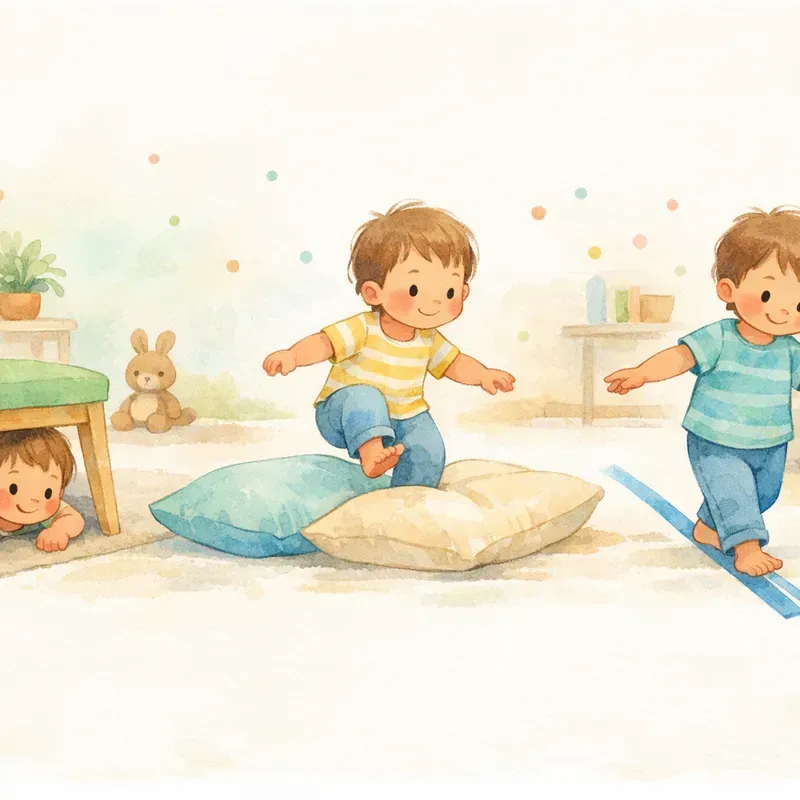
Living Room Obstacle Course
- Age
- 2–5 years
- Time
- 15–30 min
- Energy
- Hands-on
- Setting
- Indoor
You'll need: Pillows, Chairs, Hula hoop or rope +1 more

Pretend Tea Party
- Age
- 2–5 years
- Time
- 15–30 min
- Energy
- Low-energy
- Mess
- No mess
You'll need: Toy tea set or cups, Stuffed animals, Real or pretend snacks
Keep reading
Related guides & topics
Common questions
How many activities do I need for a full day at home?
What do I do when my toddler rejects every activity?
Is it bad if we stay inside all day?
Need an idea right now?
Skip the scrolling, tell the generator your child's age and how long you've got.
Get an activityStay stocked with ideas
A few fresh play ideas, every now and then.
Practical activities and short parenting reads, no spam, no fluff, unsubscribe anytime.
Written by the TinyPlay team
We're parents who got tired of complicated activity ideas. Everything here is practical, low-prep, and built around how toddlers actually play, no ads in your face, no sign-up walls, no Pinterest pressure.